Massachusetts has the pieces in place to become a serious player in climate innovation — top research universities, a startup culture that actually works, and a state government willing to fund it. The question now is whether the state can move fast enough to turn lab breakthroughs into the technologies that actually heat homes and power businesses.
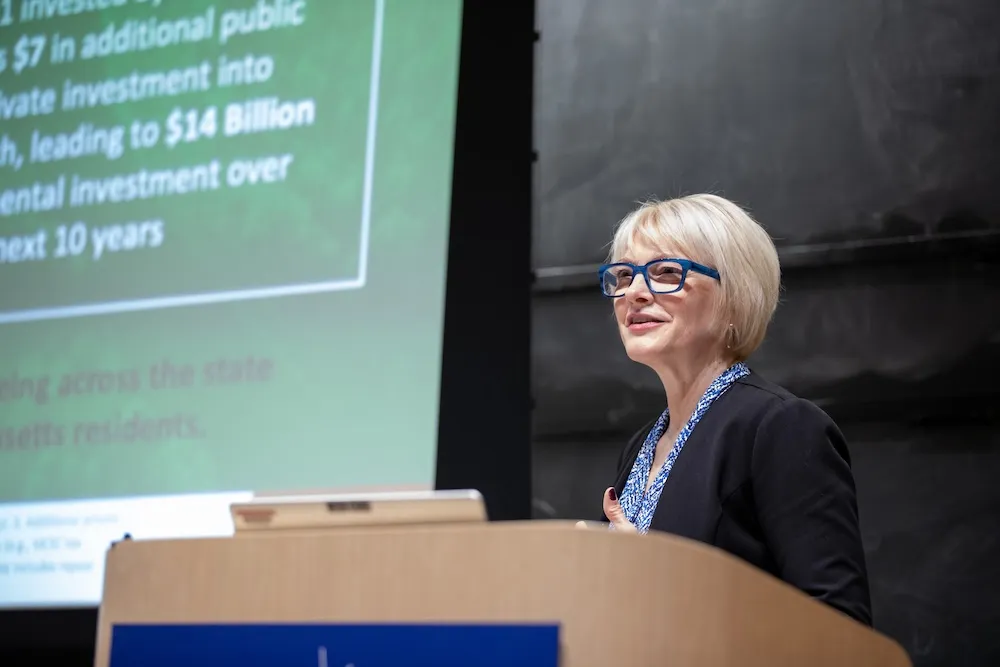
Emily Reichert, CEO of the Massachusetts Clean Energy Center (MassCEC), sees the opportunity clearly. The state already leads in life sciences. Its workforce is educated. Its infrastructure, though aging, is precisely the kind of real-world testing ground where new climate solutions need to prove themselves. "Economic development is just as much about the jobs these businesses create as it is about the businesses themselves," Reichert said.
That's the practical angle most climate innovation stories miss. It's not enough to invent something in a lab. You need companies that stick around, grow, and hire locally. MassCEC's approach — grants, internships, a small investment fund — is designed to keep emerging climate startups in Massachusetts rather than watching them get poached by California or New York.
We're a new kind of news feed.
Regular news is designed to drain you. We're a non-profit built to restore you. Every story we publish is scored for impact, progress, and hope.
Start Your News DetoxFrom Lab to Living Room
The real work happens in deployment. MassCEC is taking technologies that already work and figuring out how to get them into homes and businesses across the state. Massachusetts' older building stock — including the iconic triple-deckers that define so many neighborhoods — requires specialized knowledge. You can't just copy-paste a decarbonization strategy from a newer city.
Offshore wind offers a concrete example. A wind farm off Martha's Vineyard will eventually power about 400,000 homes. But building that requires port infrastructure, supply chains, and skilled workers. MassCEC's role is to make sure those jobs exist in Massachusetts, that the ports are ready, and that the supply chain runs through local businesses.
Workforce development sits at the center of the strategy. MassCEC is funding internships, training programs for high school and community college students, and pathways for people switching careers into clean energy. This matters because climate tech doesn't work without people who know how to build it, install it, and maintain it.
The state government is backing this up with policy. The Healey-Driscoll administration passed the Mass Leads Act, which created a tax incentive program for climate tech companies. They've also commissioned a 10-year strategy to position Massachusetts as a global climate tech leader — not just a nice-to-have, but an actual economic development priority.
Reichwert's confidence rests on a simple observation: the world is moving toward clean energy whether Massachusetts competes or not. "We can decide not to compete as a country, or we can decide that we want to be part of the future," she said. The state is choosing to compete. What matters now is whether the infrastructure, funding, and talent can move together fast enough to make it real.