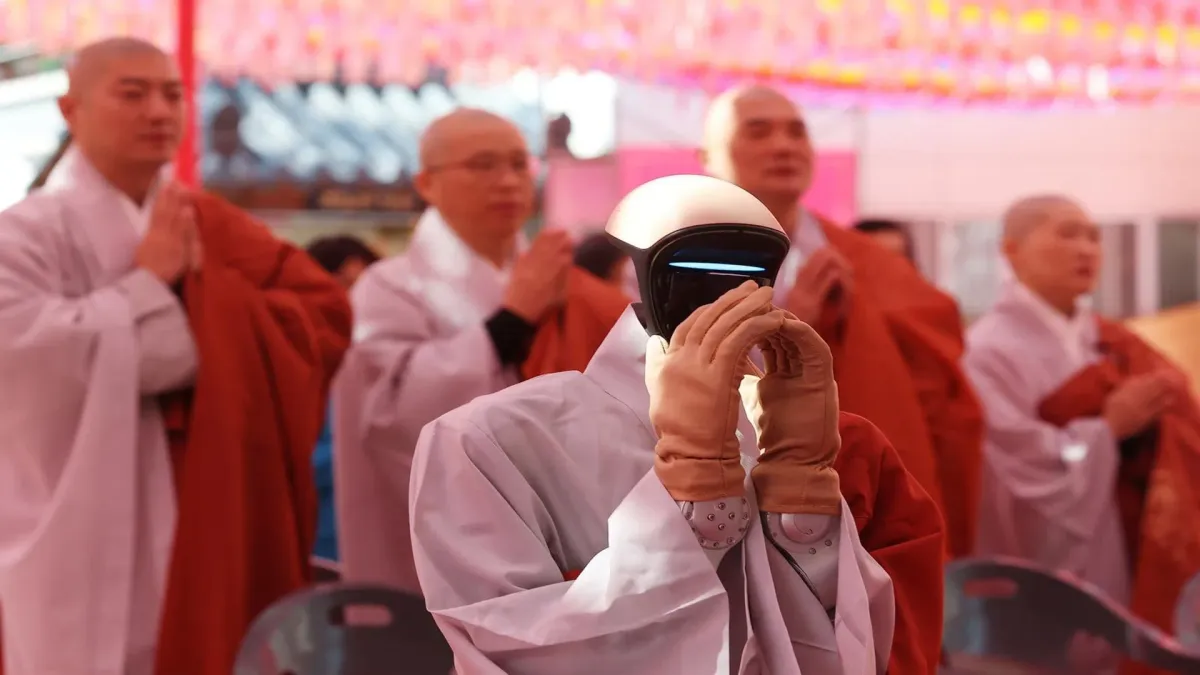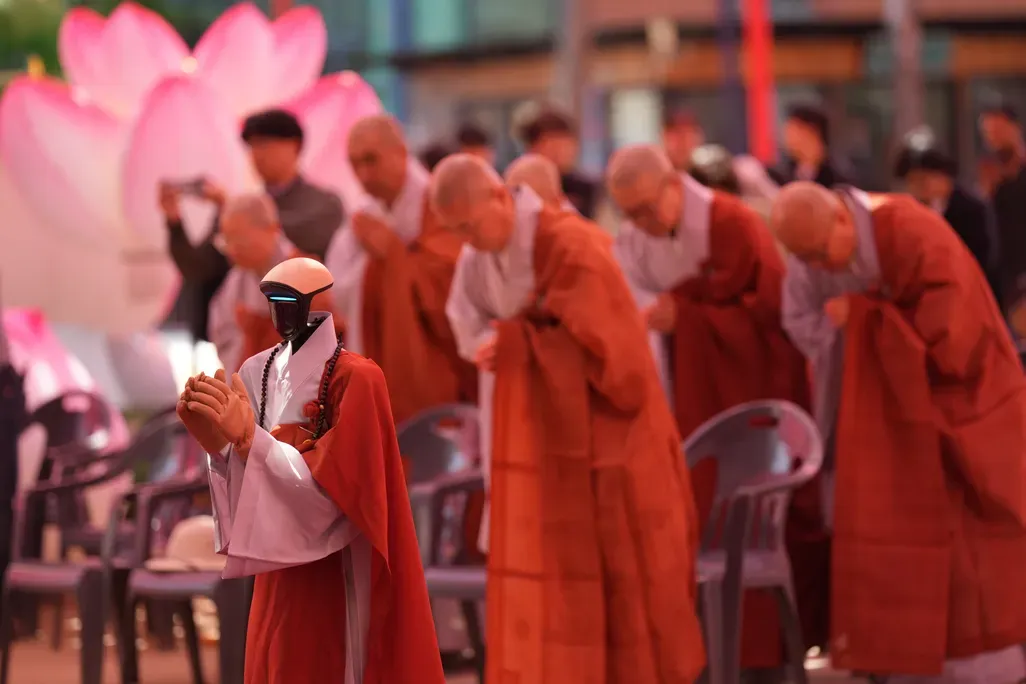
A four-foot-tall humanoid robot named Gabi recently became a monk at a Buddhist temple in Seoul, South Korea. Gabi participated in an initiation ceremony, pledging devotion to Buddha and his teachings. This event marks a growing trend of religious leaders embracing artificial intelligence.
Gabi's Initiation and Vows
The ceremony at the Buddhist temple in downtown Seoul looked like any other, with monks in robes. However, Gabi, also wearing monk robes, stood out. Hong Min-suk, a manager at the Jogye Order, South Korea's largest Buddhist sect, noted that robots will work with humans in all fields. He believes it's natural for them to be part of their festivals.
This was the first time a robot took part in the sugye initiation ceremony. During this ritual, followers promise their devotion to Buddha. Gabi, a Buddhist name meaning mercy, was created by Unitree Robotics, a Chinese company. The G1 model costs about $13,500.
We're a new kind of news feed.
Regular news is designed to drain you. We're a non-profit built to restore you. Every story we publish is scored for impact, progress, and hope.
Start Your News DetoxGabi took five vows, similar to those of human monks, but adjusted for a robot. The robot promised to respect life, act peacefully towards other robots and objects, listen to humans, avoid deception, and save energy. Instead of a traditional incense burn, Gabi received a lotus lantern festival sticker and a prayer bead necklace during a modified purification ritual.
Embracing AI in Buddhism
This event aligns with the Venerable Jinwoo's New Year's address. Jinwoo, president of the Jogye Order, promised to bring artificial intelligence into Buddhist traditions. He stated their goal is to lead the AI era and use its achievements for peace and enlightenment.
The Venerable Jungnyum, another leader, also spoke about Buddhism engaging with technology. He noted that as AI arrives like a "tsunami," Buddhism should move in a new direction of hope. This comes as Buddhism is seeing a decline in followers worldwide.
Robots in Religious Practice
Using robots in religious practices is not common but has happened before. A 2024 study in Theology and Science found about a dozen robots involved in religious rituals. Fewer robots teach religious education or provide spiritual care. Even fewer actively preach.
Researchers found that believers generally react neutrally or positively to robots. However, some reject them, believing robots cannot weep, worship, or "talk to God."
In 2017, a humanoid robot named Pepper performed Buddhist funeral rites in Japan. The same year, an Indian tech company introduced a robotic arm for aarti, a Hindu ceremony. Martien Halvorson-Taylor, a religious studies scholar, noted that robots highlight an old debate in religion: what matters more, belief or actions? Sometimes, how something is done is more important than why.
Gabi is scheduled to take part in the lantern festival later this month. This festival celebrates Buddha’s birth and the arrival of spring. It is recognized by UNESCO as an Intangible Cultural Heritage of Humanity.
Deep Dive & References
- Robots are performing Hindu rituals, some devotees fear they’ll replace worshippers - The Conversation, 2023
- Robots in Liturgical and Ritual Practices - Theology and Science, 2024