A kite string doesn't sound like a weapon. But in Delhi's skies, the manjha—a traditional kite string coated with glass powder—cuts like a razor. When Nadeem and Mohammad Saud found their first injured bird tangled in one during the 1990s, they had no idea it would become their life's work.
That first rescue attempt nearly ended before it started. Local veterinary clinics turned them away. But the brothers didn't stop. They began collecting injured birds themselves, learning to treat wounds, set fractures, and nurse animals back to flight. Between 2003 and 2010, they saved almost 400 birds—owls, hawks, water hens, egrets. The work was working.
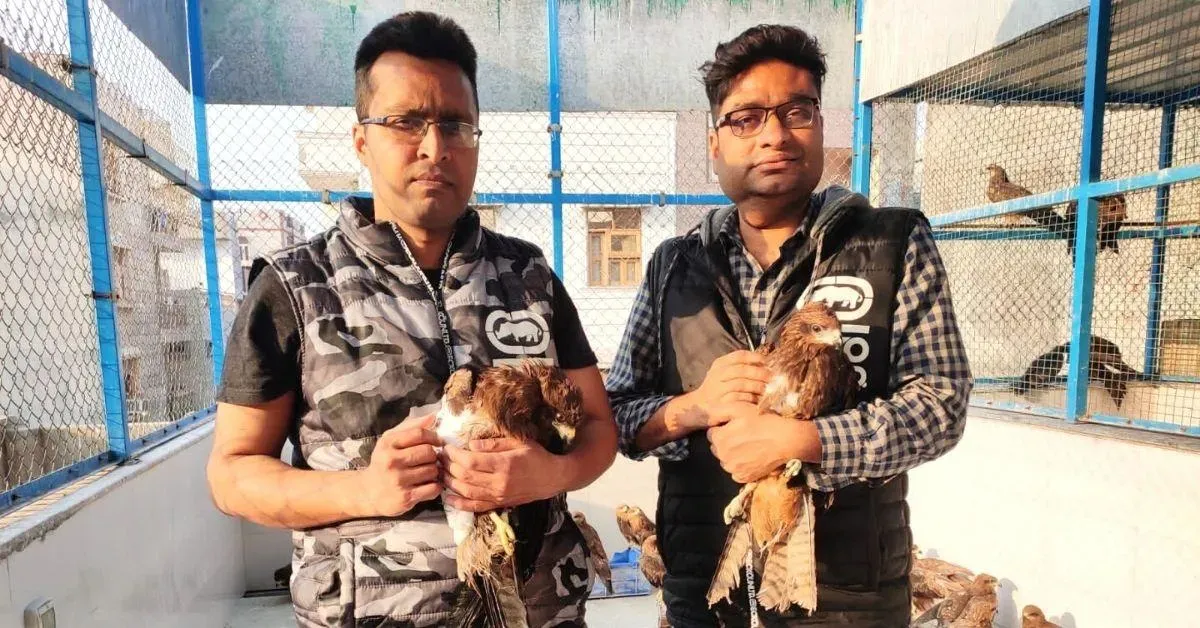
In 2010, they formalized it. Wildlife Rescue became their NGO, and the calls started coming in. Not just from concerned citizens, but from police, fire services, and municipal officials. Over the past decade, the brothers have rescued more than 23,000 birds from over 100 species. Some arrive with lacerations that need surgery. Others are poisoned or have been hunted. The manjha is just one threat among many.
We're a new kind of news feed.
Regular news is designed to drain you. We're a non-profit built to restore you. Every story we publish is scored for impact, progress, and hope.
Start Your News DetoxInjured birds during treatment.
What's striking is how they've done this with almost no formal training. Nadeem and Mohammad learned by doing—attending workshops in the US, studying under their own hands, building expertise through repetition and failure. Their rooftop in Delhi became a treatment facility. Their determination became their credential.
Researcher Urvi Gupta from the Wildlife Institute of India explains why this matters. Raptors—the birds the brothers rescue most often—are ecosystem anchors. They control rodent populations, balance predator-prey dynamics, and signal environmental health. When they disappear, entire systems shift. Habitat loss, poisoning, hunting, and kite strings all threaten them. Each bird saved is a small correction to an unbalanced equation.
An injured bird undergoing surgery.
Rooftop at Nadeem's house that works as an enclosure.
Nadeem's hope is simpler than it sounds: that people understand the cost of entertainment. Kite flying is a tradition, a joy, a cultural practice. But the glass-coated strings exact a price paid by creatures that can't consent to the game. The brothers aren't asking for kites to disappear—just for the strings to change.
Right now, they're planning a full-fledged bird hospital. It would expand their capacity, allow for more complex surgeries, and create a permanent center for raptor rescue in Delhi. They have the expertise. They have the track record. What they need is funding and partners who believe that 23,000 rescued birds is just the beginning.