Michigan's Eagle Mine is running out of high-quality nickel ore, but it might not have to close. The mine's owner is testing a fermentation broth developed by startup Allonnia — a microbial solution mixed with lower-grade ore that captures impurities and lets miners extract usable nickel from rock that would normally be too poor to bother with.
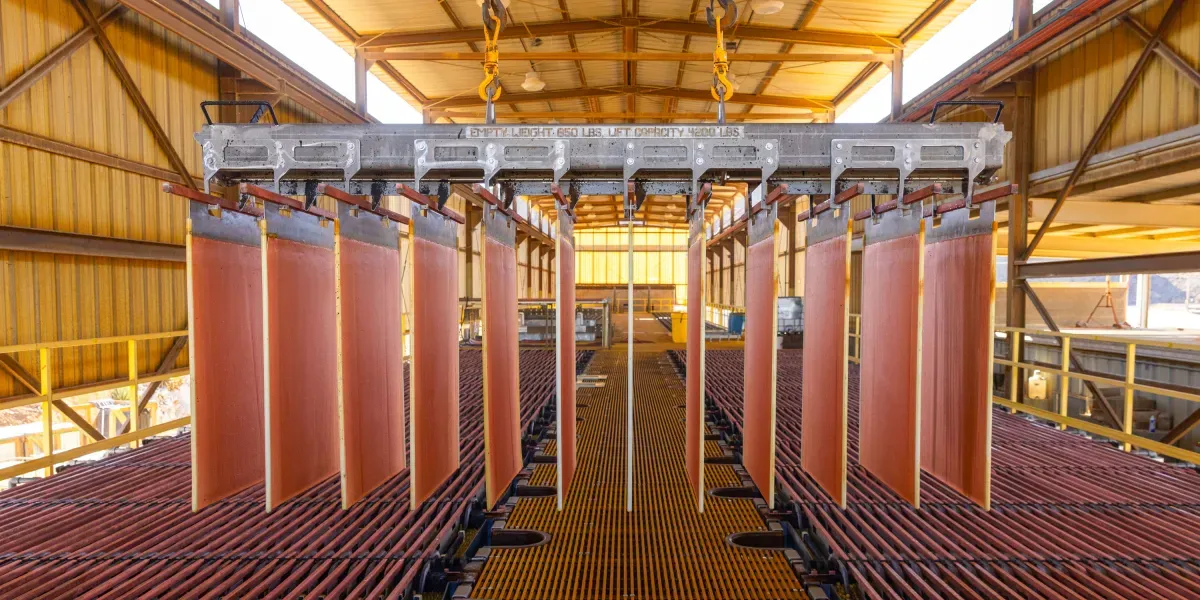
It's a small shift with outsized implications. Electric vehicles, data centers, and renewable energy projects are driving demand for nickel, copper, and rare earth elements faster than miners can find new deposits. The easy ore is gone. What remains requires either deeper pockets, riskier extraction, or a smarter way to work with what's left.
Biology offers that smarter way. Mining companies have used acid-loving bacteria like Acidithiobacillus ferrooxidans to extract copper for decades — they pile crushed ore into heaps, add acid, and let the microbes do the chemistry. It works, but it's passive. You maintain the conditions and hope.
We're a new kind of news feed.
Regular news is designed to drain you. We're a non-profit built to restore you. Every story we publish is scored for impact, progress, and hope.
Start Your News DetoxNow startups are turning that into active management. Endolith analyzes the DNA and RNA in the liquid flowing out of copper heaps to map which microbes are thriving, then adds species that optimize extraction. In lab tests on ore from mining giant BHP, this approach outperformed traditional bioleaching. The company has raised $16.5 million to scale from the lab to actual mine sites.
The skepticism is real
But mining is cautious by nature. Corale Brierley, who's been working on metal bioleaching since the 1970s, raises the obvious question: what happens when microbes don't grow the way you planned? Big mining firms have already optimized their current processes — they know exactly what works and what breaks. Convincing them to swap proven methods for microbial experiments, even promising ones, requires years of data and proof.
Venture-backed biotech startups face a different pressure. Their investors want returns in years, not decades. Mining companies want certainty before they touch their operations. That timeline mismatch is real.
Other approaches are emerging. Some startups are genetically engineering microbes for specific ore types. Others, like Alta Resource Technologies and REEgen, skip live organisms entirely and use the fermentation products themselves — the chemicals microbes produce, without the living complexity.
Buz Barstow, a microbiologist at Cornell, sees the potential clearly: "Biomining is one of these areas where the need is big enough." The constraint isn't whether biology can work. It's whether the industry can move fast enough to adopt it before the gap between demand and supply becomes a real problem.
For a mine like Eagle, that timeline matters. The nickel inside the remaining ore isn't going anywhere — but the vehicles that need it are being built today.