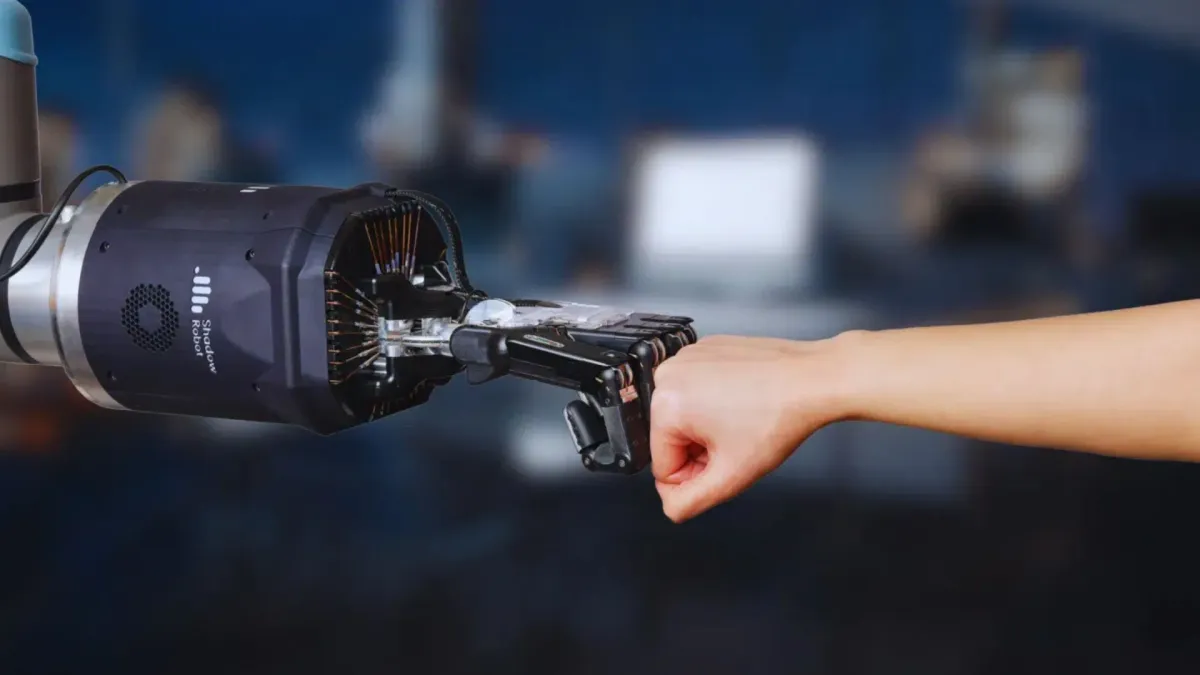
Microsoft has built an AI model that does something robots have struggled with: it listens to what you want, then figures out how to do it with two hands.
The model, called Rho-alpha, is designed to move robots beyond factory floors where every task is pre-programmed. Instead of following rigid scripts, it translates natural language into actual movement — a robot can understand "fold this towel" or "assemble this part" and adjust on the fly.
What makes this different is that Rho-alpha doesn't just see. It feels. The system incorporates tactile sensing, meaning robots can adjust their grip and movement based on touch rather than relying only on cameras. If a robot picks up something fragile, it can sense when pressure is too much. Microsoft plans to add force sensing and other sensing types in future versions.
We're a new kind of news feed.
Regular news is designed to drain you. We're a non-profit built to restore you. Every story we publish is scored for impact, progress, and hope.
Start Your News DetoxLearning from mistakes
Here's the part that matters for real-world deployment: when a robot makes a mistake, a human operator can step in using a 3D controller, show it a better way, and the system learns from that correction. The robot doesn't reset to factory defaults — it adapts. Over time, as it works alongside humans, it gets better at reading what people actually want, not just what engineers programmed it to do.
This adaptability is intentional. Microsoft's researchers believe robots that learn human preferences will be more useful and more trusted in homes, hospitals, and workplaces where they'll interact with real people doing real tasks.
The biggest hurdle in robotics has always been training data. You need thousands of examples of a robot successfully picking up a mug, folding fabric, or inserting a bolt — and collecting that data physically is slow and expensive. Rho-alpha trains on a mix of real robot demonstrations, simulated tasks, and large-scale visual data. Microsoft generates much of its synthetic training data through simulation running on Azure, then combines those simulated examples with real data collected from physical robots. This hybrid approach helps overcome the scarcity problem without waiting years to collect enough real-world examples.
For robotics companies, the shift matters. Instead of relying on a single vendor's pre-trained model, manufacturers can now use their own data with their own robots, giving them more control over how their systems learn and perform.
As robots move closer to everyday environments — warehouses, hospitals, homes — adaptability will separate the systems that work from those that frustrate. Rho-alpha is Microsoft's bet that AI trained to feel and learn will get there first.