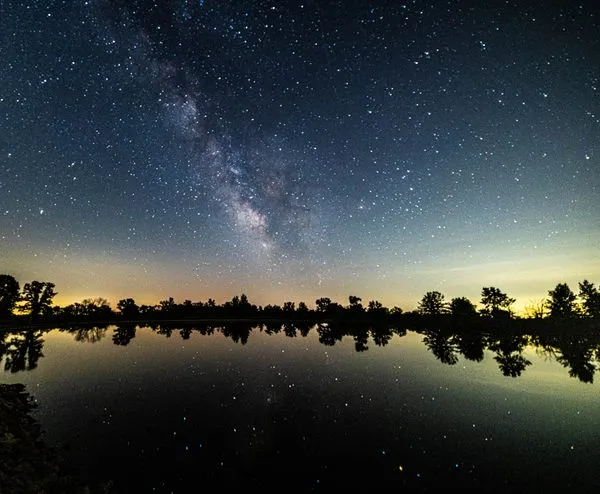
In a world where city glow-up means you can barely see a single star, one corner of Illinois is doing the exact opposite. The Middle Fork River Forest Preserve isn't just dark; it's intentionally dark. So dark, in fact, that in 2018, it earned the coveted title of Illinois' first International Dark Sky Park.
Because apparently, preserving actual darkness is a thing now, and a genuinely good one at that. The folks at DarkSky International gave this Champaign County gem its nod for going to extreme lengths to protect the natural night. Think strict rules on outdoor lighting, shielded fixtures, and a community effort to keep light pollution from nearby development at bay. The payoff? A night sky so truly, profoundly dark, it practically glows with stars.
Where the Wild Things Are (and the Stars Too)
During daylight hours, Middle Fork plays the part of a classic Illinois prairie and river landscape. The Middle Fork of the Vermilion River meanders through forests, restored tallgrass prairie, and wetlands. Eight hiking trails invite you to witness spring wildflowers and the lush green of summer. Canoeing and camping are also on the menu, with eleven campsites even designated as "Dark Sky Friendly" — because even your tent light has a part to play, apparently.
We're a new kind of news feed.
Regular news is designed to drain you. We're a non-profit built to restore you. Every story we publish is scored for impact, progress, and hope.
Start Your News DetoxBut once the sun dips below the horizon, the preserve truly pulls out its party trick. Public stargazing events and night-sky programs are a regular feature, run by the Champaign County Forest Preserve District. They even recently unveiled "dark trails," allowing hikers to experience the landscape under the bare minimum of artificial light. On moonless nights, the Milky Way isn't just visible; it's practically showing off. And meteor showers? They draw crowds bundled up in open fields, all craning their necks for a celestial show.
By championing darkness, this preserve isn't just giving us a stellar view. It's also a crucial refuge for nocturnal animals, a boon for scientific research, and, perhaps most importantly, a rare portal to a night sky that looks much like what our ancestors saw. Which, if you think about it, is pretty wild.