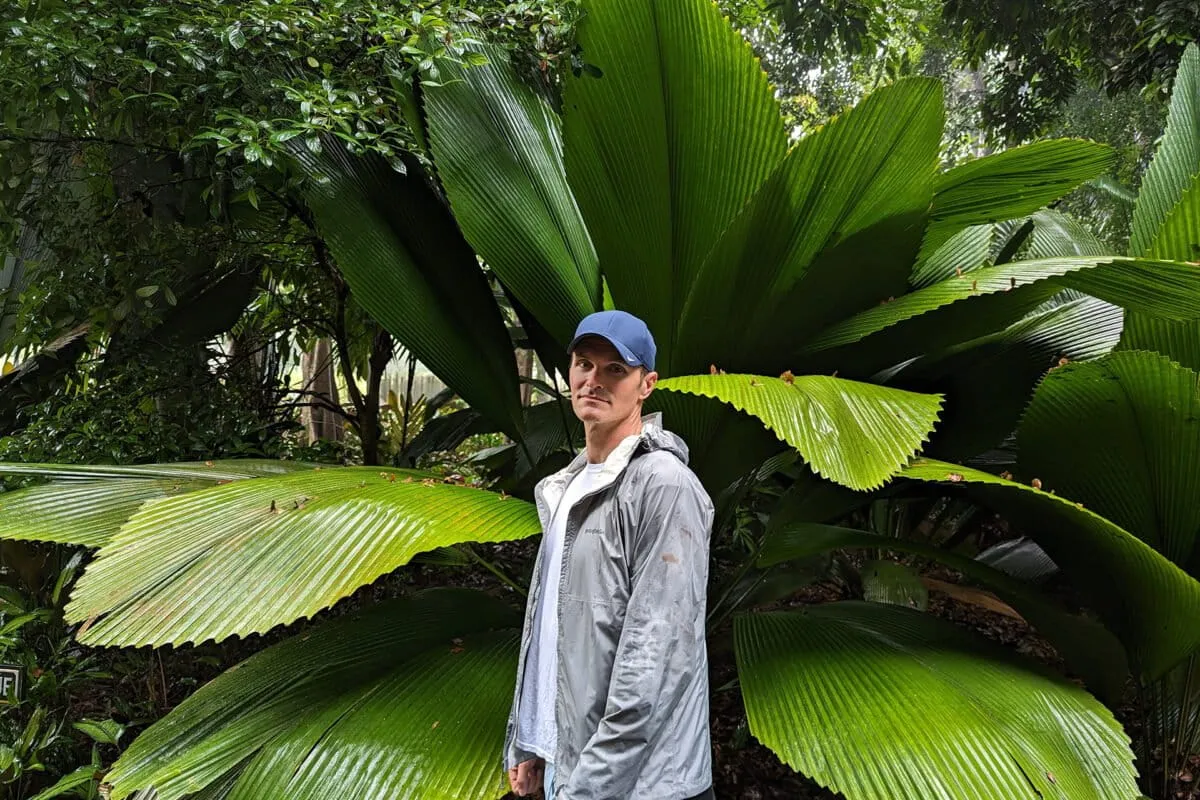
Rhett Butler launched Mongabay in 1999 from his apartment, coding the website by hand after watching rainforests disappear faster than the world seemed to notice. He had field notes from Borneo and Madagascar, a love of forests, and a simple conviction: credible information about environmental destruction should be free.
Twenty-five years later, Mongabay's real measure of success isn't awards or traffic metrics. It's the illegal logging concession halted in Gabon because of their reporting. The investigation in Peru that exposed plans to clear rainforest. The Indigenous leaders who reach out to say Mongabay got their story right when others didn't.
"Journalism doesn't plant trees or prosecute loggers directly," Butler explains. "But it creates the conditions that make those things possible."
We're a new kind of news feed.
Regular news is designed to drain you. We're a non-profit built to restore you. Every story we publish is scored for impact, progress, and hope.
Start Your News DetoxThat philosophy shaped a pivotal decision in 2012: shift from an advertising-driven model to nonprofit status. Ad revenue rewards clicks. Nonprofit structure rewards impact. The difference sounds small. It's not. Suddenly, the incentive wasn't to maximize engagement with sensational headlines — it was to maximize actual environmental outcomes.
The shift unlocked something. Mongabay launched editions in Indonesia, Latin America, and India. They built partnerships across roughly 85 countries, working with more than a thousand journalists. The crucial part: most of these reporters are embedded in the communities they cover. They speak the language. They know the local power structures, the history, the stakes. A journalist reporting on deforestation in Sumatra isn't parachuting in for a story — they live there.
This local rootedness gives Mongabay something rare in global media. When a story breaks about forest loss or wildlife trafficking, they don't just cover it from a distance. They have someone on the ground who understands the context so deeply that the reporting carries weight with both local decision-makers and international audiences.
The network is still expanding. Butler sees the next phase as deepening that global web of local journalists — not to chase every story, but to focus relentlessly on the environmental issues that matter most. The rainforests that sparked his original passion are still disappearing, but now there's a newsroom with eyes in 85 countries watching it happen, documenting it, and making sure the people with power to change course can't claim ignorance.