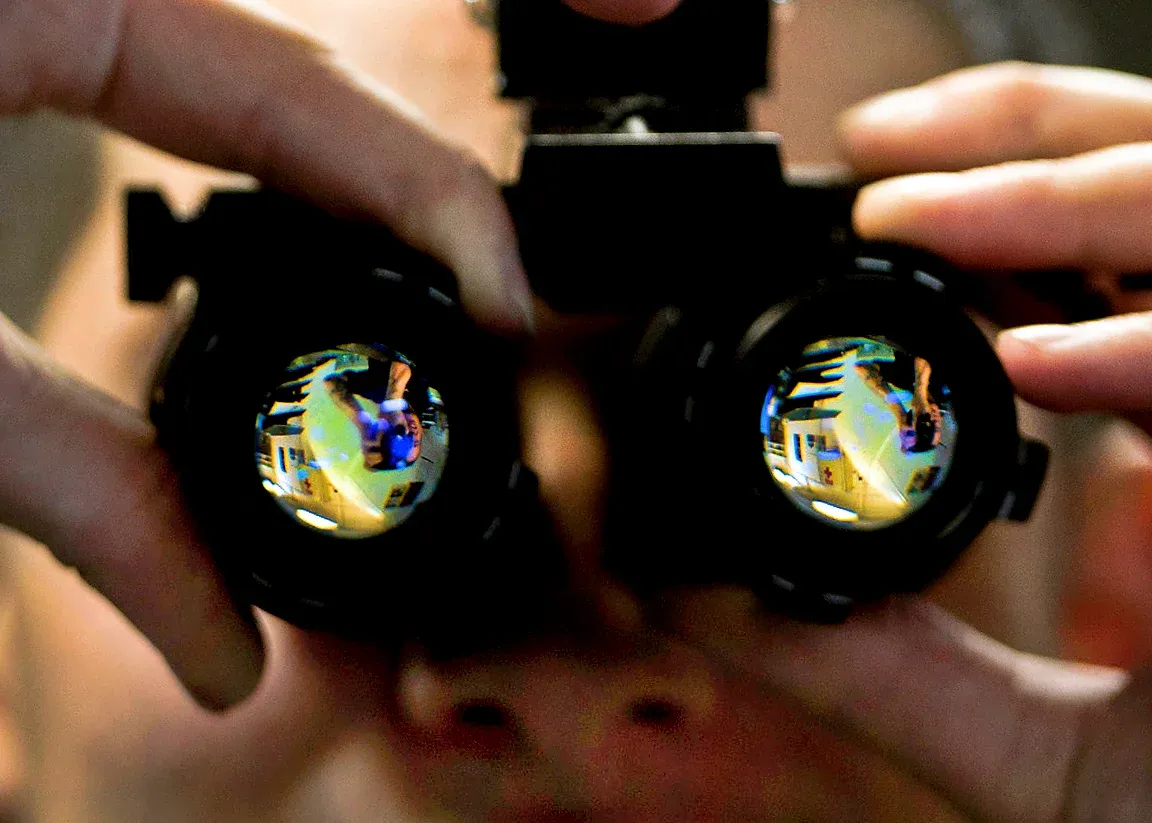
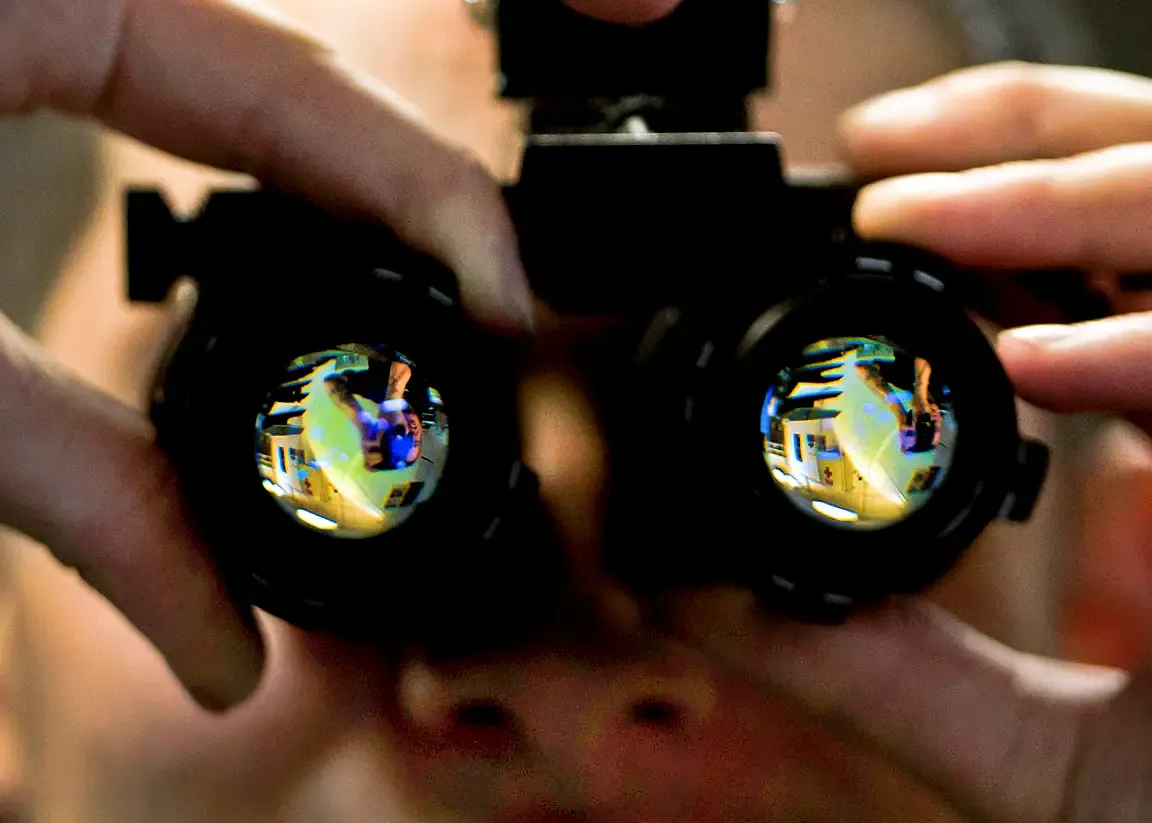
For decades, night vision meant one thing: a hazy, green-tinged world where everything looked vaguely like a ghost. Distinguishing a shrub from a lurking badger? Good luck. Judging depth? Forget about it. But now, a team of researchers has decided that monochrome is so last century, developing a new system that transforms infrared light into a full-color spectacle.
Imagine seeing the world after dark not as a blurry, emerald-hued film negative, but in actual, honest-to-goodness color. That's the promise from a team at the Beijing Institute of Technology. They've figured out how to translate those invisible-to-us infrared wavelengths into a vibrant, full-spectrum display. And to prove they're not messing around, they built it into a pair of eyeglasses. Because apparently, that's where we are now.
From Invisible to Incredible
Traditional night vision is like a minimalist painting: it amplifies what little light is there and slaps a green filter on it, relying solely on brightness changes. Which, for our color-savvy eyeballs, is about as helpful as a black-and-white map. Our brains are infinitely better at spotting nuanced differences in color than just varying shades of green.
We're a new kind of news feed.
Regular news is designed to drain you. We're a non-profit built to restore you. Every story we publish is scored for impact, progress, and hope.
Start Your News DetoxThe Beijing team's device, charmingly dubbed an "upconverter," changes all that. It's a ridiculously thin stack of films — mere hundreds of nanometers thick — on a glass slide. The real magic happens in a layer of mercury telluride quantum dots. These aren't just any dots; they're semiconductor crystals less than four nanometers across, designed to sniff out the tiniest whispers of infrared radiation.
Above this microscopic infrared detective agency sits an OLED display, not unlike the one in your phone. Except this one has two light-emitting layers. A lower layer glows red with a weak charge. An upper layer, however, is a bit more demanding; it glows cyan only when it gets a much stronger kick.
What this means in practice: a faint infrared signal only triggers the red. As the signal gets beefier, the cyan kicks in, mixing with the red to create brighter, color-shifting images. The quantum dots are the master conductors here, releasing more charge when infrared light is brighter, and even more when the wavelength is shorter (because shorter wavelengths carry more energy, naturally).
The result? The color you see on the display tells you both the strength and the approximate wavelength of the infrared light. This clever combo of color and brightness allows a person to detect infrared power differences 200 times better than with brightness alone. Let that satisfying number sink in.
Night Vision, Now With Added Brain Power
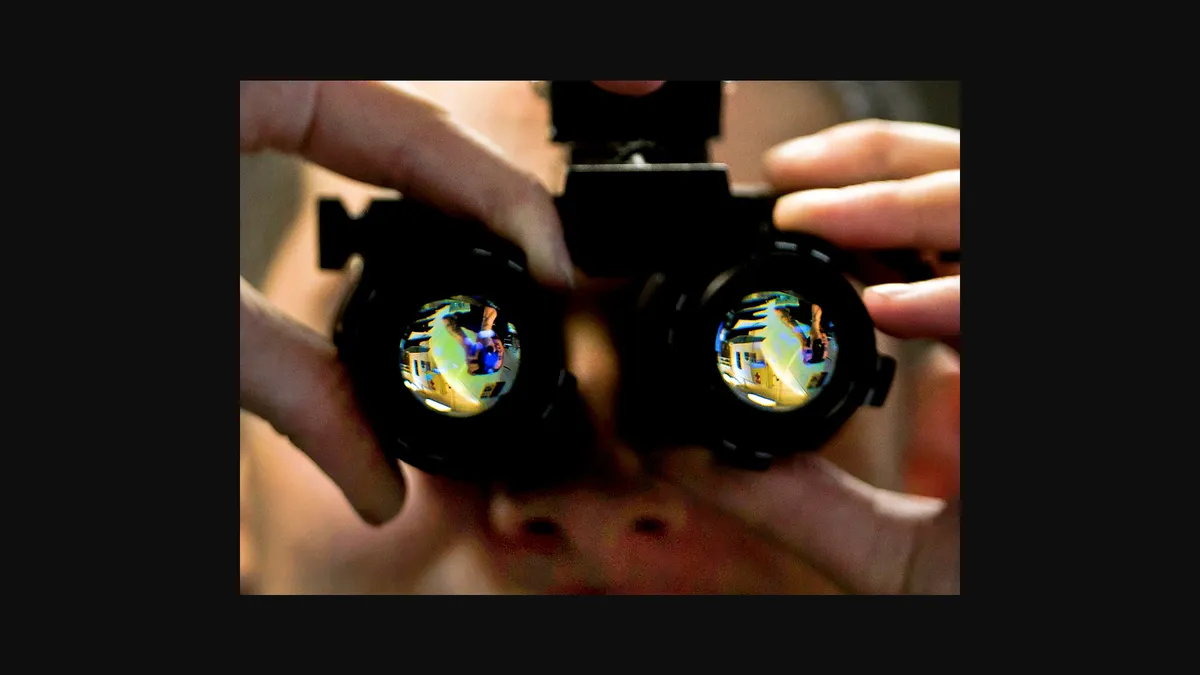
To show off, the researchers popped their tech into a pair of glasses. As infrared light hit the lens, it cycled from deep red to orange, then yellow. It could even pick out letters and track moving objects. Which, if you think about it, is both impressive and slightly terrifying.

But they didn't stop there. They even explored enhancing natural vision. They rigged up neurons to respond to blue light and then connected their upconverter. When infrared light hit the system, the device pumped out enough blue light to stimulate those neurons. Electrical recordings confirmed that the stronger the infrared signal, the stronger the neural response. Your move, science fiction.
They even taped the upconverter over the eyes of mice and humans, recording brain and retinal activity. Infrared pulses alone? Crickets. But with the device in place, both species reacted strongly. We’re talking about a device that could, potentially, give us a whole new sense.
Sure, it’s still in the lab, requiring external power and an infrared illuminator (someone has to create those reflections, after all). But the idea that we might soon swap grainy green for full-spectrum night vision, or even augment our own senses, is a pretty bright prospect. No pun intended. Mostly.