Two groups are moving slowly across continents, turning footsteps into a form of protest and prayer.
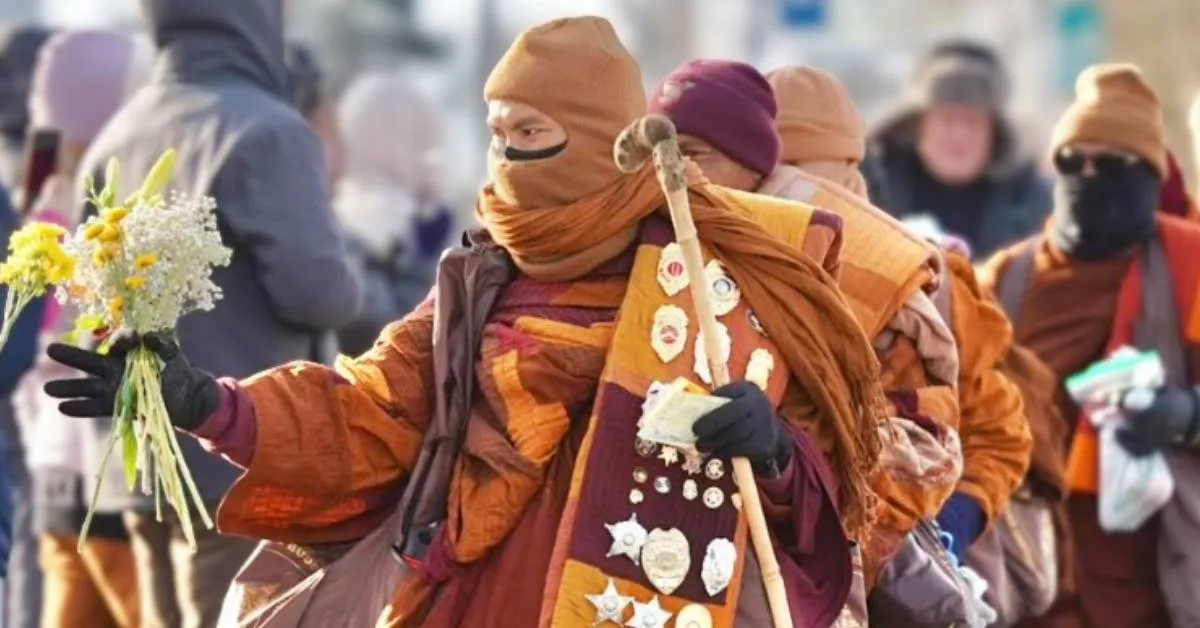
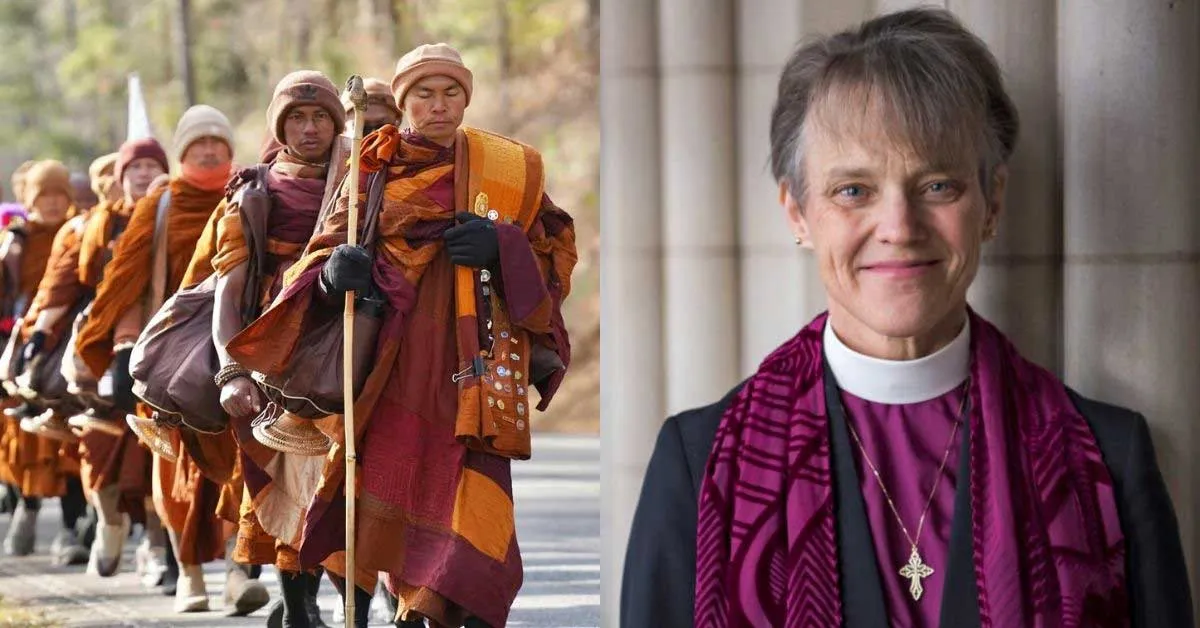
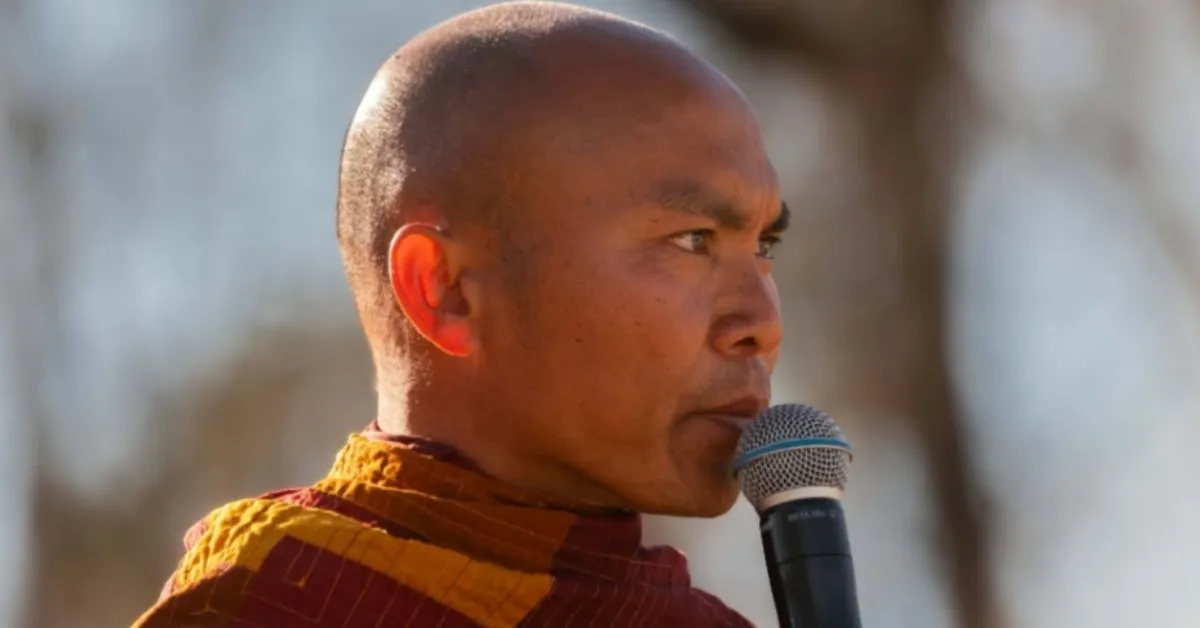
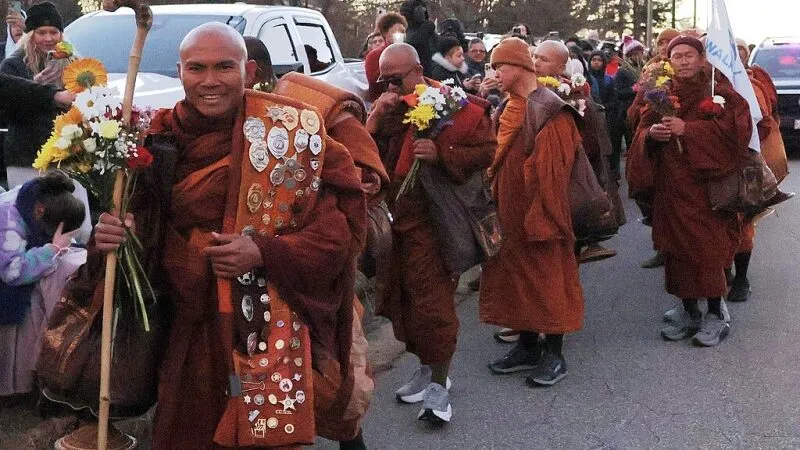
In late 2025, 19 Buddhist monks and a rescue dog named Aloka left Fort Worth, Texas, on a 3,700-kilometer journey across the American South. They're walking barefoot through towns and cities, moving deliberately — the way Theravada Buddhist tradition teaches — as a practice of meditation and compassion. Led by Bhikkhu Pannakara, the "Walk for Peace" has drawn 60,000 followers online, with live maps tracking their eastward progress toward Washington, D.C.
The walk isn't abstract. In one town after another, locals encounter the monastics in public spaces — silent, present, embodying a kind of quiet resistance to hurry and conflict. But the journey has been hard. A support vehicle was struck by a truck, injuring two monks; one required a leg amputation. The walk continues anyway.
We're a new kind of news feed.
Regular news is designed to drain you. We're a non-profit built to restore you. Every story we publish is scored for impact, progress, and hope.
Start Your News DetoxMovement as witness
Across the Atlantic, a similar act of solidarity unfolded. In January, two young men from South Sudan — Giel Malual and John Kuei — walked 1,126 kilometers from southern England to the Scottish Highlands. Their "Long Walk of Freedom for Sudan" took 33 days and raised over £100,000 for primary schools serving Sudanese children displaced by conflict and living in refugee camps in Chad.

Malual explained the walk's logic simply: it was a way to walk alongside the Sudanese children forced to travel long distances seeking safety. The journey drew support from community leaders, including Newcastle's former Lord Mayor, who used the walk as an opening to speak about the humanitarian crisis most media outlets had moved past.
What both walks share is something older than modern activism. Buddhist teachers like Thich Nhat Hanh and Maha Ghosananda understood pilgrimage as a form of engaged spirituality — not separate from the world, but moving through it with intention. These contemporary walks echo that tradition. They're slow enough to be noticed, deliberate enough to mean something, and public enough to create space for others to witness and join.
The monks are expected to reach Washington, D.C., by mid-February. Malual and Kuei have already arrived at their destination. But the real destination, in both cases, was never the endpoint. It was every step taken in public, every conversation sparked, every moment of choosing to move together toward something better than what we have now.