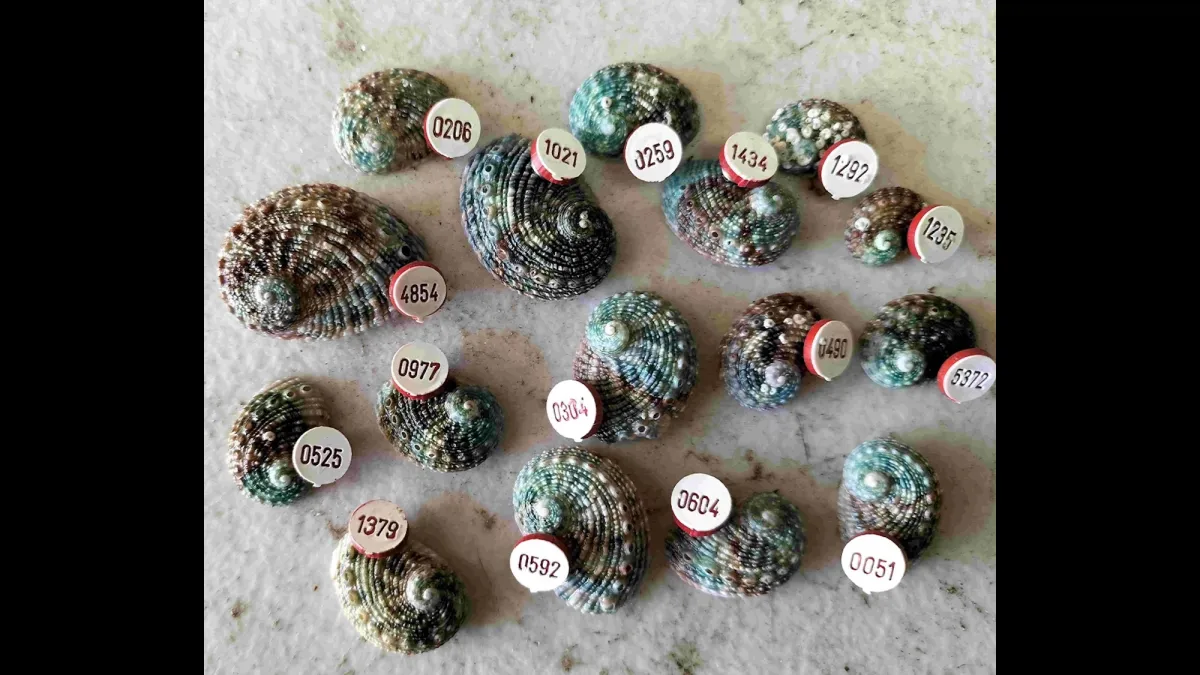
A plastic tag numbered 5247, etched in red ink and fused to a black abalone shell, turned up in the sand at Mettams Pool near Perth last week. Elisha Blott, a local resident, spotted the broken shell fragment and immediately recognized something unusual—a mollusk with a label, like it had been catalogued and released into the ocean.
She was right. The abalone she found is one of 7,000 bred in hatcheries and tagged since 2023 as part of a Western Australian government conservation effort. Each tag is a tiny archive: it holds the creature's birth date, length when tagged, age, and exactly where and when it was released into the wild.
A shell that grew around its own ID card
Attaching the tag required patience. Researchers mounted a plastic label onto a stainless steel spring, then secured the spring to the growing edge of the abalone's shell. Over months in hatchery tanks, the mollusk's calcium carbonate shell slowly grew around the spring, encasing the tag permanently. By the time these abalones were released into three locations near Perth, each one carried its own permanent record.
We're a new kind of news feed.
Regular news is designed to drain you. We're a non-profit built to restore you. Every story we publish is scored for impact, progress, and hope.
Start Your News DetoxAfter roughly three years in Australian waters, many have grown large enough to catch—or, like Blott's discovery, to wash ashore and surprise a beachgoer. The Western Australia Department of Primary Industries and Regional Development is now asking anyone who finds a tagged abalone to report it through an online portal. Every sighting becomes data.
Why this matters: Black abalone populations have declined sharply across their range, making them endangered. Wild populations are fragmented and under pressure. By tracking thousands of tagged individuals, scientists can measure how well these hatchery-bred snails survive in the ocean, how fast they grow, and where they end up. It's a way of asking the question directly: does breeding and releasing work for this species.
Each report—whether from a fisher, a beachcomber, or someone sorting through tide pools—adds another data point to the survival story. Blott's find was probably just one of hundreds that will eventually reach DPIRD's database, quietly building a clearer picture of whether this conservation strategy is working.