Water has always been a hot topic in California. For over a century, people have argued about how much water should go to farms, cities, or natural ecosystems. These arguments have even turned violent at times.
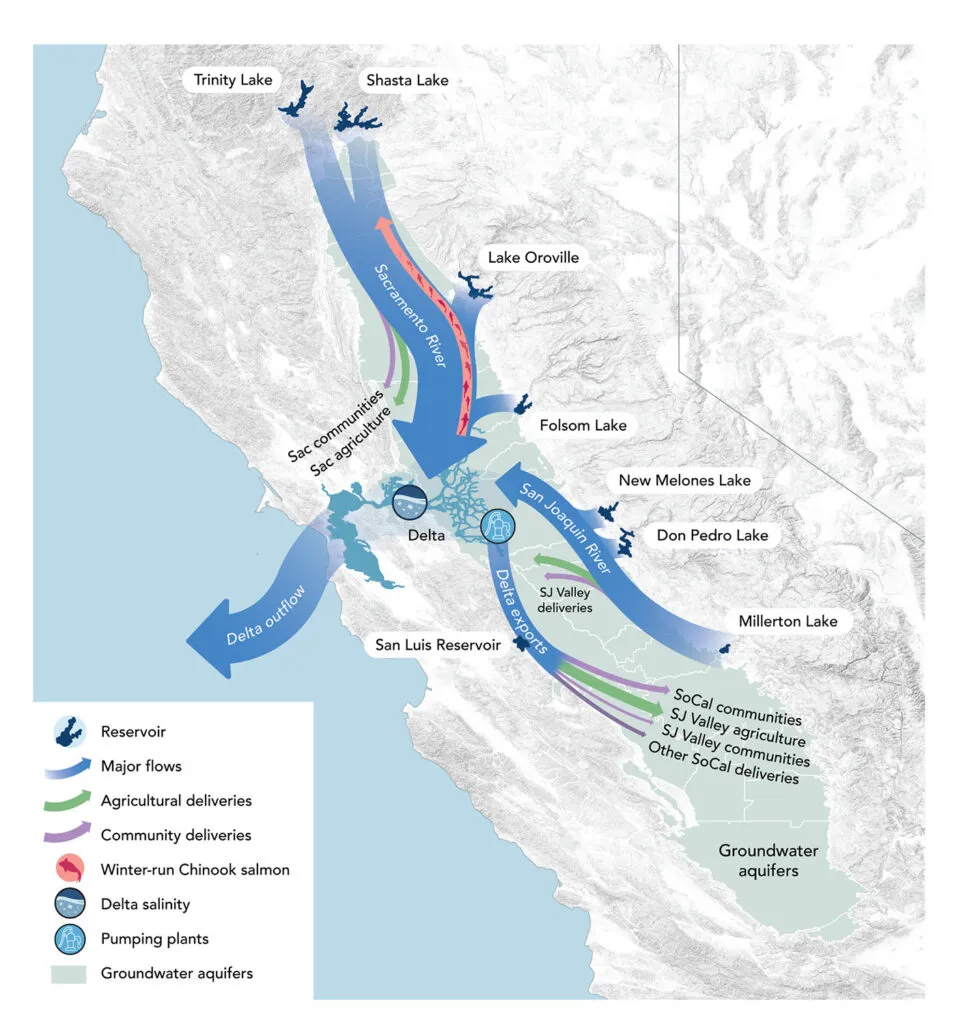
California's water system is very complex, with many reservoirs, rivers, dams, and aqueducts. This makes it hard for anyone, even experts, to understand what happens when different management choices are made.
Climate change is making California's dry and wet periods even more extreme. After a decade of severe drought, the state is now preparing for a super El Nino, which is expected to bring heavy rainfall this winter.
We're a new kind of news feed.
Regular news is designed to drain you. We're a non-profit built to restore you. Every story we publish is scored for impact, progress, and hope.
Start Your News DetoxA New Tool for Water Management
A project led by UC Berkeley wants to help all Californians understand the state's water system. It also aims to give them a voice in how this important resource is used. The Collaboratory for Equity in Water Allocation (COEQWAL) team has worked for three years with groups across the state.
They are creating tools to show where California's water goes. These tools also illustrate the effects of different water priorities and how climate change will change the water landscape.
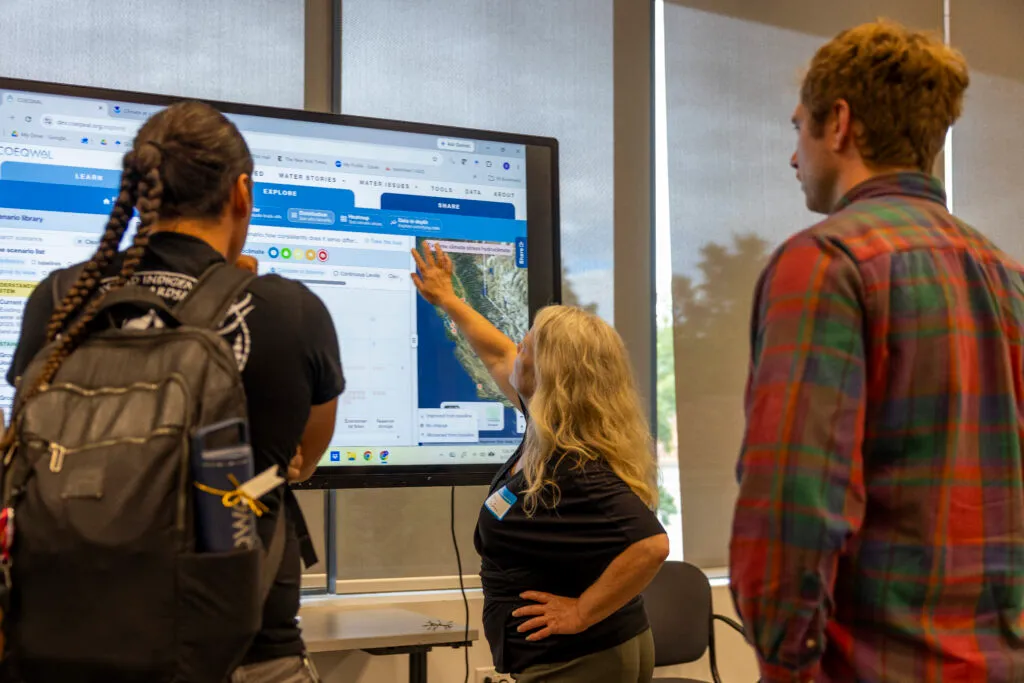
On September 3, the COEQWAL team launched a new website. It offers learning modules and guides about California's water system.
The website also shows the results of over 100 water management plans. These plans were modeled using the California Department of Water Resource’s CalSim 3 tool. The public can now explore how specific water policies might affect water users and ecosystems. This includes things like limiting groundwater pumping or increasing river flows to protect salmon.
Ted Grantham, a professor at Berkeley and project lead, explained that CalSim is a very complex model. It was hard for anyone but specialized engineers to use. He said a main goal was to explore more scenarios than the Department of Water Resources had published. This helps people understand current water management and what's possible in the future.
The team worked with nearly 100 organizations to design these scenarios. They held workshops to learn about different groups' water priorities. The scenarios look at various approaches. These include increasing river flows for fish, improving access to drinking water, and the effects of rules on sustainable groundwater use and protecting the Sacramento-San Joaquin River Delta.
Jonathan Rosenfield, science director at San Francisco Baykeeper, noted that it's rare to be asked to manage water for entirely different priorities. He said this project is a real example of the university helping the public and decision-makers understand their choices.
All the findings are on the COEQWAL website. Users can filter and explore scenario outcomes and trade-offs using advanced data visualization tools.
Morgen Snyder, director of policy and programs at Restore the Delta, said having access to this modeling is powerful for small organizations. She was impressed by how the COEQWAL team brought together many different groups, including water contractors, environmental justice groups, and tribal organizations, to find a common path forward using science.
Surprising Resilience and Future Focus
Grantham hopes the tool will lead to more informed discussions about California's water future. He also wants it to clear up simple arguments and misunderstandings about what could happen if priorities change.
He was surprised to find that the system was often more resilient than expected. This might be because the state's many waterways are deeply connected.
Grantham noted that many strategies don't have as big an impact as people might think. He said it shows that sustainably managing groundwater, protecting the environment, or ensuring clean drinking water for everyone won't cause the entire system to collapse. These actions may have trade-offs, but they are manageable.
The COEQWAL project team has received a grant from the Delta Science Program to continue their work. They will now focus on working with tribal communities and better modeling Indigenous relationships with water. During workshops, the team learned that models like CalSIM don't fully show how Indigenous nations see water as part of interconnected ecological and cultural systems.
Grantham wants to explore how to better include these values and relationships into the models. He hopes to highlight that these systems are more than just water moving from one place to another.
COEQWAL is a large research effort involving many institutions. These include Berkeley, UC Agriculture and Natural Resources, UC Davis, UC Merced, UC Santa Cruz, UC San Diego, UCLA, California State University, and others.