England is deploying its first dedicated drone unit to hunt down illegal waste dumping operations — a problem that costs the UK economy £1 billion a year. The 33-strong team, equipped with lidar technology that maps waste sites in precise detail, represents a significant shift in how authorities are fighting organized waste crime.
The announcement comes on the back of a major conviction. Varun Datta, 36, from London, was sentenced at Birmingham Crown Court for orchestrating an illegal dumping scheme across 16 sites nationwide. Operating through his company Atkins Recycling Ltd — registered as a legitimate waste broker in 2015 — Datta diverted approximately 4,275 tonnes of waste to unlicensed dumps across seven counties, from Lincolnshire to Kent. He was ordered to pay £1.4 million in fines and compensation, received a four-month suspended sentence, and was handed 200 hours of unpaid work.
How the scheme worked and why it matters
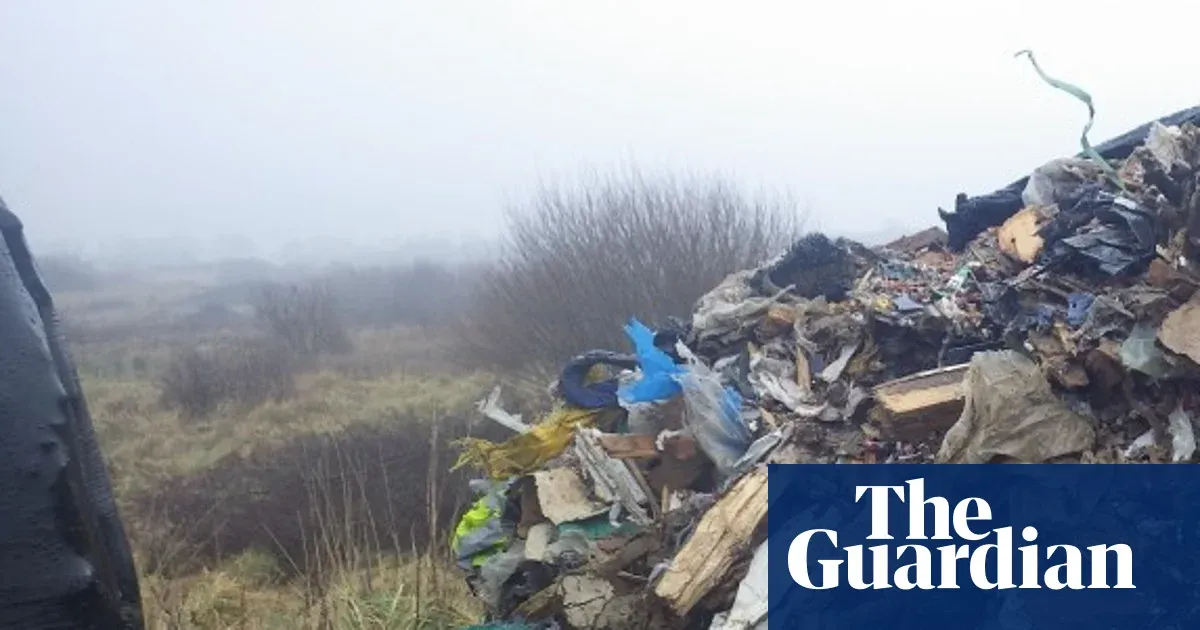
Datta's operation exploited a gap in the system: he'd claim waste loads were heading to a licensed site near Sheffield, then divert them to illegal dumps instead. The environmental toll was real. Judge Paul Farrer noted that smell and flies became persistent problems at several sites, affecting local air quality. Middleton nature reserve in Lancashire — a sensitive ecological area — was one of the dumping grounds. Landowners faced steep cleanup costs, and now £100,000 of Datta's compensation is being directed toward restoring the reserve.
We're a new kind of news feed.
Regular news is designed to drain you. We're a non-profit built to restore you. Every story we publish is scored for impact, progress, and hope.
Start Your News Detox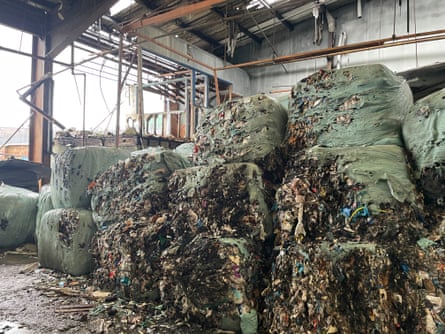
Illegal dumping by Datta's company at Rhyddings Mill, Oswaldtwistle, Lancashire. Photograph: Environment Agency
Two men were convicted alongside Datta. Mohammed Saraji Bashir, 45, of Peterborough, pleaded guilty to knowingly causing controlled waste to be deposited at three sites and received similar penalties. Robert William McAllister, 55, of London, was fined £750 for failing to comply with waste broker duties. Two other suspects remain under investigation.
The Environment Agency's response is escalating. Its joint investigations unit for waste crime has expanded from a handful of specialists to 20 dedicated officers. Phil Davies, heading the unit, describes the new approach bluntly: "With organised criminals becoming ever more sophisticated, we are adopting new technologies to find and, importantly, stop them." The drone unit, stronger partnerships between agencies, and more ground-level enforcement are designed to send a message that waste crime has become too risky.

Bricks and rubble were dumped at the Westwood business park in Margate, Kent. Photograph: Environment Agency
What makes this moment significant isn't just one conviction — it's the infrastructure shift behind it. Enforcement agencies are moving from reactive cleanup to proactive detection. Lidar-equipped drones can identify illegal sites faster than ground patrols, and a larger specialist unit means investigations can actually follow through. For communities near dumping grounds, that's the difference between years of cleanup costs and prevention.