For decades, PFAS—the synthetic chemicals that make non-stick pans and waterproof jackets possible—have accumulated in drinking water with no easy way to remove them. These "forever chemicals" don't break down naturally, and they've been linked to liver damage, reproductive problems, and immune system disruption. Current cleanup methods are slow, inefficient, and create their own waste problem. Now researchers at Rice University and Korean institutions have developed a material that changes that equation entirely.
The breakthrough centers on a layered compound made from copper and aluminum. When Korean professor Keon-Ham Kim first synthesized this material in 2021, it seemed like a curiosity. But when Rice researcher Youngkun Chung tested it against PFAS, the results were startling: it captured the chemicals more than 1,000 times more effectively than existing materials, and did it roughly 100 times faster than commercial carbon filters. Instead of hours, the material removed large amounts of PFAS within minutes.
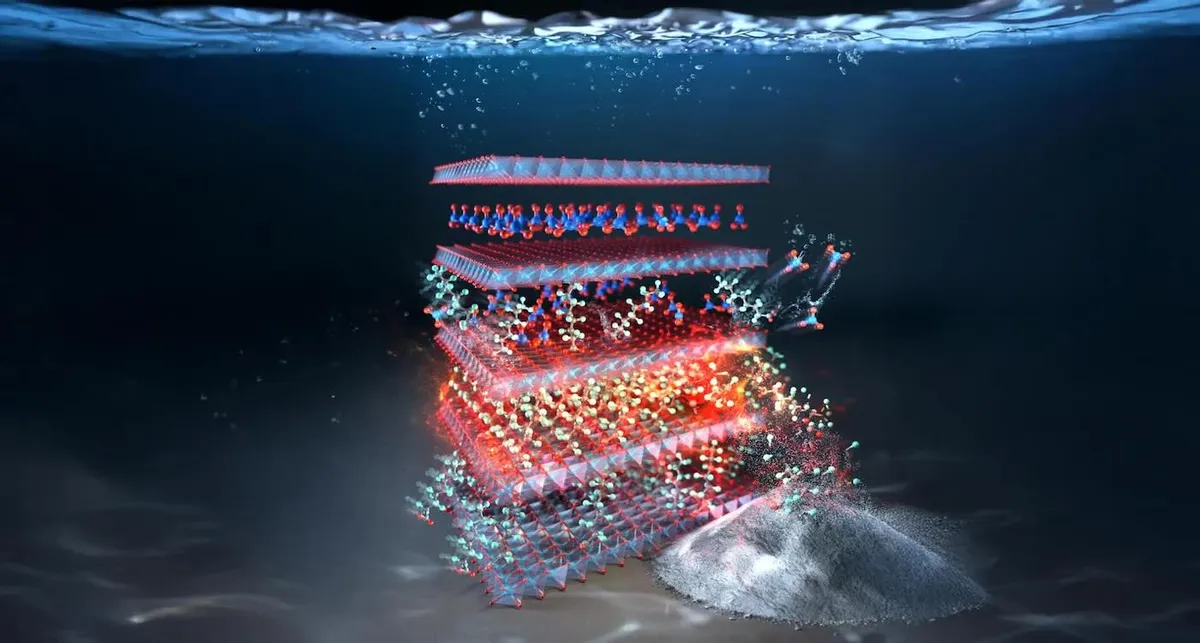
The material works because of its internal structure. The organized copper-aluminum layers create slight charge imbalances that act like magnets for PFAS molecules, pulling them in with both speed and strength. When the team tested it in river water, tap water, and wastewater—both in static tanks and in continuous-flow systems—it performed consistently well across all conditions.
We're a new kind of news feed.
Regular news is designed to drain you. We're a non-profit built to restore you. Every story we publish is scored for impact, progress, and hope.
Start Your News DetoxCapturing is only half the battle
Removing PFAS from water solves one problem. Destroying them safely solves another. The Rice team developed a method to thermally decompose the captured chemicals by heating the saturated material with calcium carbonate. The process eliminated more than half of the trapped PFAS without releasing toxic byproducts. Better still, the heating process regenerated the material itself, allowing it to be reused.
Early tests showed the material could complete at least six full cycles of capture, destruction, and renewal—making it the first known system that both removes PFAS and regenerates itself sustainably. "It's a rare one-two punch against pollution," as Science Daily put it. The findings, published in Advanced Materials, suggest the technology could scale to municipal water treatment plants and industrial cleanup operations.
What makes this moment significant isn't just the chemistry. It's that the solution addresses a real constraint of current methods: they work, but they create waste, they're slow, and they're expensive to operate at scale. This material doesn't solve forever chemicals overnight, but it removes a major barrier to treating contaminated water sources. The next phase is moving from the lab to real-world water systems—testing whether what works in controlled conditions works when deployed in actual communities dealing with PFAS contamination.