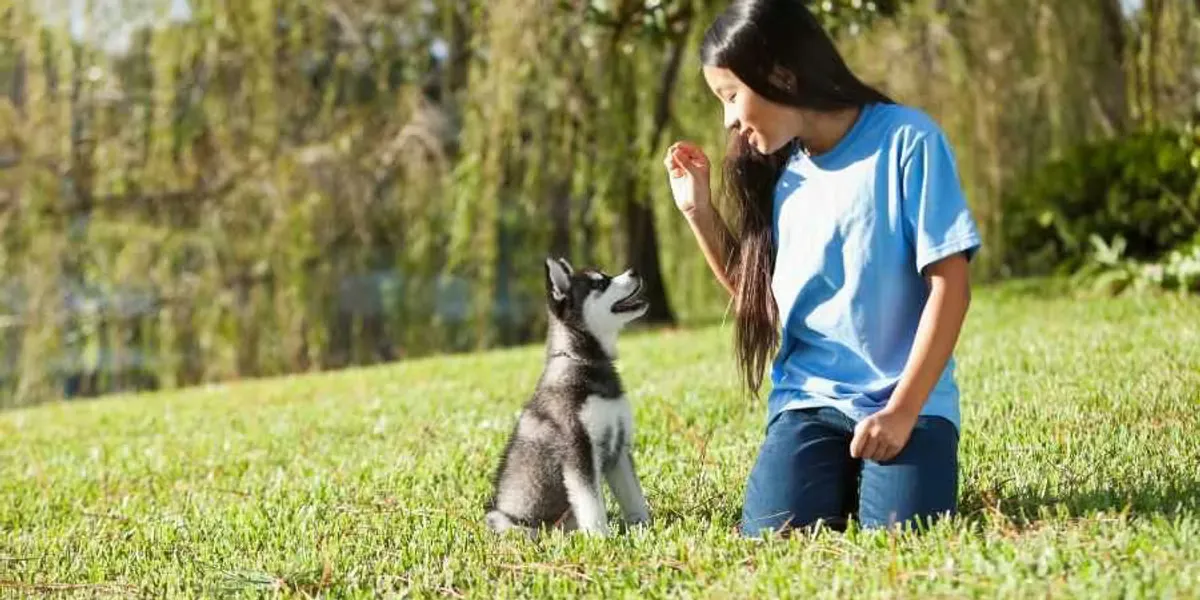
Your dog isn't just hoping you'll throw the ball. By eight weeks old, puppies are already scanning your face, reading your gestures, and anticipating what you want—often before you've said a word.
A five-year study from Duke's Canine Cognition Lab tracked 100 golden retriever puppies from 8 to 20 weeks old, testing them every two weeks to map how their ability to understand human communication develops. What researchers found was striking: puppies show an almost uncanny knack for reading human intention remarkably early, a skill that emerges much sooner than previously believed.
"They are really tuned in to our communication, and they are prepared to look to us for information," explains Hannah Salomons, the PhD student who led the research with the Duke team. The lab measured this by watching how puppies made eye contact, responded to human gestures, and tracked where humans were looking—essentially testing whether dogs could follow our social cues without explicit instruction.
We're a new kind of news feed.
Regular news is designed to drain you. We're a non-profit built to restore you. Every story we publish is scored for impact, progress, and hope.
Start Your News DetoxWhat makes this finding even more interesting is how uniquely dog this ability is. Wolf puppies, even those raised around humans, don't develop the same level of attunement at the same age. This suggests that somewhere in the 15,000 to 40,000 years since dogs diverged from wolves, they evolved a specific gift for reading us.
The socialization question
One of the study's most reassuring findings came from an unexpected comparison. Some puppies were raised in typical family homes, while others spent their early weeks at Duke University, exposed to hundreds of students and staff. The researchers expected the home-raised puppies to be more socially attuned. They weren't. Both groups developed the same communication skills at roughly the same pace.
"You're enough for your dog, and giving them a nice, loving home is going to help them develop really well," Salomons says. The implication is quiet but important: you don't need to engineer your puppy's social development or expose them to dozens of people to help them bond with you. A consistent, attentive human is what matters.
This reframes what dog owners often feel guilty about—the worry that their dog isn't getting "enough" socialization. The research suggests that what your dog is actually seeking is you: your attention, your consistency, your face. That's what their brain is wired to read from the moment they're old enough to focus their eyes.
The next phase of this research will likely dig deeper into which specific skills emerge when, and how individual differences between dogs shape their ability to read human cues. For now, the takeaway is simpler: your dog's intelligence has been quietly developing since they were a tiny thing, and much of it has been spent learning how to understand you.