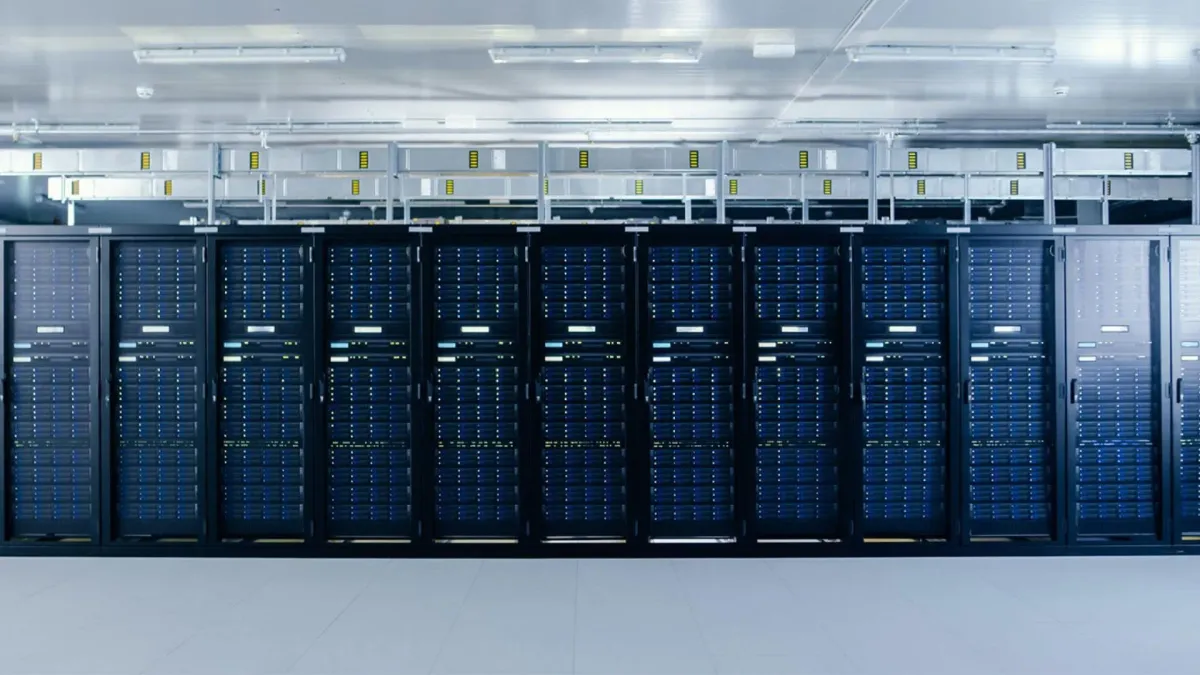
Researchers at NYU Tandon have cracked a problem that's been quietly draining electricity grids: data centers need enormous amounts of power just to stay cool, and most of that energy gets wasted. A thermal battery system using cheap, porous zeolite crystals could change that by capturing waste heat from nearby factories and refineries instead.
Here's how it works. Industrial sites like chemical plants produce low- to medium-temperature waste heat (below 200°C) that usually just dissipates into the air. That heat "charges" zeolite by drying it out, turning the material into a thermal sponge. Trucks or trains then transport the charged zeolite to data centers—and here's the clever part—where it replaces the electricity-hungry compression chillers that normally do the cooling. When a server room needs to cool down, water evaporates and the zeolite absorbs the vapor, acting as a heat sink. The result: 86% less electricity for cooling, and 75% less overall electricity use across both facilities.
The logistics actually work. A geospatial analysis of U.S. facilities found that the median distance between a data center and the ten nearest industrial sites is just 57 kilometers. That's close enough to transport charged zeolite economically while still saving 40% of the electricity that cooling would normally consume. For data centers, this translates into a 12% improvement in power usage effectiveness—the industry standard for measuring efficiency.
We're a new kind of news feed.
Regular news is designed to drain you. We're a non-profit built to restore you. Every story we publish is scored for impact, progress, and hope.
Start Your News DetoxWhy This Matters Now
Data centers are the invisible engine of modern life, but they're also energy hogs. As AI and cloud computing demand explodes, cooling costs keep climbing. This isn't just about electricity bills. It's about grid stability. If data centers keep growing at current rates without efficiency gains, they'll need dedicated power plants just to stay operational. Zeolite thermal batteries reframe the problem entirely: instead of asking "how do we cool this building," they ask "how do we move heat around." That shift opens up a whole supply chain. Industrial waste heat becomes a tradeable commodity. A refinery's exhaust becomes a data center's cooling resource.
There is a water trade-off. The combined system uses 15–25% more water overall because evaporation is central to the cooling process. But the researchers note that water released during zeolite charging can be reused on site, and the industrial facility itself uses dramatically less water because its waste heat is being captured instead of dumped through cooling towers. It's not a perfect solution, but it's a genuine improvement.
Unlike other heat storage methods that degrade over time, zeolite retains its thermal potential until water is introduced. That means charged zeolite can travel hundreds of miles without significant energy loss, making it genuinely transportable in ways other thermal storage systems aren't.
The team has moved beyond lab models and is now working with industry leaders on real-world scaling. If this works at scale, data centers won't need to choose between growth and efficiency. They'll simply plug into a new infrastructure that turns industrial waste into a resource.