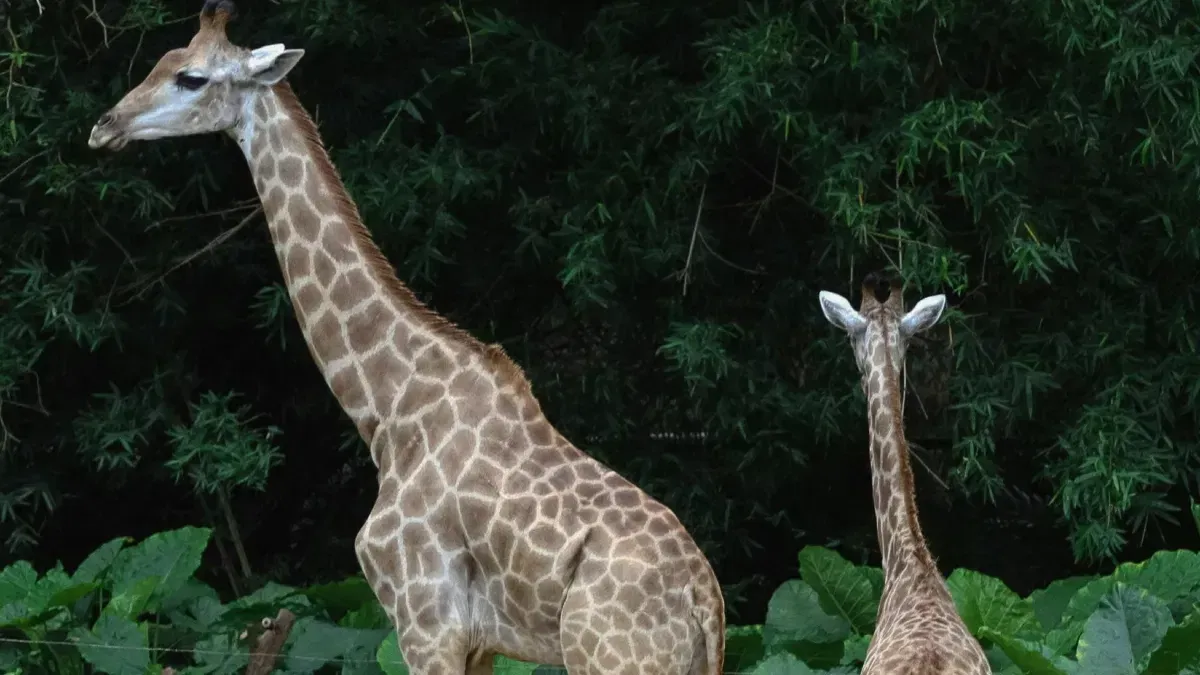
A month into his life, Eugene—a 130-pound reticulated giraffe born at the Toledo Zoo—has already become the internet's unlikely style icon. His claim to fame isn't his spots or his impressibly long tongue, but a tuft of black hair that parts naturally down the middle, giving him the appearance of a small, four-legged gentleman who showed up to the savanna already dressed for something.
Eugene arrived on January 17 to first-time mother Lily and father Rocket, who fathered Franklin two years earlier. The zoo's neonatal exam cleared both mother and calf as healthy, and keepers have already introduced Eugene to his herd—Franklin, Charlotte, Michelle, Ellie, and Rae—with no complications.
What's remarkable about Eugene's arrival isn't just his unusual hair situation. Giraffe pregnancies last roughly 15 months, making every birth a significant commitment. For Lily, this was her first calf. For the Toledo Zoo, Eugene represents part of a broader conservation effort: reticulated giraffes have seen their wild population decline by nearly 50 percent over the past three decades, mostly due to habitat loss and poaching. Zoos participating in breeding programs like this one help maintain genetic diversity and contribute to knowledge that could eventually support wild populations.
We're a new kind of news feed.
Regular news is designed to drain you. We're a non-profit built to restore you. Every story we publish is scored for impact, progress, and hope.
Start Your News DetoxBut mostly, people are just delighted by how ridiculous he looks. Social media users have suggested he needs a bow tie for picture day, joked about his "toupee," and marveled that "Eugene really came out lookin' like a Eugene." The Toledo Zoo leaned into the charm, announcing him with the kind of warmth that's made their social media feed a refuge for people tired of scrolling through bad news.
Visitors are already planning spring trips to meet him in person. For a moment when much of the conversation around wildlife centers on what we're losing, Eugene is a reminder that some places are still building—still welcoming new life, still giving people a reason to show up and look.