Astronomers have just assembled the largest image ALMA has ever created—a sweeping view of the region around our galaxy's supermassive black hole that reveals something unexpected: the cosmic gas there is far richer and more intricate than anyone predicted.
The image stretches across 650 light-years and was built by combining hundreds of individual observations from the Atacama Large Millimeter/submillimeter Array, a network of radio telescopes high in Chile's desert. What makes this particular view remarkable isn't just its size. It's what it shows. In the cold molecular gas clouds surrounding the black hole, researchers identified dozens of molecules—from simple silicon monoxide to more complex organic compounds like methanol and acetone. The complexity caught the team off guard.
"We anticipated a high level of detail when designing the survey, but we were genuinely surprised by the complexity and richness revealed in the final mosaic," says Katharina Immer, an ALMA astronomer at the European Southern Observatory.
We're a new kind of news feed.
Regular news is designed to drain you. We're a non-profit built to restore you. Every story we publish is scored for impact, progress, and hope.
Start Your News Detox
Why the galactic center matters
The region they mapped, called the Central Molecular Zone, sits in one of the harshest environments in our galaxy. Stars here live dramatically different lives than they do elsewhere. They form faster, burn hotter, and die younger—often in catastrophic supernova explosions. Understanding how stars manage to form at all under these extreme conditions has puzzled astronomers for years.
"The CMZ hosts some of the most massive stars known in our galaxy, many of which live fast and die young," explains Steve Longmore, the project's leader at Liverpool John Moores University. But here's where it gets interesting: the conditions in the galactic center now may closely resemble what was happening in galaxies billions of years ago, when the early universe was assembling itself. By studying star birth near a supermassive black hole today, researchers gain a window into how galaxies grew and evolved in the cosmic past.
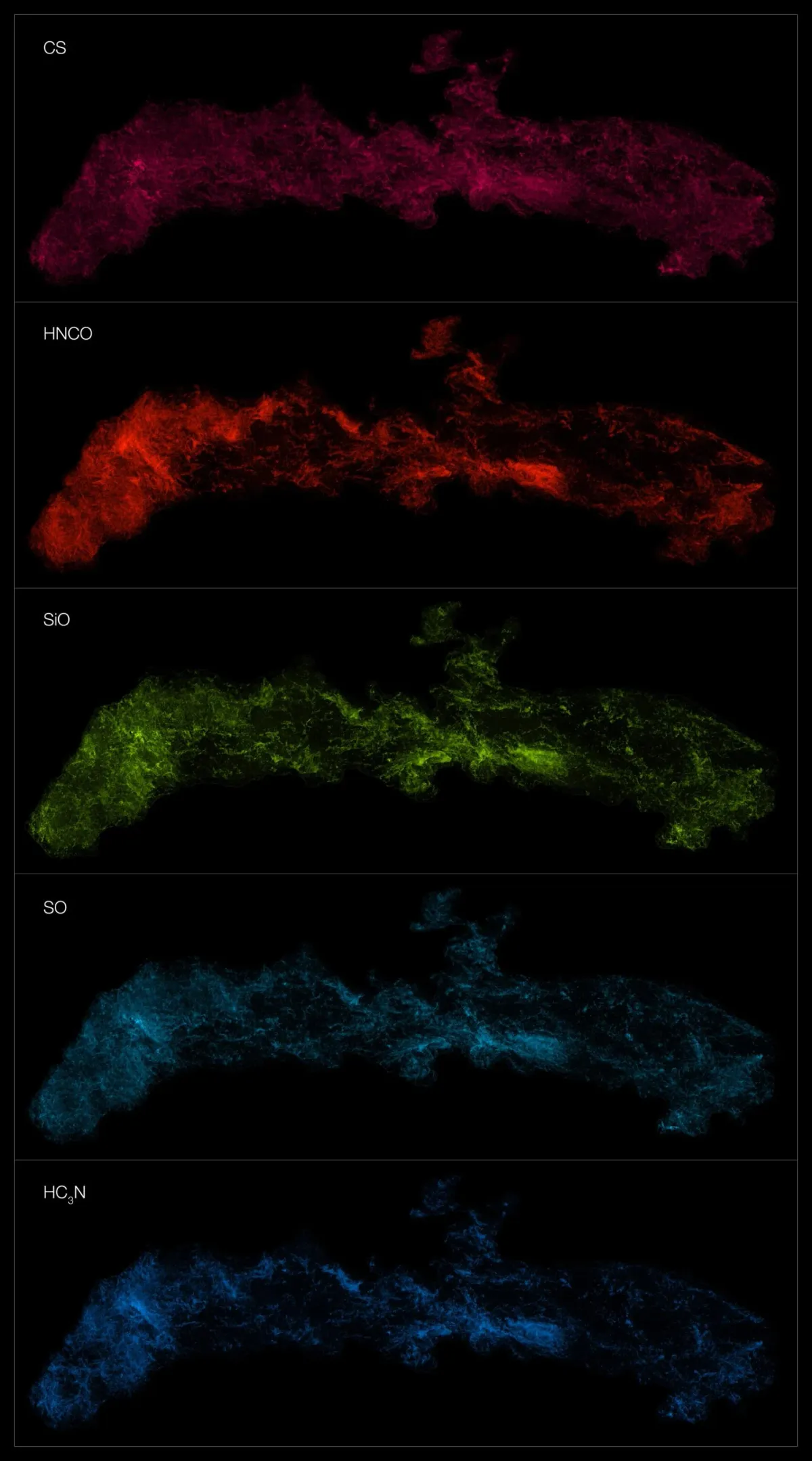
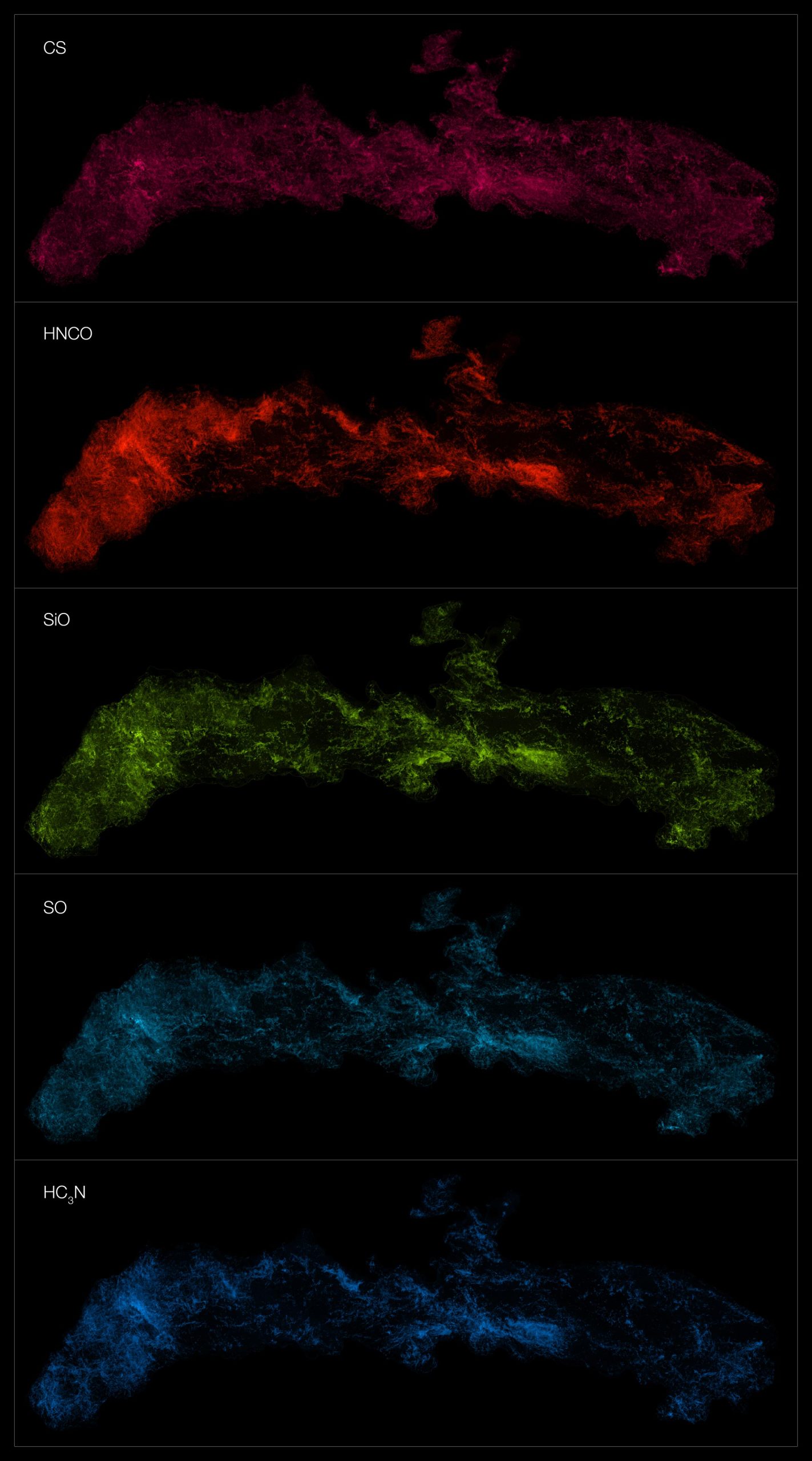
The observations focused specifically on cold molecular gas—the raw material from which stars form. In the galactic center, this gas streams along long filaments and clumps into dense pockets where new stars ignite. The new ALMA data mapped this material across the entire region with unprecedented precision for the first time, capturing structures ranging from enormous formations dozens of light-years across down to smaller clouds orbiting individual stars.
This project, called ACES (the ALMA CMZ Exploration Survey), involved more than 160 scientists from over 70 institutions across six continents. The data they collected is now publicly available, meaning researchers worldwide can dig into it to answer questions the original team never thought to ask.
What comes next will be even more revealing. New upgrades to ALMA, along with ESO's upcoming Extremely Large Telescope, will allow astronomers to resolve finer structures and trace even more complex chemistry in the galactic center. "In many ways, this is just the beginning," says Ashley Barnes, an astronomer at ESO and member of the research team.