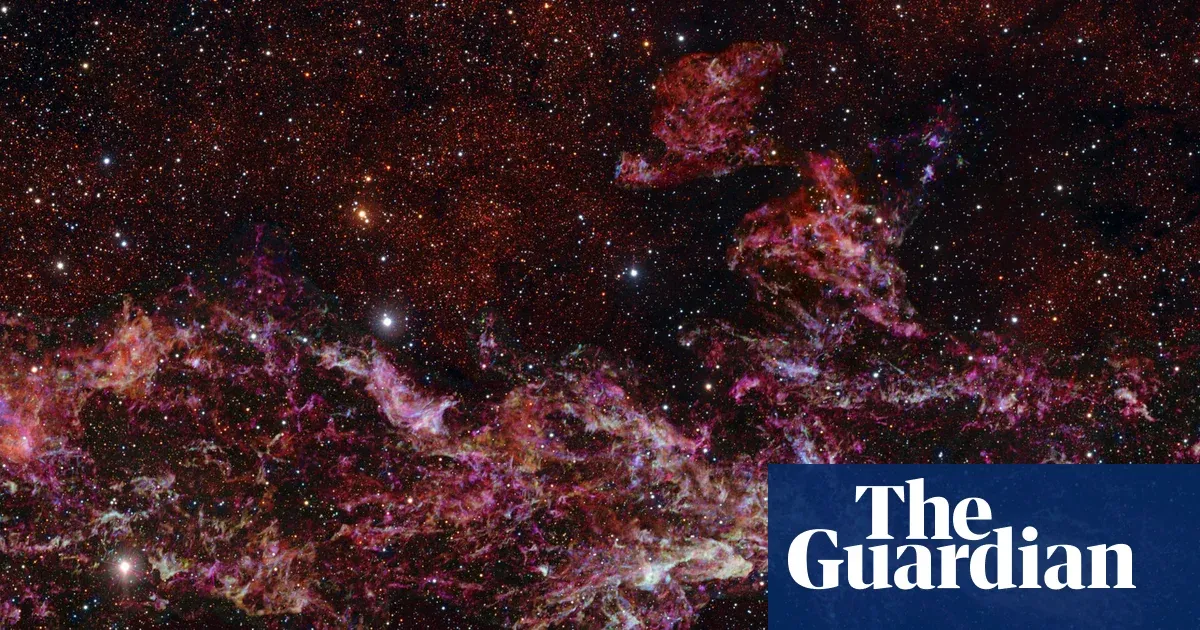
Scientists have captured the most detailed image ever of our galaxy's core—a photograph so vast it required the Atacama Large Millimeter/submillimeter Array (Alma) in Chile to stretch beyond its previous limits. The image reveals something that has been invisible until now: the actual architecture of how stars and planets form at the heart of the Milky Way.
This matters because the galactic center is a cosmic time machine. "The conditions there—extreme temperatures, pressures, turbulence—mirror what we see in galaxies from the early universe, when most stars were being born," says Steven Longmore, an astrophysicist at Liverpool John Moores University who led the survey. "Those distant galaxies are too far away to see individual star formation. But here, in our own backyard, we can watch it happen."
For decades, researchers could only see fragments. Longmore describes it like having snapshots of individual streets with no map of the city. One team might spot a gas cloud, another might find a star-forming region, but nobody could see how the pieces connected. Over several years, more than 160 scientists collaborated to stitch together a complete picture of the galactic center through the Alma CMZ Exploration Survey.
We're a new kind of news feed.
Regular news is designed to drain you. We're a non-profit built to restore you. Every story we publish is scored for impact, progress, and hope.
Start Your News DetoxWhat emerged was unexpected. Long, thin filaments of matter—streams flowing through space—became visible for the first time. These aren't random. They're the highways along which gas moves to fuel the creation of stars and planets. "That was surprising," Longmore says. "We could finally see how it all connects."
What's striking is that the image works on two levels at once. It's visually arresting—the kind of photograph that makes you stare. But embedded in those colors and shapes is the physics itself. Where gas clouds collide, young stars ignite in the middle. The beauty and the science aren't separate; they're the same thing.
The team is already planning the next phase. By combining observations across different wavelengths—each color revealing different physical information—they can start to trace cause and effect. A collision between gas clouds, a burst of star formation right at the impact point. The story written in light.
They've requested time on the James Webb Space Telescope, though Longmore is realistic: the telescope is oversubscribed, and competition is fierce. The Extremely Large Telescope, currently under construction in Chile, may offer another window when it comes online. Either way, this image is just the beginning of seeing our galaxy the way it actually is.