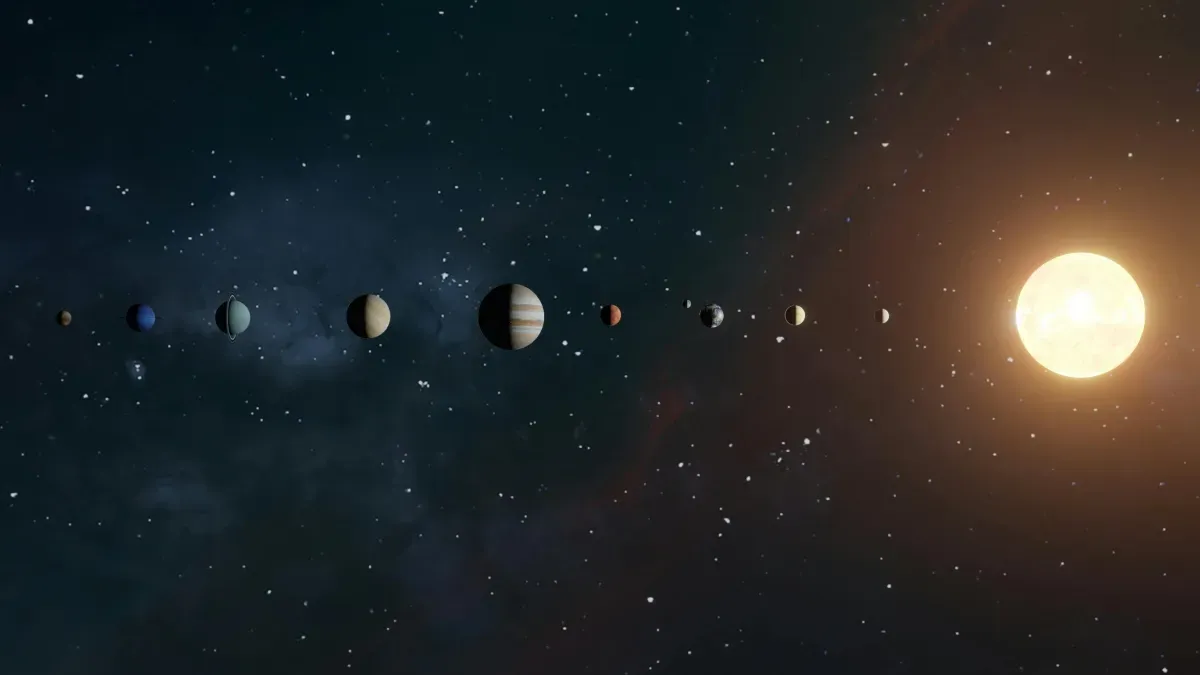
For the next few days, if you step outside about half an hour after sunset and look west, you'll see something most people never do: six planets hanging together in the same patch of sky.
Mercury, Venus, Neptune, Saturn, Uranus, and Jupiter are lining up in what astronomers call a planetary parade. It's not that the planets have actually moved into some cosmic formation — they're just positioned from Earth's perspective so we can see them all at once. These alignments happen, but not often, and when they do, they tend to pull people outside.
Why This Matters Right Now
NASA's Chandra X-ray Observatory released new data on February 25 that helps explain what's happening during these moments. While Chandra is famous for studying black holes and extreme cosmic objects, it also watches our own solar system closely. The Sun constantly emits X-rays that bounce off planets, moons, and other bodies — giving astronomers a view of physics they can't see any other way. Right now, with six planets visible together, that reflected light tells a fuller story of how our corner of space is arranged.
We're a new kind of news feed.
Regular news is designed to drain you. We're a non-profit built to restore you. Every story we publish is scored for impact, progress, and hope.
Start Your News DetoxThe best window for watching is tight: look toward the western horizon about 30 minutes after sunset. That's when Saturn, Mercury, and Venus are still high enough to spot clearly before they dip below the horizon. If you wait much longer, you'll miss them. If you go out earlier, the sky won't be dark enough to see the fainter planets.
This kind of moment — rare enough to feel special, accessible enough that anyone can step outside and see it — is why people still look up. There's no equipment needed, no special knowledge required. Just a clear evening and a few minutes of attention. The planets will keep moving, the alignment will break, and it'll be years before this particular arrangement happens again.