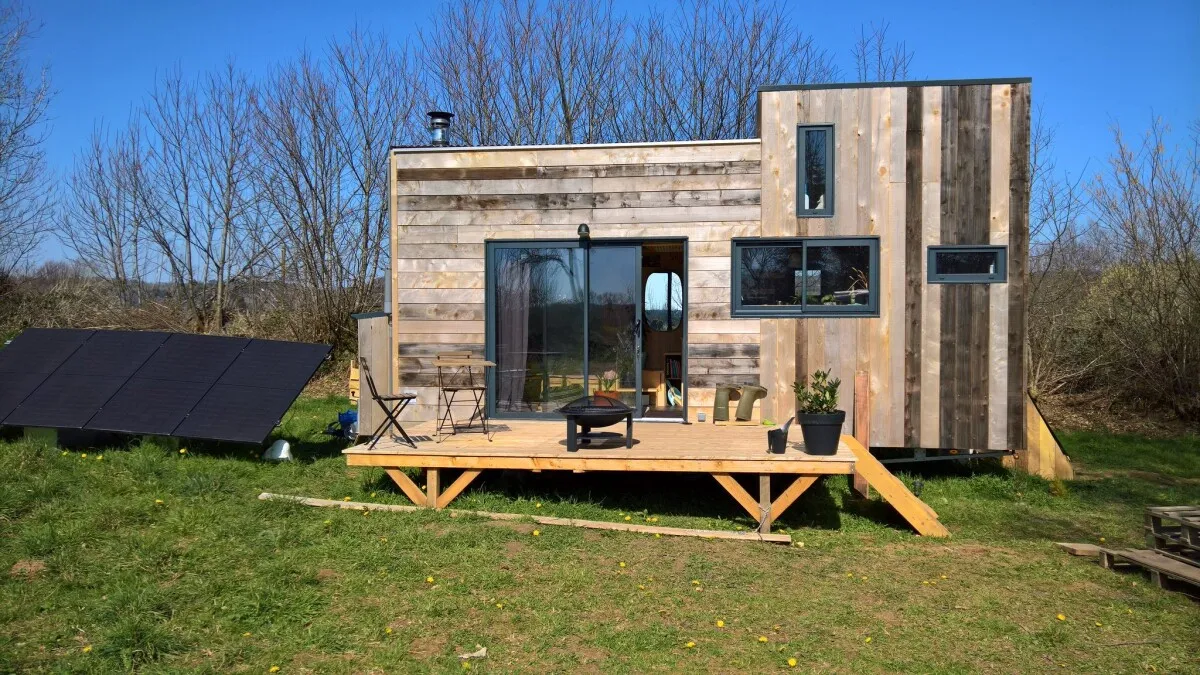
The Chillhouse is a 6.6-meter towable home that does something most tiny houses don't: it actually lives without plugging into the grid. Built by Quebec-based Atelier Bois d'ici, it's designed for two people who want to move through the world without leaving a utility bill behind.
What makes this different from the usual Pinterest-friendly tiny house is that it's built to function independently. Power comes from a combination of solar panels (positioned on the ground rather than the roof, which means they can be transported separately), a wind turbine, battery storage, and an inverter. There's a large freshwater tank and a propane boiler for hot water. The systems aren't flashy, but they're practical—the kind of setup that works whether you're parked in a forest or a field.
Living in the Real World
The interior photographs show something rarely seen in tiny house marketing: actual life. There are dishes in the sink, laundry hanging, houseplants on shelves, books stacked on surfaces. This isn't a styled showroom—it's a home someone actually lives in, which makes it more credible than the usual minimalist aesthetic.
We're a new kind of news feed.
Regular news is designed to drain you. We're a non-profit built to restore you. Every story we publish is scored for impact, progress, and hope.
Start Your News DetoxThe layout is tight but thoughtful. A wood-burning stove handles heating. The kitchen has a two-burner cooktop, oven, fridge, and surprising amounts of cabinetry. The bathroom—shower, sink, toilet—fits in the rear. There's one bedroom accessed via a storage-integrated staircase, and a netted loft space above the kitchen adds a few extra square meters of living area without expanding the footprint.
This sits in the middle ground for European tiny houses, though it would feel quite small by North American standards. The wood exterior, aluminum windows, and metal roof are built to last, not just to look good on Instagram.
The Chillhouse has already been delivered to its first owner. What's interesting isn't that this home exists—tiny house builders have been experimenting for years—but that the off-grid systems are becoming standard equipment rather than an afterthought. As more people look for ways to live with lower environmental impact and less financial overhead, homes designed from the ground up for self-sufficiency are starting to feel less like a niche experiment and more like a practical option.