Last fall, a good Samaritan found a young great horned owl stuck in a concrete mixer in St. George, Utah. A quarter of his body was covered in dried concrete, making him unable to fly.
To remove the concrete, the bird needed daily 20-minute baths while under anesthesia.
A Unique Challenge for Rescuers
The owl went to Utah’s Wild Friends sanctuary, a wildlife rehabilitation center. Once stable, rescuers hoped his damaged feathers would naturally replace themselves through molting. However, his spring molt did not go as planned.
We're a new kind of news feed.
Regular news is designed to drain you. We're a non-profit built to restore you. Every story we publish is scored for impact, progress, and hope.
Start Your News DetoxBart Richwalski, supervisor of Wild Friends, noted that his team had never seen a case like this in 40 years. Other wildlife rehabilitators also had no experience with an owl falling into concrete.
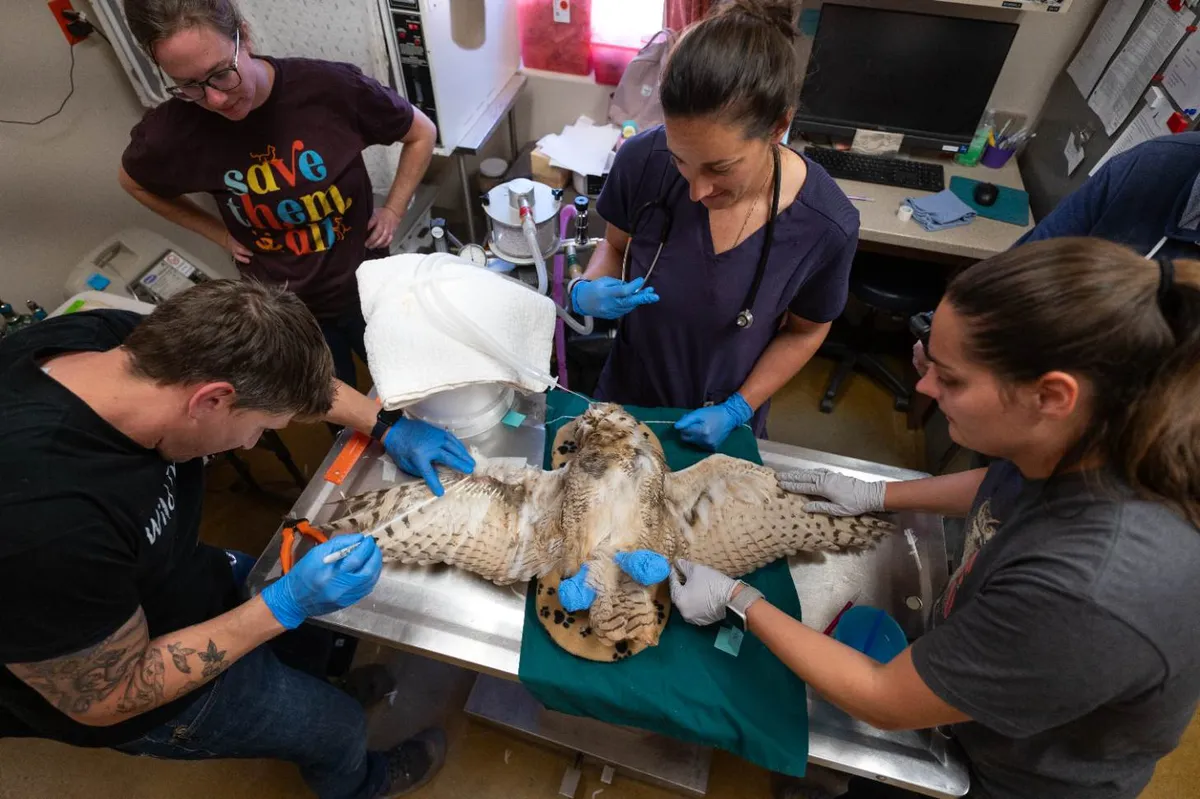
So, the Wild Friends team decided to try a new procedure called imping. This involves using donor feathers and adhesive to replace damaged feathers.
A wildlife rescue in Northern Utah provided feathers from a great horned owl of similar size that had died. Wild Friends veterinarians then studied their rescue owl’s feather patterns to understand his unique anatomy.
Richwalski explained that they checked his feathers every few weeks. This helped them know which ones needed replacing and allowed them to snip damaged shafts beforehand.
The Feather Transplant and Release
On May 1, the owl underwent a 90-minute imping procedure under anesthesia. Three experts carefully laid out donor feathers to match each wing. They cut them to the right length before attaching them to the owl.
Richwalski said the first few feathers were nerve-wracking. But as they continued, the process became smoother.
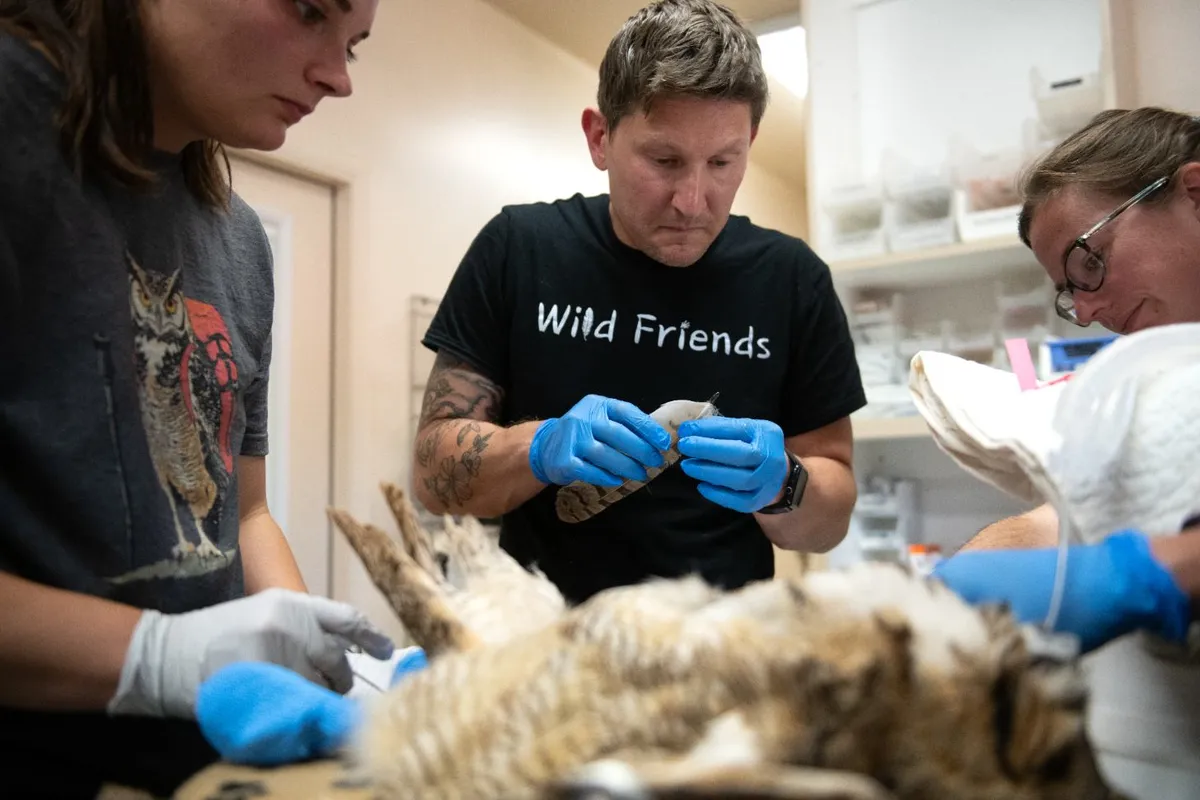
In total, 10 primary and one secondary feather were replaced on the owl’s right wing. The left wing did not need any replacements.
The Wild Friends team learned that after this procedure, the bird should be released as soon as possible once it can fly silently. Owls use specialized feathers to fly quietly, which helps them hunt prey without being detected.
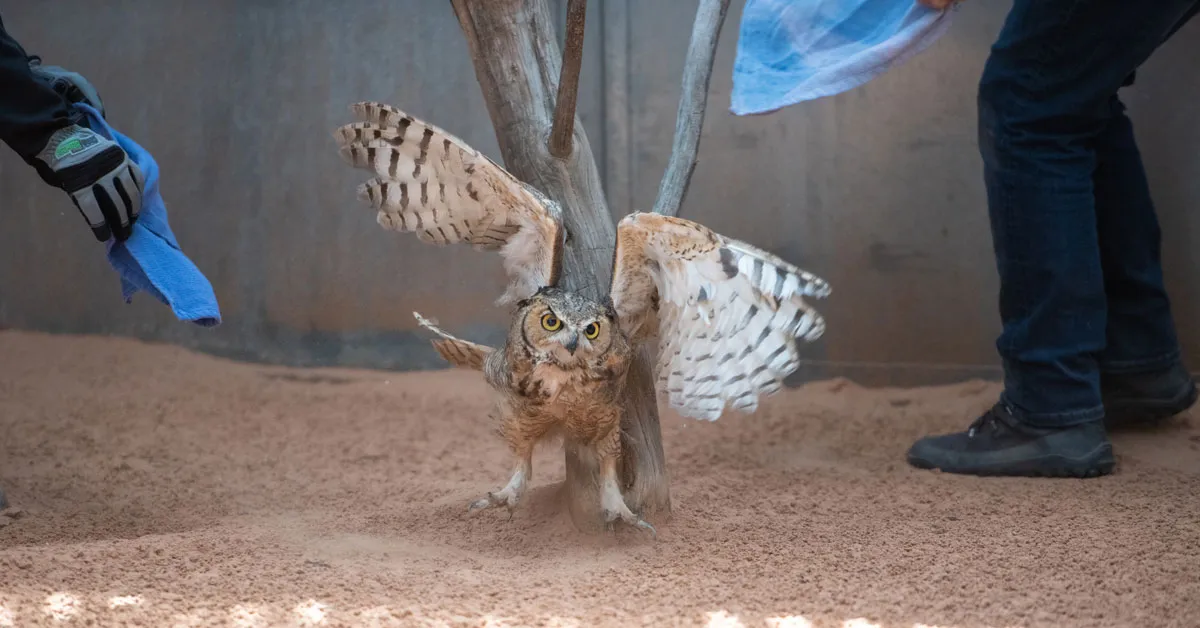
The owl was placed in the sanctuary’s largest aviary to recover and prepare for flight.
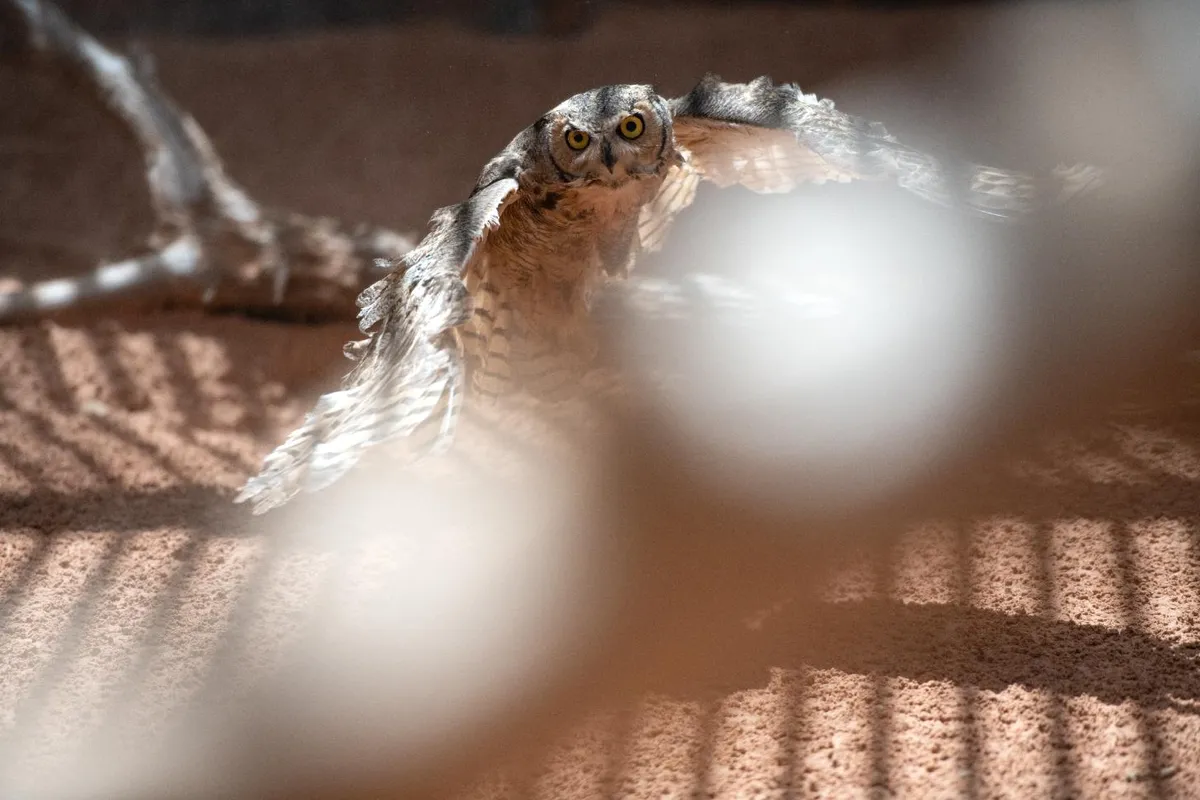
In the aviary, the owl was soon seen flying to the highest perch. Richwalski measured the sound of his wingbeat and confirmed his flight was quiet enough for a safe release.
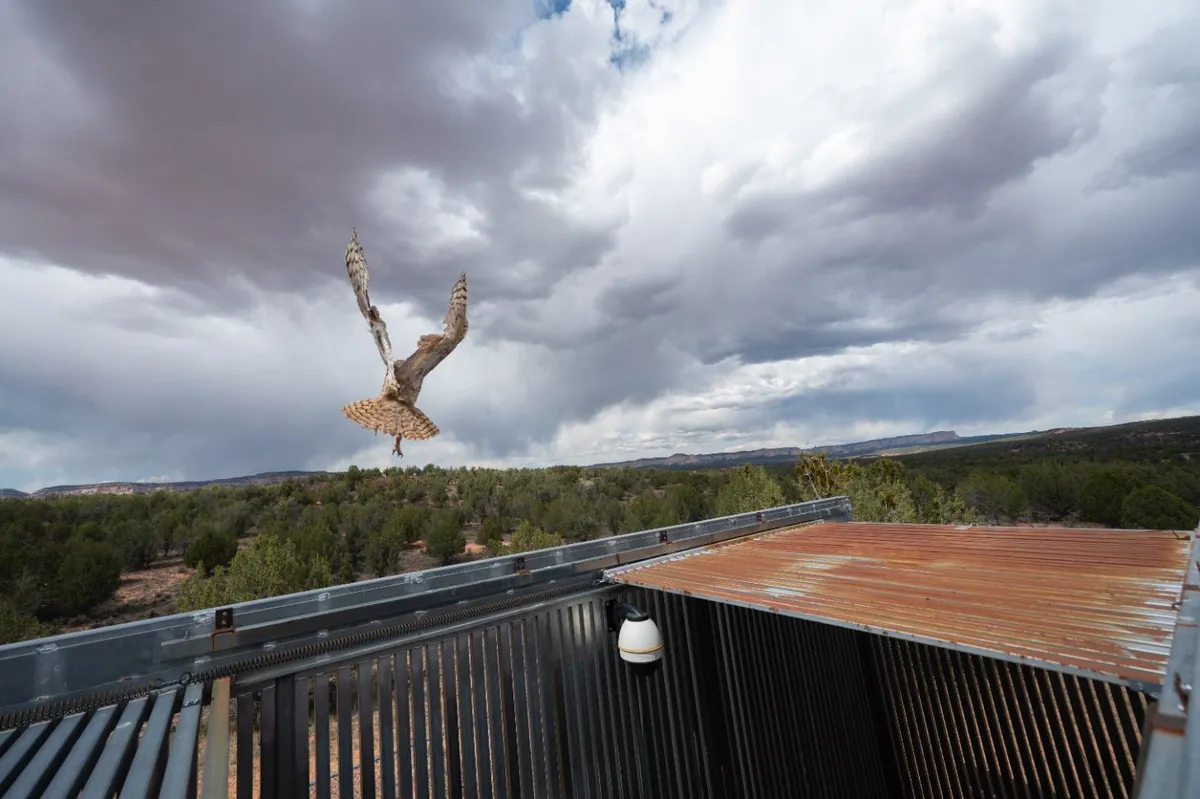
The aviary roof was slowly opened. The owl hesitated, then gained speed and flew into the sky.
Richwalski reflected on the seven-month journey from rescue to release. He said his heart didn't beat until he saw the owl leave. He was overjoyed to know the owl was healthy and back in the wild.