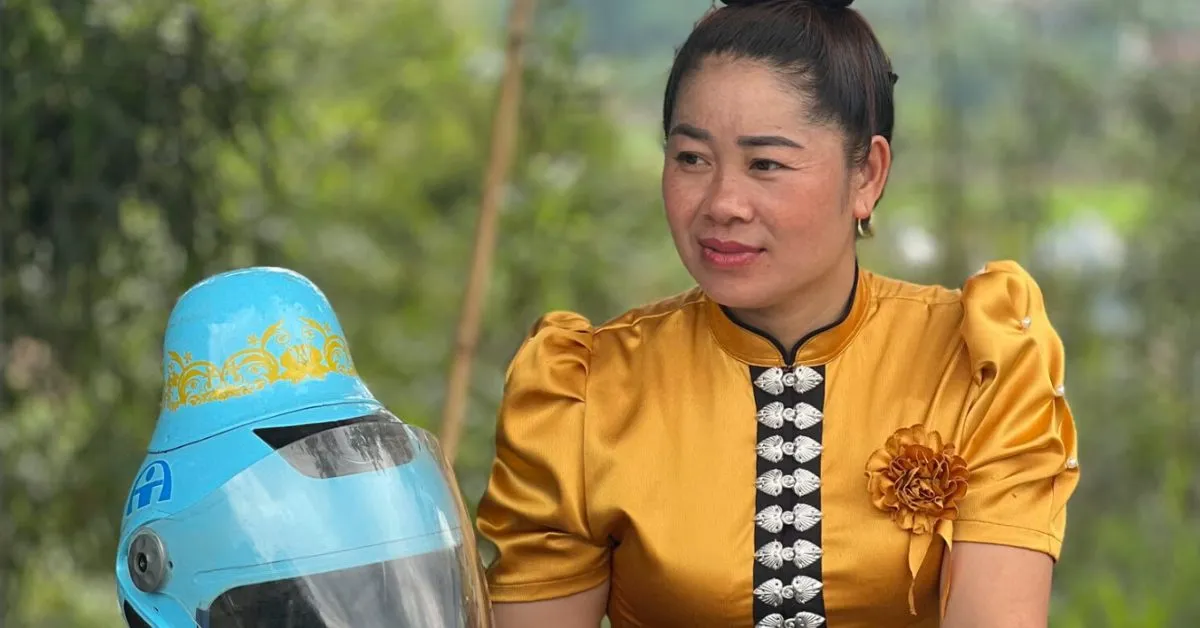
For married Thai women in Vietnam, a daily ritual used to be a head-scratcher: traditional high bun, or legally mandated motorcycle helmet? Because, apparently, one simply did not accommodate the other. And for years, women were forced to choose.
Ha Thi Binh, a married Thai woman and the main provider for her family, explained the six-inch high bun isn't just a hairstyle; it's a deeply respected tradition. Wearing her hair down in public would, astonishingly, suggest she was "unfaithful" to her husband. It's an "affirmation that the woman is married," she told the humanitarian group CARE.
So, imagine this: you're riding your motorcycle daily to run your coffee company, Ara Tay, in Son La, Vietnam, and you're stuck between cultural fidelity and, you know, not cracking your skull. Not exactly ideal.
We're a new kind of news feed.
Regular news is designed to drain you. We're a non-profit built to restore you. Every story we publish is scored for impact, progress, and hope.
Start Your News DetoxMany women tried to make both work, resulting in uncomfortable, ill-fitting, and frankly, unsafe situations. Others just gave up on one or the other. As Khuat Viet Hung, deputy chairman of Vietnam’s National Traffic Safety Committee, dryly noted, regular helmets simply didn't protect these women. Because how exactly do you cram six inches of hair into a standard dome?
Enter Vietnam’s Ministry of Science and Technology, who, after two years of head-scratching of their own, finally unveiled the solution: a special motorcycle helmet with extra room to accommodate the high bun. Because apparently that's where we are now — designing helmets for specific hairstyles.
After passing all the necessary safety tests (presumably, a helmet designed to fit a bun still needs to protect a head), these ingenious "bun helmets" were distributed to low-income families in six provinces across Vietnam.
Now, it's a common sight to see these unique helmets zipping around Vietnam. Thai women like Binh can finally travel safely, without having to choose between cultural identity and basic road safety. Which, if you think about it, is both impressive and slightly terrifying that it took this long.