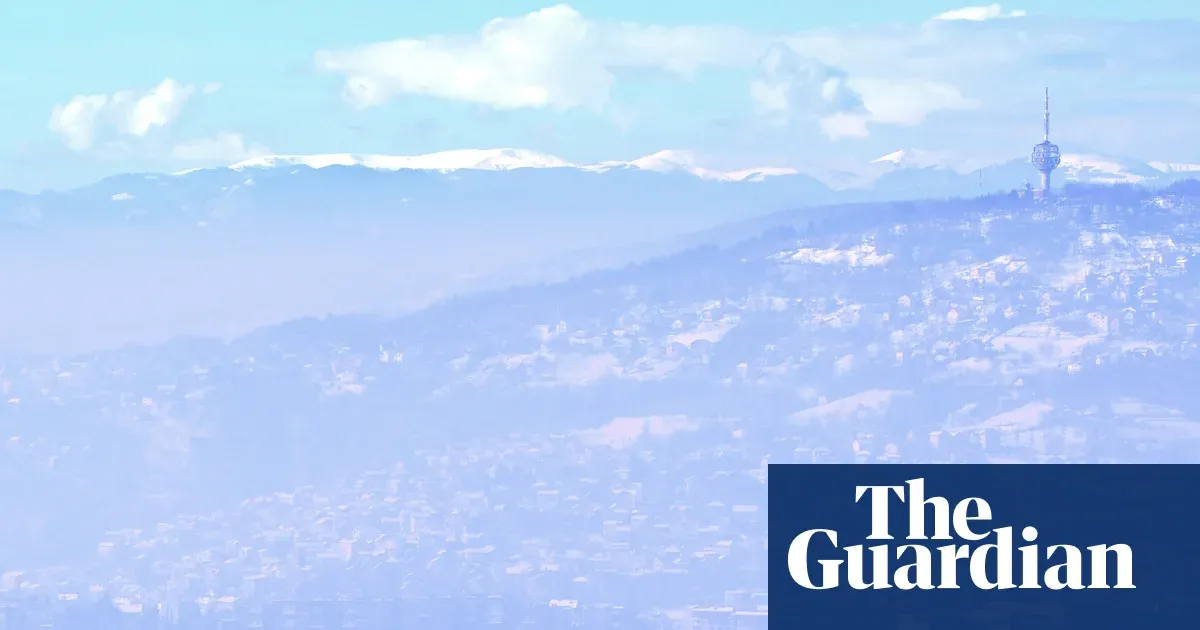
The Balkans face an air quality crisis that few outside the region realize. During winter months, particle pollution in cities like Sarajevo reaches levels comparable to Beijing and Delhi — sometimes ranking among the worst on Earth. Yet this isn't happening in distant megacities. It's happening in Europe.
Researchers from Switzerland's Paul Scherrer Institute set out to measure exactly how bad it gets. They packed a van with sophisticated sensors and drove through Sarajevo's narrow streets during winter, completing up to six circuits a day over 90 minutes each. What they found was stark: on 66% of winter days, pollution levels exceeded World Health Organization guidelines by a factor of eight or more. Sulphur dioxide concentrations ran 30 times higher than typical western European winter readings.
The human toll is immediate. An estimated 3,300 people die prematurely each year in Bosnia and Herzegovina from particle pollution alone.
We're a new kind of news feed.
Regular news is designed to drain you. We're a non-profit built to restore you. Every story we publish is scored for impact, progress, and hope.
Start Your News DetoxWhere the pollution comes from
The problem isn't mysterious. Researchers identified three main culprits. Home heating dominates — wood, coal, and even rubbish burned in residential stoves and fireplaces create thick clouds of particulates laced with cancer-causing compounds. The city's aging vehicle fleet compounds the issue; Sarajevo's average car is 19 years old, compared to 10 years in the UK. And in the city centre, restaurant cooking — particularly grilling ćevapi, the local meat specialty — adds significant pollution during peak hours.
One researcher noted the sensory intensity: the smell of grilling was so strong it felt like northern India, almost tangible in the mouth. That same intensity in the air means particles so dense you're breathing them in with every breath.
What's actually changing
The Balkans aren't passive victims. A 2023 UN Development Programme study identified concrete solutions and nine priority neighborhoods for intervention. The region has already committed to reducing solid fuel heating by 90% in these areas by 2033 — an aggressive timeline that reflects how seriously local authorities now treat the problem.
The pathway forward involves home insulation improvements, central heating systems, and heat pumps replacing individual stoves. Stove inspections and public awareness campaigns are underway. These aren't theoretical fixes; they're being implemented now.
It's worth noting that even with these changes, other pollution sources — vehicle emissions and cooking — will remain significant. The work won't be finished by 2033. But a 90% reduction in residential heating pollution would transform winter air quality overnight, moving the needle from crisis levels toward something breathable.
The Balkans' pollution problem is real and urgent. What's equally real is that the region knows exactly what needs fixing and has started the work.