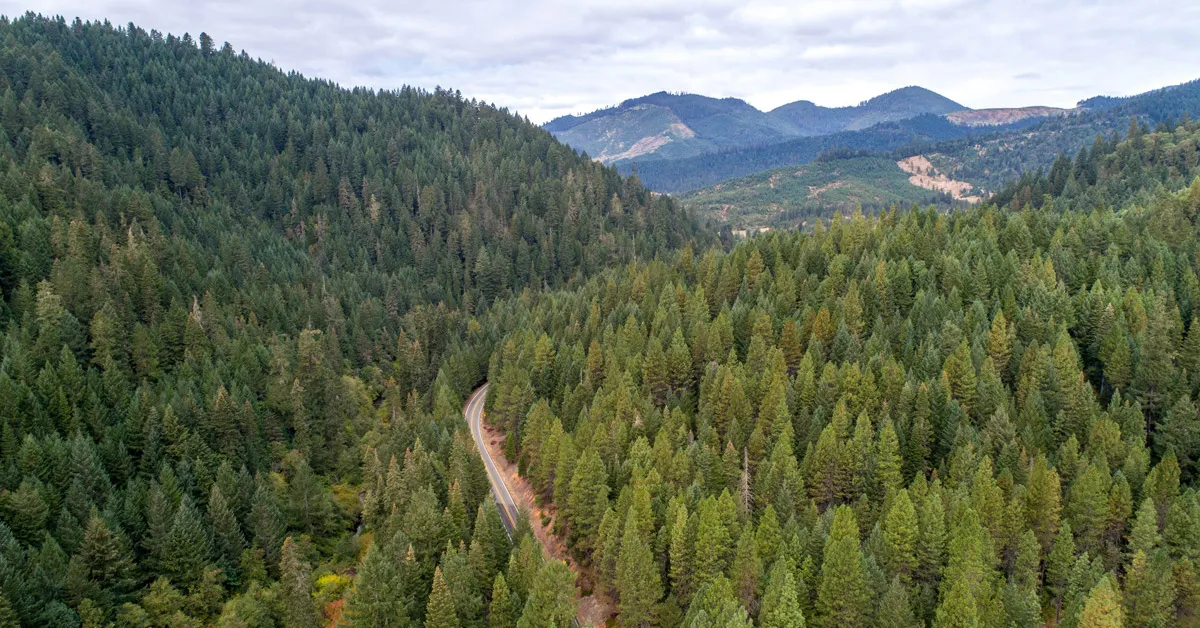
People worldwide plan to plant over one trillion trees this decade. This huge effort aims to slow climate change and reduce the loss of different plant and animal species. However, many of these new trees might not survive. Even if they do, they could become "biological deserts" that lack the rich life of natural forests.
But there is a better way.
The United Nations named 2021-2030 the Decade on Ecosystem Restoration. This encourages efforts to fix damaged ecosystems. Tree planting is a big part of this, supported by groups like the Bonn Challenge and the Trillion Trees Campaign.
The Problem with Monocultures
Many tree-planting plans have a major flaw: they rely too much on monoculture plantations. These are huge areas planted with only one type of tree.
We're a new kind of news feed.
Regular news is designed to drain you. We're a non-profit built to restore you. Every story we publish is scored for impact, progress, and hope.
Start Your News DetoxMonoculture plantations are mostly for producing wood. But these high-yield farms are risky and can be very fragile. If there's a drought, pests, or forest fires, an entire plantation can fail. For example, nearly 90% of 11 million young trees planted in Turkey died in three months due to drought and poor care.
Forests do more than just make timber. They help manage water, store carbon, provide homes for wildlife, cool the land, and even benefit human health.
The Power of Mixed-Species Forests
Instead of betting on one tree species, science shows a smarter path. This path offers both environmental and economic benefits while lowering risks. It involves planting different tree species together, mimicking natural forest biodiversity. This creates forests that grow faster and are stronger against threats.
The long-running BiodiversiTREE study compares forest plots with several tree species to those with only one. The results show that mixed-species plots grow trees 80% larger than monocultures. This leads to denser canopies, cooler microclimates below, and more insects, spiders, and birds.
Since 2013, ecologists at the Smithsonian Environmental Research Center have been testing this idea with the BiodiversiTREE experiment. The findings are clear: trees in mixed forests not only survive but also grow bigger than those in monocultures and support much more biodiversity.
How Diverse Trees Thrive
Thirteen years ago, researchers and volunteers planted almost 18,000 tree seedlings on 60 acres at the Smithsonian Environmental Research Center. They didn't plant just one species. They used 16 different native species, including fast-growing timber trees, mid-story trees, and slow-growing ones.
Some plots had only one species, planted in uniform rows. Other plots had random mixes of four or 12 species, reflecting the diversity found in local forests. The question was simple: What happens if we copy nature and plant a mix of species instead of a monoculture?

A decade later, the differences are striking. The monoculture plots that survived look like traditional timber plantations. They have rows of tall, narrow trees with thin canopies and little life underneath.
In contrast, the mixed-species plots are complex and dynamic. Their canopies are full of leaves, and many different plants and animals thrive below.
These visual differences show real ecological gains. Trees grown in mixtures, like poplar and red oak, are up to 80% larger than the same species grown alone. Mixed plots had fewer leaf diseases, more caterpillars (which feed birds), and more diverse chemicals in their leaves. These chemicals might deter deer, leading to better tree growth in mixed plots.
Plots with several tree species also had much fuller, denser canopies. This created cooler, shadier conditions that help understory plants grow and support up to 50% more insects, spiders, and birds.
This pattern isn't just at one site. The BiodiversiTREE project is part of TreeDivNet, a global network of experiments with over 1.2 million trees. Across different continents and climates, the results are consistent: diverse forests grow larger, store more carbon, and better withstand drought, pests, and disease.
Designing Forests for the Future
Despite this evidence, mixed-species plantings are still rare. Most commercial forestry uses monocultures, and these are often counted in global planting campaigns. The reasons are practical: mixed plantings can be harder to design, more expensive to set up, and tougher to manage. Also, until recently, there wasn't much proof they could match the economic benefits of traditional plantations.
A new experiment at the Smithsonian Environmental Research Center, called "Functional Forests," aims to bridge this gap. Researchers are developing specific tree combinations to see if they can provide ecological benefits while also producing timber and other services needed for a thriving, sustainable economy.
Each of the 20 tree species in the Functional Forests project was chosen for specific benefits, such as timber, wildlife habitat, food, deer resistance, and climate resilience. No single species offers all these benefits.
Some of the nearly 200 plots will have a single species, while others will have carefully chosen combinations of five species based on their functions. Some plots are protected from deer, while others are not.
By comparing these methods, researchers can test how different planting strategies perform for various goals, from timber and food production to biodiversity and climate resilience.
Landowners and communities have different priorities. The idea behind Functional Forests is to design plantings that can deliver multiple benefits at once. This uses the positive effects of biodiversity to achieve real-world goals.
Planting Wisely for Lasting Forests
The stakes are high. Ecosystem restoration is a major global investment, with hundreds of billions of dollars spent each year. Getting it wrong means wasted resources and missed chances to solve urgent environmental problems.
If the world is going to plant a trillion trees, it needs to do more than just put seedlings in the ground. It needs to rethink what a forest should be. The goal isn't just to grow trees; it's to grow forests that last.