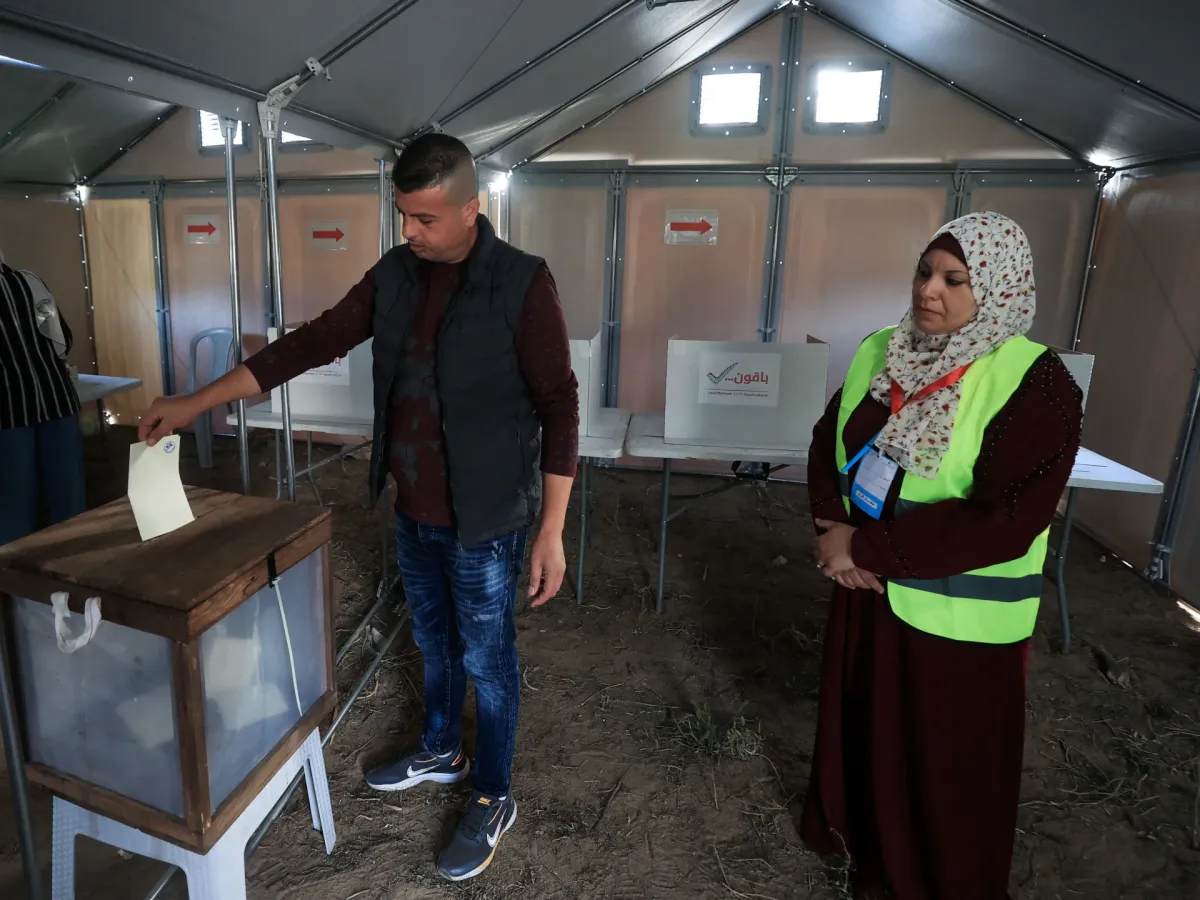
Palestinians in central Gaza and the occupied West Bank have started voting in municipal elections. This is the first local vote since Israel's war on Gaza began.
Polling stations opened at 7 am on Saturday for 70,000 eligible voters in Gaza's Deir el-Balah area. This is the first such election in the besieged area in 20 years.
The vote in Gaza is mostly symbolic. Officials are calling it a "pilot" election.
We're a new kind of news feed.
Regular news is designed to drain you. We're a non-profit built to restore you. Every story we publish is scored for impact, progress, and hope.
Start Your News DetoxNearly 1.5 million registered voters in the occupied West Bank are also voting. They will choose members for local councils that manage water, roads, and electricity.
These elections come as the Palestinian Authority (PA) tries to show it is reforming and gaining legitimacy. There is growing public frustration over corruption, political stagnation, and no national elections since 2006.
Most candidates are backed by President Mahmoud Abbas's Fatah movement or are independent. Hamas, which controls parts of Gaza, is not officially participating.
Connecting the West Bank and Gaza
Much of Gaza has been destroyed by more than two years of war. Because of this, the Central Elections Commission in Ramallah chose to hold its first vote in Deir el-Balah. They had to find new ways to register voters.
Fareed Taamallah, a spokesperson for the commission, said the main idea is to link the West Bank and Gaza politically as one system.
The commission did not work directly with Israel or Hamas for the Deir el-Balah vote. It also could not send materials like ballot papers or ballot boxes into Gaza.
Palestinian voter turnout has slowly gone down. However, it has been relatively high in past local elections compared to other countries in the region, averaging between 50 and 60 percent.
Gaza's First Election in 20 Years
Hamas won parliamentary elections in 2006. A year later, it took control of Gaza from the Fatah-led PA.
Hamas did not put forward candidates for Saturday's election. However, polls show it is still the most popular Palestinian group in both Gaza and the occupied West Bank.
Ramiz Alakbarov, the UN deputy special coordinator for the Middle East peace process, called the elections "an important opportunity for Palestinians to exercise their democratic rights during an exceptionally challenging period."
Hamas controls half of Gaza, including Deir el-Balah. Israeli forces partially left Gaza last year. The coastal area is now preparing for a new governance structure under US President Donald Trump's 20-point plan.
This plan created a Board of Peace with international envoys and a committee of unelected Palestinians. Progress on disarming Hamas, rebuilding, and transferring power has stopped.
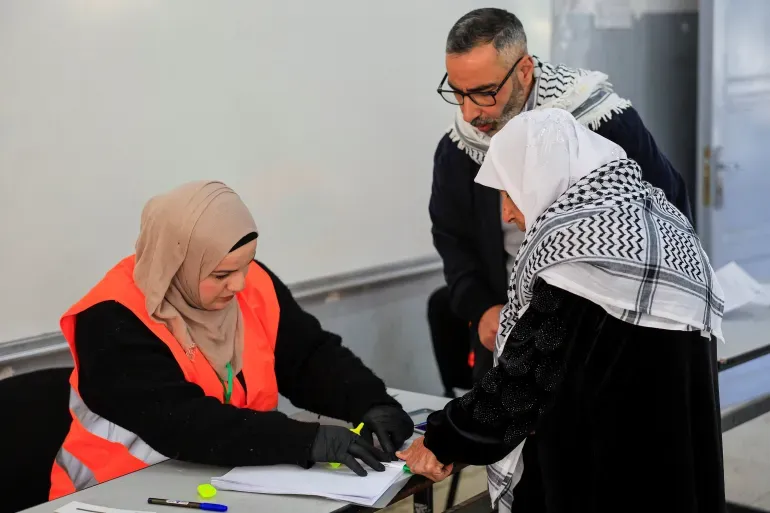 A polling official assists a Palestinian woman as she votes during the municipal council election, in Hebron, the occupied West Bank [Mussa Qawasma/Reuters]
Electoral Changes
Palestinian President Mahmoud Abbas, 90, signed a decree last year to change the electoral system. These changes met some demands from Western donors.
The reforms allow people to vote for individuals instead of party lists. They also lowered the age to run for office and increased the number of spots for female candidates.
In January, another decree from Abbas required candidates to accept the program of the Palestine Liberation Organization (PLO). The PLO leads the PA. Its program calls for recognizing Israel and giving up armed struggle. This effectively sidelined Hamas and other groups.
The candidate lists in major West Bank cities are mostly from Fatah, the group that leads the PA, and independents. Some independents have ties to other groups. This is the first time in six local elections that no other group has officially put forward its own candidates.
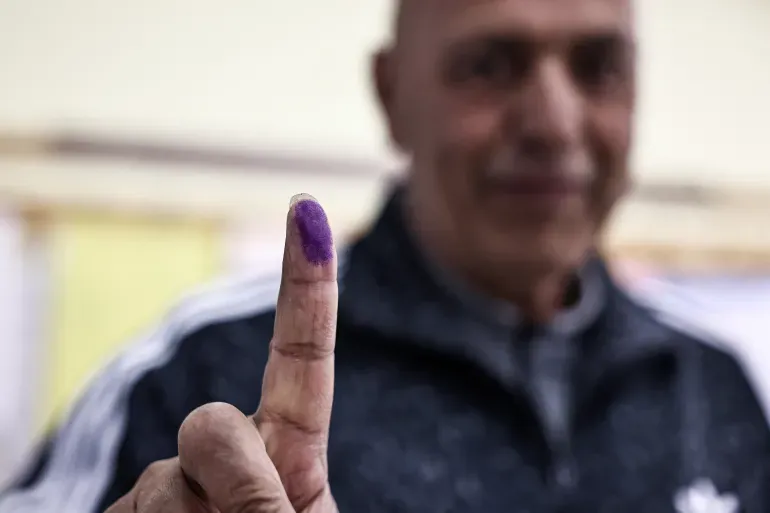 A Palestinian man shows his marked finger after casting his ballot at a polling station in the occupied West Bank city of el-Bireh [AFP]
In the occupied West Bank, the PA has limited power. Local councils manage services like trash collection and building permits.
Votes are being held in villages in Area C. This area covers about 60 percent of the West Bank and is under direct Israeli control. According to the 1995 Oslo Accords, full administrative control should have gone to the PA.
Votes will also happen in towns that Israel's military occupied after a ground invasion in the northern West Bank last year.
Campaign posters are visible across cities. However, many cities, including Ramallah and Nablus, will not hold elections. This is because too few candidates or lists registered.
The PA's power has weakened after years without peace talks with Israel and the growth of illegal Israeli settlements in the occupied West Bank.