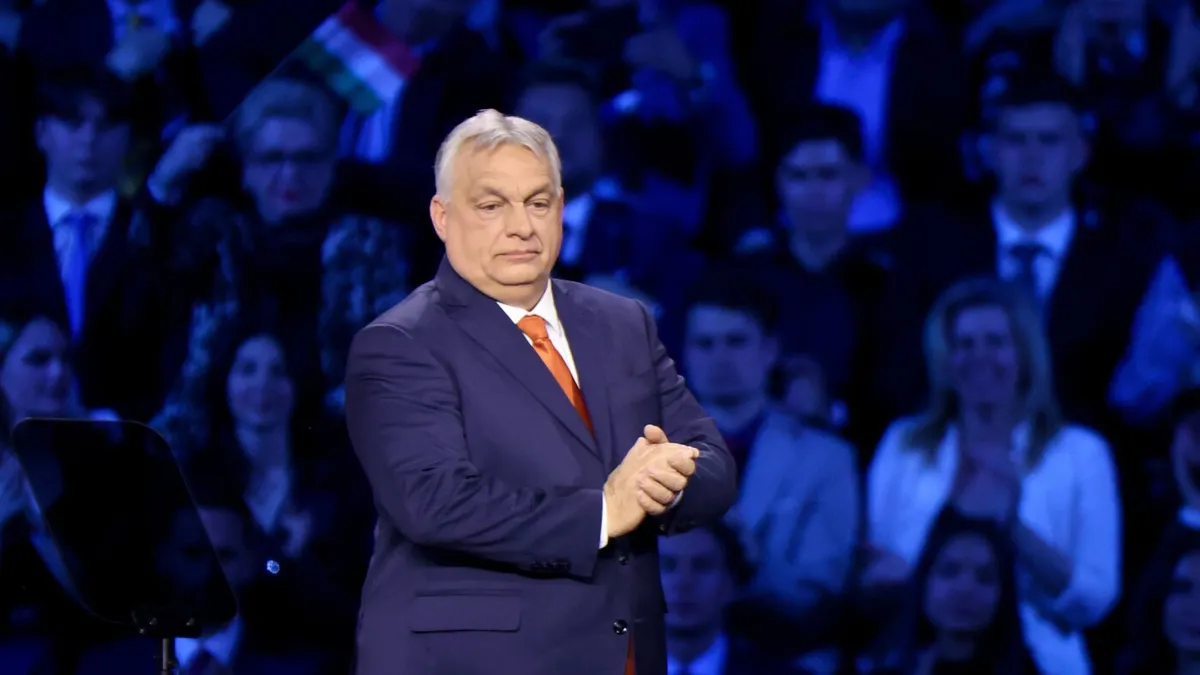
Well, this is going to make for some awkward holiday dinners. Hungarian voters, in numbers not seen since the 1990s, just showed Prime Minister Viktor Orbán the door, ending his rather impressive 16-year run. And they didn't just show him the door; they practically kicked it off its hinges.
Exit polls are pointing to a "super-majority" win for Péter Magyar's Tisza movement, a fresh political force that managed to unite various opposition groups under one banner. Their platform? A rather straightforward two-fer: fight corruption and get Hungary back into the European mainstream. Because apparently that's where we are now.
Orbán, to his credit, didn't drag his feet. Less than three hours after the polls closed, he was already congratulating Magyar. While the official numbers are still being tallied, it looks like Magyar and his movement could secure a two-thirds majority. Which, if you think about it, is both impressive and slightly terrifying for anyone on the losing side.
We're a new kind of news feed.
Regular news is designed to drain you. We're a non-profit built to restore you. Every story we publish is scored for impact, progress, and hope.
Start Your News DetoxThat kind of majority means Magyar could actually undo some of Orbán's more controversial constitutional changes – the ones that, among other things, weakened the judiciary and gave Orbán's Fidesz party a tighter grip on the country's political levers. Imagine having that much cleanup on aisle five.
This election isn't just a local affair; it has serious ripple effects for Europe and, more specifically, Ukraine. Orbán has been, shall we say, cozy with the Kremlin, and frequently found himself at odds with other EU nations, particularly when it came to funding Kyiv's budget and war efforts. He's also faced accusations of corruption and misusing EU funds, which he, of course, denies. The campaign even drew international attention, with U.S. Vice President JD Vance appearing alongside Orbán, and President Trump phoning into one of his rallies. Orbán had openly championed an "illiberal" democracy for Hungary. Apparently, Hungary had other plans.