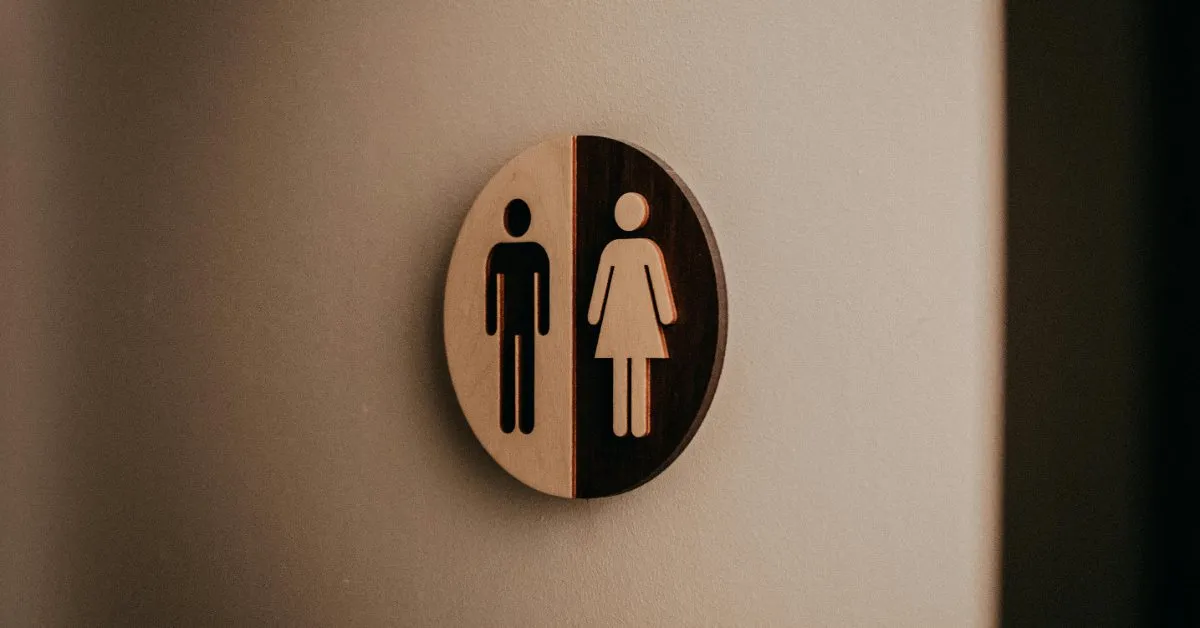
In 2017, Texas lawmakers decided they needed to tell people where to pee. Their proposed "bathroom bill" would have forced individuals to use public restrooms based only on the sex they were assigned at birth. Because apparently that's where we are now.
Six months into this legislative absurdity, activist Alicia Roth Weigel decided she'd had enough. She hadn't even told her closest friends and family, but she knew she had to come out publicly as intersex. "At this point I hadn’t told my brother and my best friends, that have known me my whole life, that I’m intersex," Weigel revealed in the 2023 documentary "Every Body."
More Common Than You Think
Intersex people are, statistically speaking, about as common as redheads. They make up roughly 2% of the global population. Yet, as Weigel points out, they're "present in society but hidden in plain sight." She adds, with a dry wit born of experience, "We’re not exotic, but we are exhausted — constantly struggling for recognition or mere acknowledgment of our existence."
We're a new kind of news feed.
Regular news is designed to drain you. We're a non-profit built to restore you. Every story we publish is scored for impact, progress, and hope.
Start Your News DetoxWeigel herself was born with androgen insensitivity. She appeared female but had internal testes, which doctors removed when she was an infant. Her parents, like many of their generation, never discussed her birth or surgeries. So, Weigel kept quiet too.
But by age 27, the shame and silence were too much. The bathroom bill, in her eyes, ignored an entire group of people who simply don't fit into neat, traditional gender boxes. She stood before senators, making it clear: "I am a woman. And regardless of my gender, a bathroom is a bathroom." She urged them to reconsider what she rightly called "an extremely harmful piece of legislation."
Spoiler alert: The bathroom bill did not pass. Weigel has since penned a 2023 memoir, "Inverse Cowgirl," continuing her fight for visibility, empathy, and the radical idea that human rights should apply to, well, all humans. Because, as she wisely puts it, "Empathy is a choice, not a circumstance one is born into; we should recognize how powerful that is."