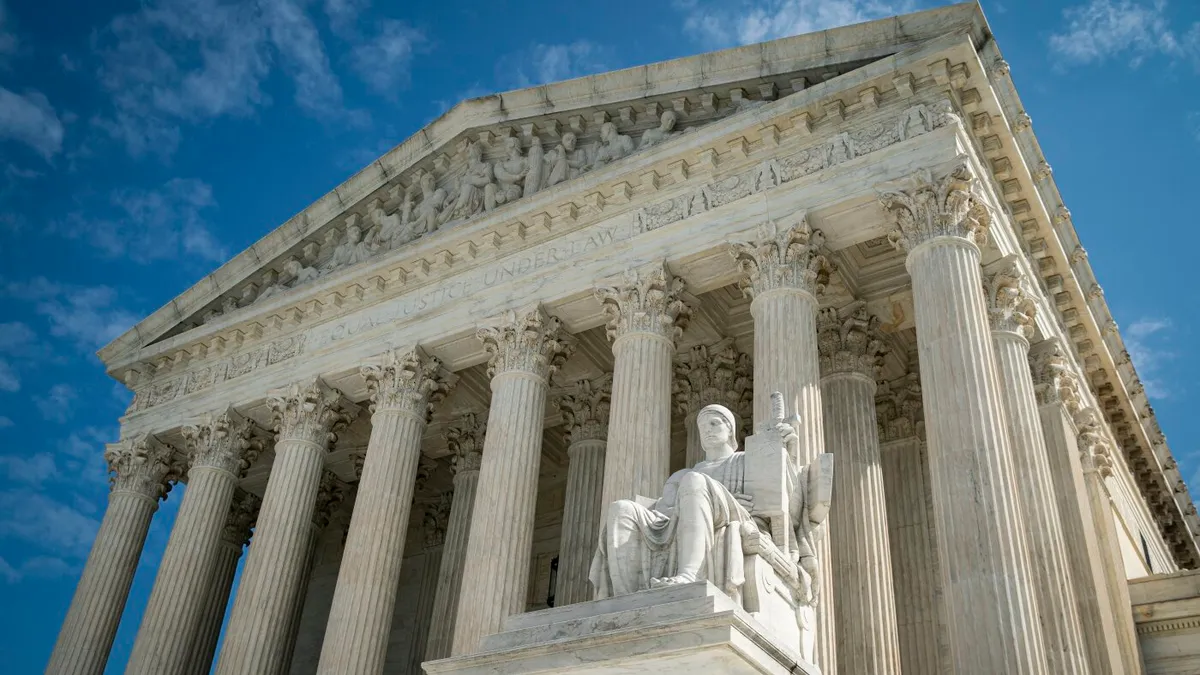
The Supreme Court just put some serious brakes on a police tactic called "geofence warrants." Essentially, this is when law enforcement asks tech companies to hand over data on everyone who happened to be near a crime scene, often without a specific suspect in mind. Because, apparently, your phone knows more about your whereabouts than you do.
In a 6-3 decision, the Court ruled that this digital dragnet goes against the Fourth Amendment, which — bless its heart — is supposed to protect us from unreasonable searches. Justice Elena Kagan, writing for the majority, basically said, "Nice try, but no." The idea of drawing a virtual fence around a crime and then seeing who was inside it, hoping someone looks suspicious, is now largely off-limits.
The Bank Robbery That Started It All
This whole discussion kicked off after a bank robbery in Virginia, where a cool $195,000 vanished. Two months later, detectives asked Google for location data on cellphones near the bank, an hour before and after the heist. Google initially found 19 potential suspects, then narrowed it down to three based on who actually spent time inside the bank.
We're a new kind of news feed.
Regular news is designed to drain you. We're a non-profit built to restore you. Every story we publish is scored for impact, progress, and hope.
Start Your News DetoxOne of those three was Okello Chatrie. When police knocked on his door, they found a pistol matching security footage and nearly $100,000 in cash. Chatrie confessed and was convicted. Open and shut, right? Not quite.
Chatrie's lawyers argued that these geofence searches flip the Fourth Amendment on its head. Instead of having a suspect and then looking for evidence, the government was looking for evidence (location data) to find a suspect. They pointed out that millions of innocent people's location histories could be swept up in these searches, which is both impressive and slightly terrifying.
The government, of course, argued that your location data isn't constitutionally protected because, well, you willingly share it with Google. Which, if you think about it, is a pretty bold take on privacy in the digital age.
But the Supreme Court wasn't buying it. The ruling means police can't simply cast a wide net and see who they catch. They'll need more specific reasons to demand your digital breadcrumbs. Because your phone might be smart, but it shouldn't be a snitch without due process.