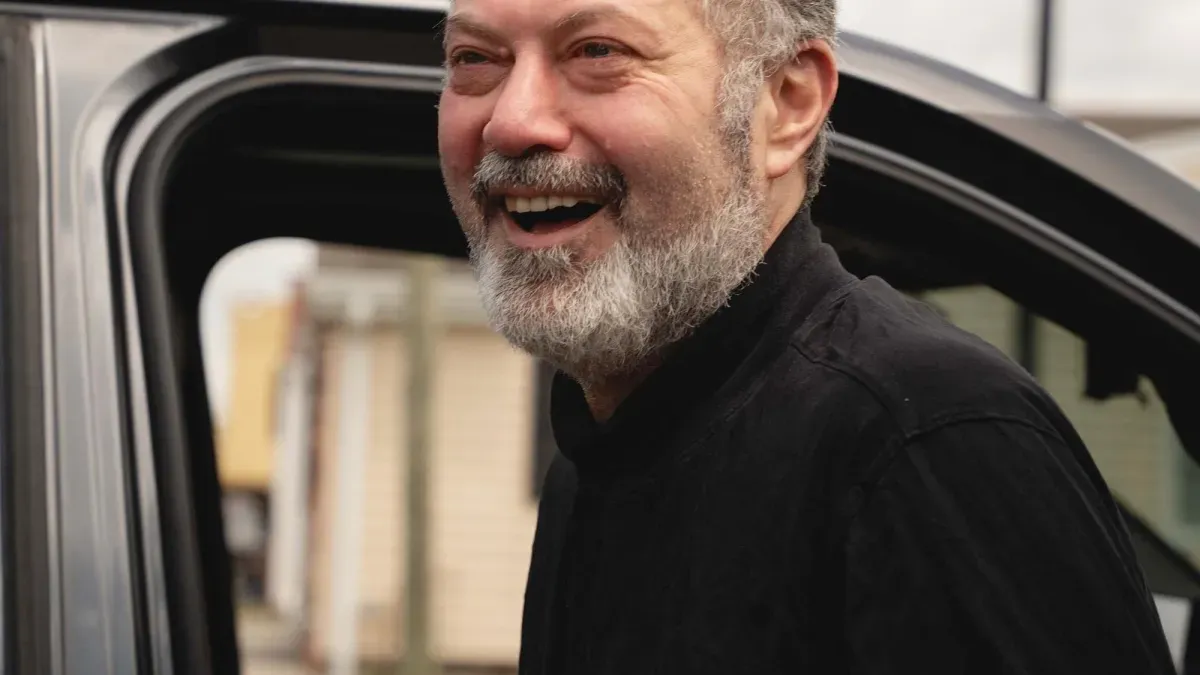
A US federal judge has just ordered the release of Salah Sarsour, a prominent Muslim leader and Palestinian rights advocate, after a detention that Sarsour himself believes was pure payback for his vocal support of Palestine. Apparently, even judges appointed by the very administration in question can raise an eyebrow when free speech is on the line.
US District Judge James Patrick Hanlon ruled that Sarsour had a "substantial" claim that he was targeted for speech protected by the First Amendment. Which, if true, would make his 80-day detention by immigration authorities decidedly unlawful. Let that sink in: a judge questioning the motives behind a detention, pointing squarely at constitutionally protected speech.
No, Foreign Policy Isn't a Get-Out-of-Jail-Free Card
Judge Hanlon didn't just stop there. He also dismissed the Trump administration's rather convenient claims that pro-Palestinian speech somehow harms US foreign policy. Hanlon, a Trump appointee from 2018, wrote that merely mentioning foreign relations concerns doesn't automatically trump First Amendment rights. Because apparently, that's where we are now — needing a judge to state the obvious.
We're a new kind of news feed.
Regular news is designed to drain you. We're a non-profit built to restore you. Every story we publish is scored for impact, progress, and hope.
Start Your News DetoxThe Trump administration has been quite fond of using broad national security claims to arrest and detain pro-Palestine foreign nationals in the US. Civil liberties groups, with good reason, have called these actions what they are: attempts to punish criticism of Israel and US foreign policy. Sarsour, a legal permanent resident who has lived in the US for nearly 32 years, was released just hours after the judge's decision. He promptly called it a victory for free speech.
"I am so relieved to be with my family. For 80 days, I haven’t been able to step outside and breathe fresh air," Sarsour said. "I will never stop speaking for Palestine and humanity, wherever I am." His lawyers noted he lost over 30 pounds during his ordeal. He also happens to be the president of Wisconsin's largest mosque, the Islamic Society of Milwaukee.
The Accusations and the Eyebrows They Raised
The Department of Homeland Security (DHS) had labeled Sarsour a "criminal and a terrorist," accusing him of lying on his green card application and failing to disclose a conviction by an Israeli military court. The alleged crime? Throwing stones and Molotov cocktails at Israeli forces. Sarsour, a 53-year-old Palestinian American who grew up in the occupied West Bank, denies all charges.
Rights groups quickly pointed out that such accusations are a common tactic against Palestinians in the occupied West Bank, where the Israeli military court system boasts a nearly 100 percent conviction rate. Sometimes, these convictions are based on confessions obtained through torture. Just a little context for those accusations.
Judge Hanlon, perhaps sensing the absurdity, questioned why the Trump administration suddenly saw Sarsour as a threat after three decades of quiet residency. He ordered Sarsour to return home to Wisconsin from Indiana, allowing him to stay with his family while his case continues. Because 80 days in detention for alleged decades-old stone-throwing is apparently enough.
This isn't an isolated incident. The Trump administration has pushed for mass deportations and a crackdown on pro-Palestinian voices, often labeling them antisemitic. They've weaponized a section of the Immigration and Nationality Act that allows the secretary of state to "exclude" foreign nationals who could have "potentially serious adverse foreign policy consequences." The keyword here being could.
But rights advocates argue that this law doesn't get to override the First Amendment. And frankly, they question whether an activist's free speech has ever truly harmed Trump's foreign policy. Another pro-Palestine activist, Mahmoud Khalil of Columbia University, faced similar targeting and was also eventually released by a judge. He welcomed Sarsour's release, reiterating the simple truth: "Speaking up for Palestinian rights is protected by the First Amendment."
Because sometimes, it takes a judge to remind everyone that the Constitution still applies, even when it's inconvenient.