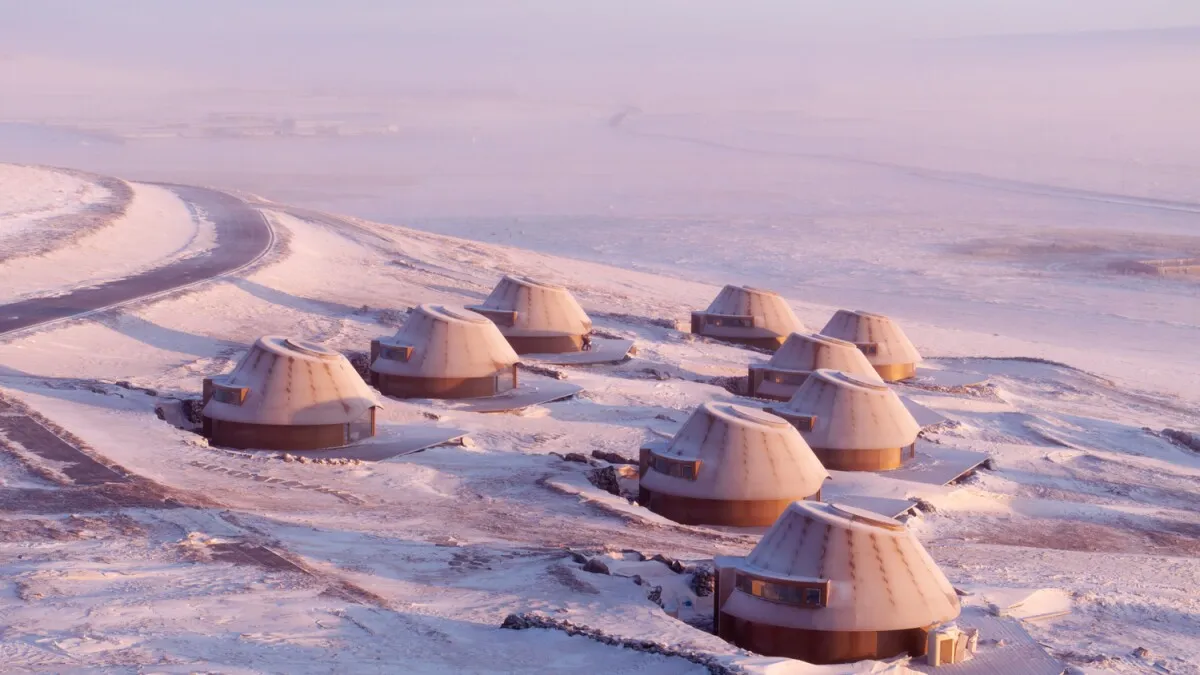
A new hotel in Inner Mongolia's volcanic steppe has flipped the usual development playbook: instead of flattening the landscape to build, architects positioned guest cabins directly over eroding sand depressions to actually stop the damage and let the soil recover.
The Volcano-In Hotel of Arrivals sits on the Baiyinkulun Steppe, a fragile ecosystem southeast of a dormant volcanic crater that's 150,000 years old. The terrain here is brutal—seasonal snowdrifts bury everything, wind shifts sand constantly, and vegetation struggles to survive. Most developers would just pave over it. PLAT ASIA, the firm behind this 1,634-square-meter retreat, chose differently.
Design that works with the land, not against it
Each guest cabin has a distinctive spherical shape clad in reddish metal panels that mirror the earth tones around it. The roofs are aluminum, reflective against the harsh steppe light. But the real innovation is underneath: the cabins hover slightly above the ground on supports, which means the fragile soil beneath can breathe and recover. No heavy machinery tore up the terrain. No concrete pads crushed the ecosystem. The entire structure was built from prefabricated components assembled on site—a construction method that left the volcanic soil almost untouched.
We're a new kind of news feed.
Regular news is designed to drain you. We're a non-profit built to restore you. Every story we publish is scored for impact, progress, and hope.
Start Your News Detox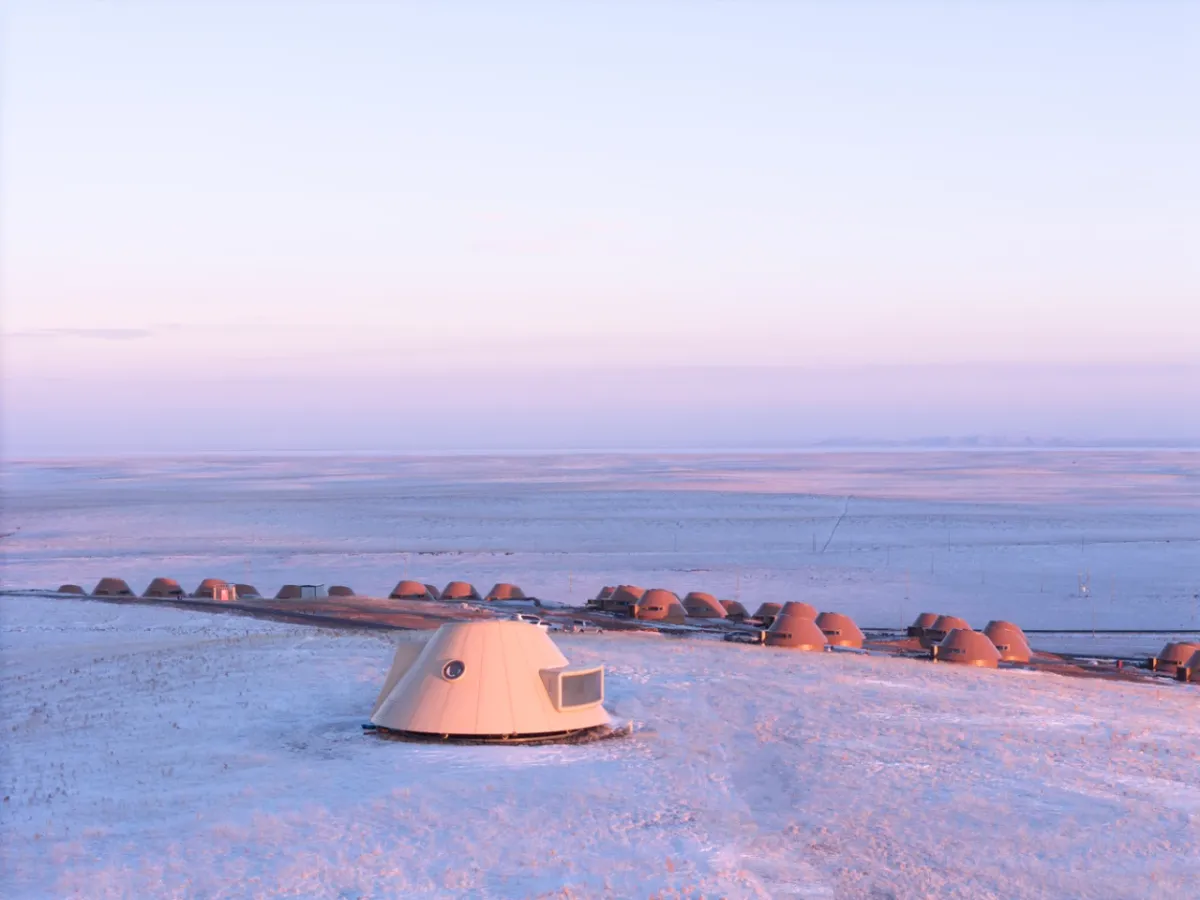
Curved retaining walls do double duty as snow screens and wind buffers, protecting the landscape from further erosion. Stone-paved walkways connect the scattered cabins, creating a gentle circulation route that doesn't demand grading or fill. Inside, each suite has a sleeping area, living zone, bathroom, and private terrace. An oval skylight above the bed frames views of the night sky. A narrow horizontal window captures the endless volcanic horizon.
Before committing to the full hotel, architects built a prototype cabin on a nearby hilltop—smaller, experimental, a way to test whether this balance between tourism and land recovery could actually work. That iterative approach, learning before scaling, is itself unusual in hospitality development.
What makes this project matter beyond its specific location is what it suggests about how we build in fragile places. For decades, the assumption has been that tourism infrastructure and ecosystem health are at odds—you choose one or the other. The Volcano-In Hotel of Arrivals proposes a third option: design that actively participates in healing. The long-term test is whether the landscape actually does recover. If it does, this becomes a template for how to bring visitors to remote, vulnerable ecosystems without destroying them.
The hotel now operates as part of the larger Baiyinkulun Steppe & Volcano Tourism Resort. The real measure of success won't come for years—when ecologists can document whether the sand depressions have stabilized, whether vegetation has returned, whether the steppe is more resilient than it was before the cabins arrived.