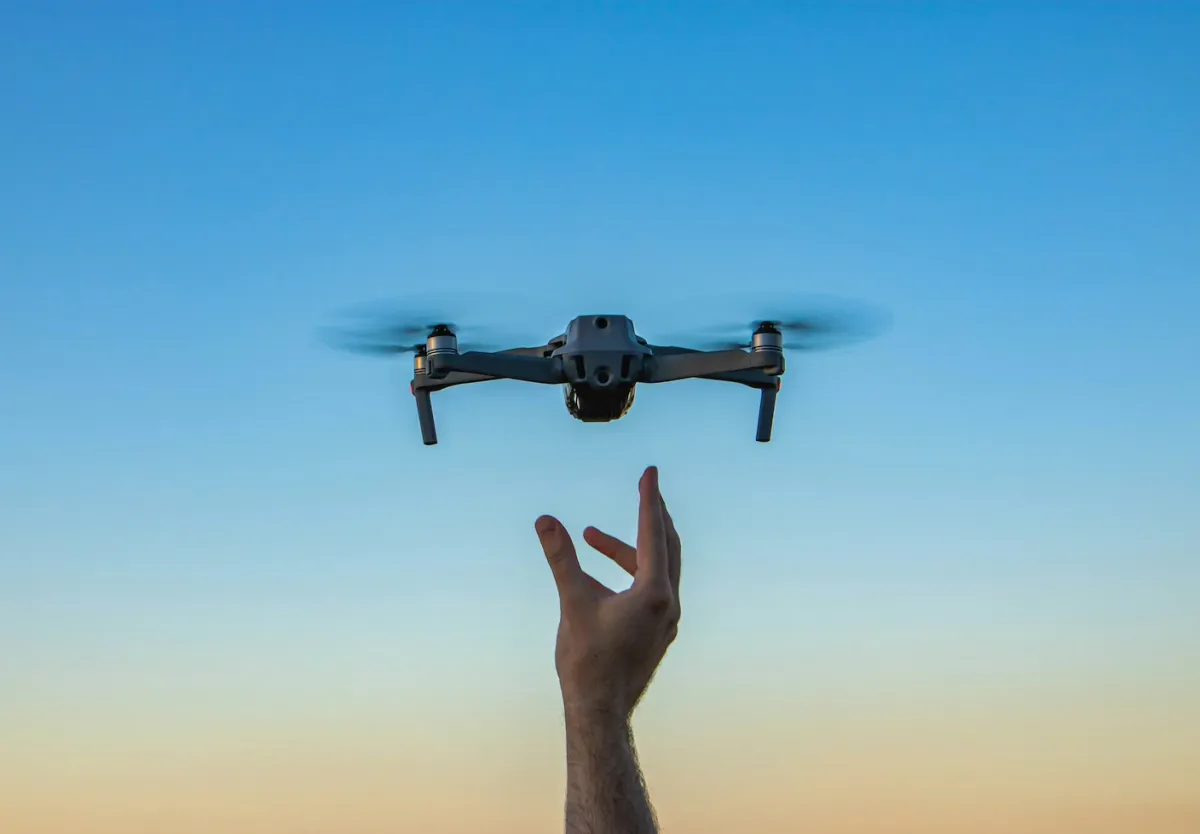
Over 8,000 everyday drone pilots have mapped 5 million acres across 200 cities in Canada and the US—using their own equipment and a smartphone app. What started as a way to earn a few dollars per flight is becoming critical infrastructure for everything from wildfire prevention to autonomous vehicles.
This is how crowdsourcing actually works at scale. Spexi, a Canadian company, doesn't own a fleet. Instead, they've built software that lets anyone with a consumer drone autonomously fly a preset path, snap high-resolution images, and get paid around $10 per flight. Some pilots earn hundreds of dollars a day. The company stitches these individual contributions into a continuously updated aerial map—think Google Street View, but from above, and refreshed constantly by people who live in those cities.
The economics are compelling. Consumer drones now produce imagery 30 times sharper than satellites, at a fraction of the cost. A helicopter or airplane mapping mission takes days and costs tens of thousands of dollars. A drone covers 25 acres in seven minutes. "We're getting better data out of micro-drones than what we get out of a $2 million mapping camera," says Spexi CEO Bill Lakeland. "The time has arrived."
We're a new kind of news feed.
Regular news is designed to drain you. We're a non-profit built to restore you. Every story we publish is scored for impact, progress, and hope.
Start Your News DetoxWhat makes this different from earlier crowdsourcing projects is the infrastructure angle. Google famously spent over a billion dollars building Street View with company-owned cars. Spexi is skipping that phase entirely, more like how Waze collected mapping data from 40 million users for free—except Spexi actually pays its contributors. The result is a living, 3D digital copy of the physical world, updated block by block as pilots fly their routes.
Where this actually matters
Forestry services are already using Spexi's data to train AI models that predict wildfire risk. Insurance companies use the same imagery for risk assessment and claims processing—a claims adjuster can now review a property from above before sending someone out. For autonomous vehicles and robotics, this 3D map data is foundational. Robots need to understand the physical world to navigate it safely. Tech writer Kevin Kelly calls this emerging digital replica the "mirrorworld"—arguably one of the decade's most consequential infrastructure projects, and it's being built partly by people in their spare time.
This also hints at something larger about how infrastructure gets built now. Satellites and airplanes still have their place, but the future of continuous, high-resolution Earth mapping might look less like centralized government projects and more like distributed networks of people with tools they already own. The hobbyist becomes the infrastructure. The bottleneck shifts from equipment and capital to coordination and software.
The race to map Earth from above is far from over—satellite imaging companies are also accelerating their capabilities. But what's striking is that 160 years after Nadar attached a camera to a hot-air balloon, the principle remains the same: attach a camera to something that flies, take pictures of Earth. The difference now is that those pictures have become essential to how the world actually works.