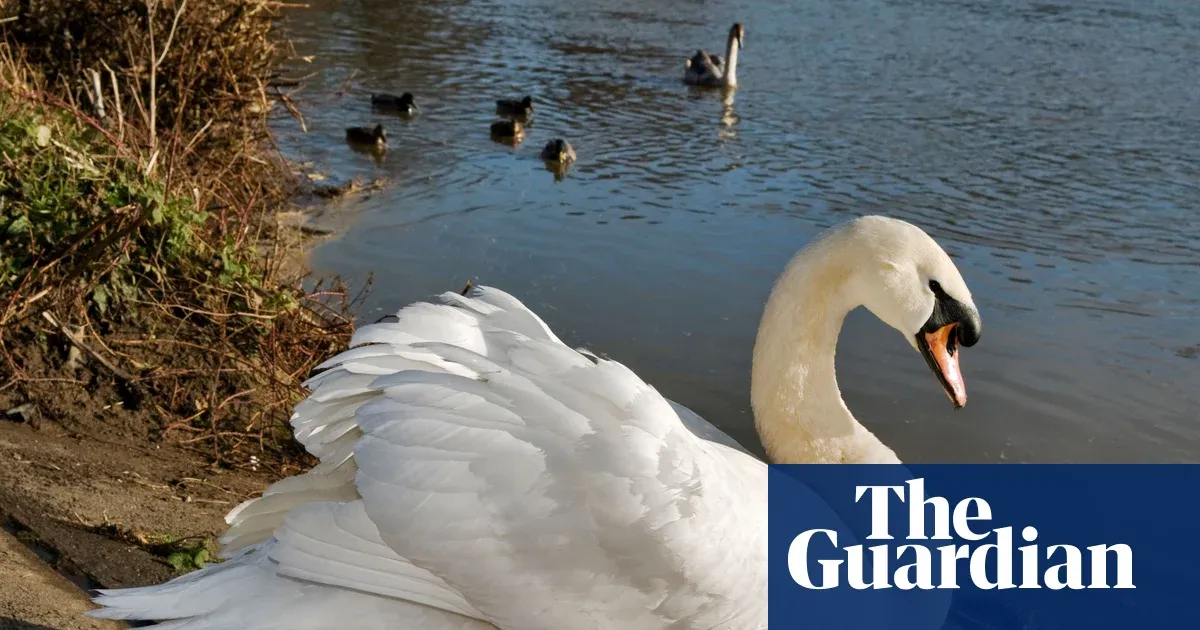
Since October, 324 swans across the Thames Valley have tested positive for bird flu. In just the first four weeks of 2026, 39 of those cases were confirmed. But the real number is almost certainly higher.
Wendy Hermon, operations director at Swan Support, has been watching the outbreak unfold from the ground. In Windsor and Maidenhead alone, her team found 46 dead swans between mid-January and late February. Another 26 turned up in Newbury. The birds showed unmistakable signs: spinning in circles, bleeding from the eyes, moving slowly as if sedated. Some bodies have been sent to Defra for testing, though confirmations are still coming through.
The culprit is H5N1, a strain that's been circulating since 2021 and has become increasingly lethal. One infected bird can transmit the virus to up to 100 others through faeces, mucus, blood, and saliva. It's a highly efficient killer.
We're a new kind of news feed.
Regular news is designed to drain you. We're a non-profit built to restore you. Every story we publish is scored for impact, progress, and hope.
Start Your News DetoxDavid Barber, the king's swan marker who monitors Thames Valley populations, puts the scale bluntly. "It's been pretty grim and one of the worst years we've had for bird flu," he said. Official counts show 40-plus deaths in the region, but Barber suspects the true figure is double that. Many birds die before anyone finds them.
Why this matters beyond the Thames Valley
Wild bird deaths matter because they're an early warning system. When swans start dying in clusters, it signals that the virus is circulating widely — and that other species are at risk. Seabirds, raptors, and waterfowl can all catch H5N1. A single outbreak in one location can seed infections across migration routes.
That's why Swan Support has shifted into containment mode. Volunteers and members of the public are actively collecting dead and dying birds, removing them from waterways before the virus spreads further. "Without such action, it's likely that the virus will spread even more," Hermon said. The work is unglamorous and often distressing, but it's proving essential.
The public is being asked not to touch sick or dead birds — the risk to humans remains very low, but why take chances. If you find a dead bird, report it online through Defra's system or call 03459 33 55 77. If you've touched feathers or faeces, wash your hands thoroughly.
What happens next depends partly on how quickly cases can be contained and partly on factors no one controls — migration patterns, weather, how efficiently the virus spreads through winter. But for now, the Thames Valley has become a focal point for understanding how H5N1 moves through wild bird populations, and how public participation can slow its advance.