A research team in South Korea has figured out how to turn rainfall into electrical signals strong enough to run drainage systems and flood alerts—no batteries, no external power required.
The technology works through something close to static electricity. As raindrops fall, they pick up a positive charge. When they hit the device's specially treated surface, that charge transfers to carbon fibers embedded in the material, creating an instant electrical pulse. A single raindrop generates up to 60 volts—enough to trigger the systems that matter when storms arrive.
How it actually works in the real world
Professor Young-Bin Park's team at Ulsan National Institute of Science and Technology (UNIST) built the system from carbon fiber-reinforced polymer composites—the same durable material used in aircraft and bridge construction. This wasn't accidental. Most experimental rain-harvesting systems rely on delicate metals or lab-only materials. The UNIST team chose composites specifically because they survive decades outdoors without corroding or breaking down.
We're a new kind of news feed.
Regular news is designed to drain you. We're a non-profit built to restore you. Every story we publish is scored for impact, progress, and hope.
Start Your News DetoxThe surface gets a lotus-leaf-inspired coating that repels water while keeping dirt and soot from building up. This matters more than it sounds: a grimy sensor won't generate reliable signals when the next storm hits.
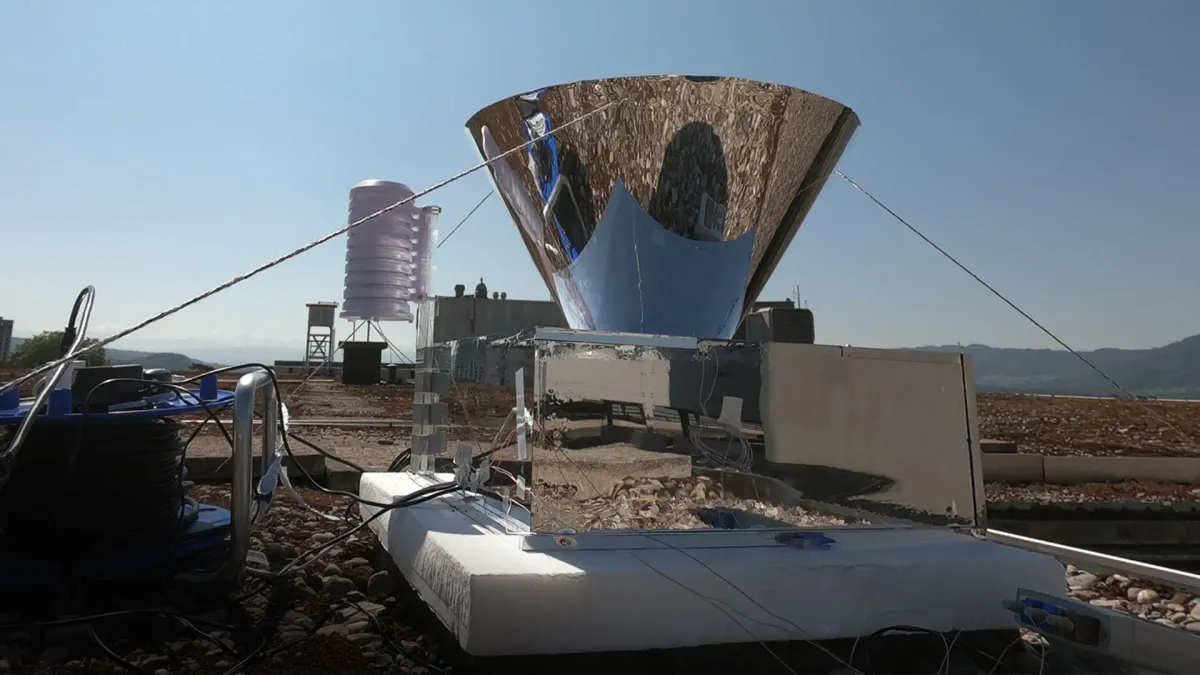
When researchers installed the devices on actual building rooftops and drainage pipes, something useful emerged. As rainfall intensity increased, the electrical signals got stronger and more frequent. The system could distinguish between light drizzle, steady rain, and heavy downpours—and automatically activate drainage pumps only when needed. No human intervention. No power draw when there's nothing to manage.
In the lab, four units connected in series briefly powered 144 LED lights, suggesting the approach scales. But the real win is simpler: a rainstorm that would otherwise require backup power systems to trigger flood controls now triggers itself. In cities where power infrastructure is aging or unreliable, or in neighborhoods where adding electrical lines is too expensive, this changes the equation.
Why this matters for urban flooding
Flooding kills hundreds of thousands globally each year and costs cities billions in repairs. Most modern drainage systems depend on electrical pumps to move water away from streets and buildings during heavy rain. If the power goes out—which often happens during storms—those pumps stop. Backup generators exist, but they're expensive and need maintenance. A self-powered trigger that responds to rainfall itself removes one critical failure point.
Professor Park's team sees potential beyond drainage: vehicles and aircraft already use carbon fiber composites extensively, so the same principle could eventually power sensors in cars, planes, or other systems that need to respond to weather.
The research was published in Advanced Functional Materials and supported by South Korea's Ministry of Science and ICT. The next phase isn't far off—moving from rooftop prototypes to integrated urban infrastructure.