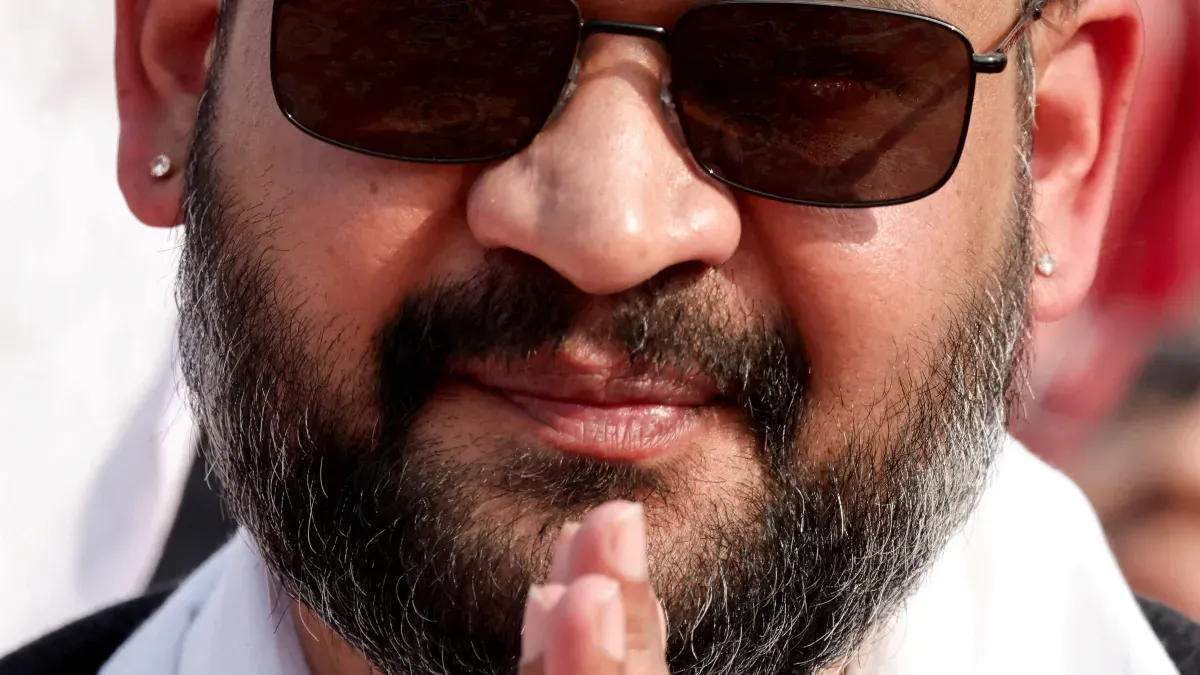
A 35-year-old rapper who became a symbol of youth rebellion has just led his party to a crushing electoral victory in Nepal, defeating veteran politicians who dominated the country for decades. Balendra Shah—known as Balen—and his Rastriya Swatantra Party (RSP) have secured nearly 100 of 165 directly elected seats in parliament, with results suggesting a clear majority when proportional representation votes are counted.
Shah's personal win was particularly striking: he defeated four-time Prime Minister Khadga Prasad Oli in Oli's own constituency, capturing almost four times as many votes. For a country where political power has historically concentrated among aging establishment figures, it felt like a generational line being drawn.
The election follows Nepal's September uprising, which began as protests against a social media ban but exploded into a mass movement against corruption and economic stagnation. At least 77 people died in the unrest. Shah didn't just observe from the sidelines—his conscious rap music, particularly Nepal Haseko (Nepal Smiling), became an anthem of the movement, accumulating over 10 million YouTube views. He trained as a civil engineer before breaking through as one of Nepal's most prominent rappers, using his platform to target inequality and corruption. When he ran as Kathmandu's first independent mayor in 2022, he won that upset too.
We're a new kind of news feed.
Regular news is designed to drain you. We're a non-profit built to restore you. Every story we publish is scored for impact, progress, and hope.
Start Your News DetoxWhat makes this moment significant isn't just the novelty of a musician in politics. It reflects a structural reality: more than 40 percent of Nepal's nearly 30 million people are under 35, yet the country's established parties have been led by politicians in their 70s. Shah's RSP, founded in 2022, was built explicitly to challenge that status quo, campaigning on health and education for poor Nepalis rather than the patronage networks that have long defined Nepali politics.
The party's campaign machinery was also notably modern. An organization of more than 660 social media operatives, funded significantly by the Nepali diaspora (particularly in the United States), ran what appears to have been one of the country's most digitally sophisticated election efforts. This wasn't a grassroots surprise—it was a well-resourced challenge to the establishment that happened to connect with public anger.
Nepalese journalist Pranaya Rana observed that Shah embodies "the outsider spirit that many young Nepalis are looking for to shake up the status quo." Even Oli himself acknowledged the result gracefully, congratulating Shah and wishing him success. India's Prime Minister Narendra Modi also acknowledged the election, calling Nepal's peaceful democratic process a "proud moment."
What happens next will test whether a reformist mandate translates into actual governance. Shah inherits a country with entrenched bureaucratic challenges and limited resources. But the election itself signals something real: a generational shift in who gets to lead, and a willingness among young voters to reject the familiar names that have cycled through power. That's a different kind of victory than just winning seats.