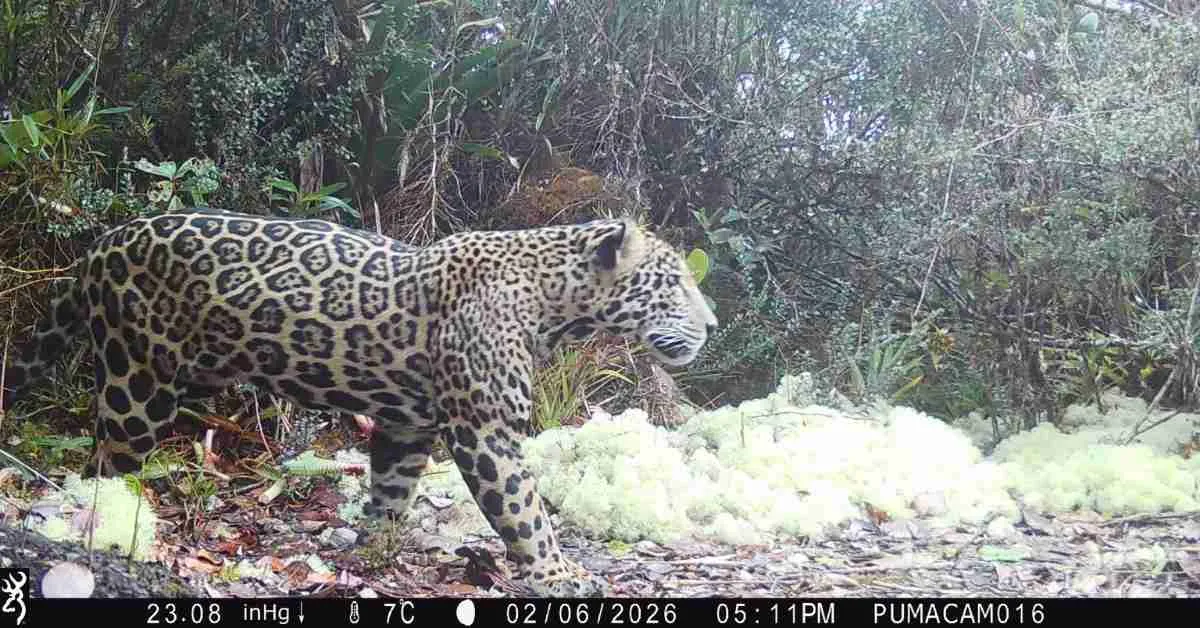
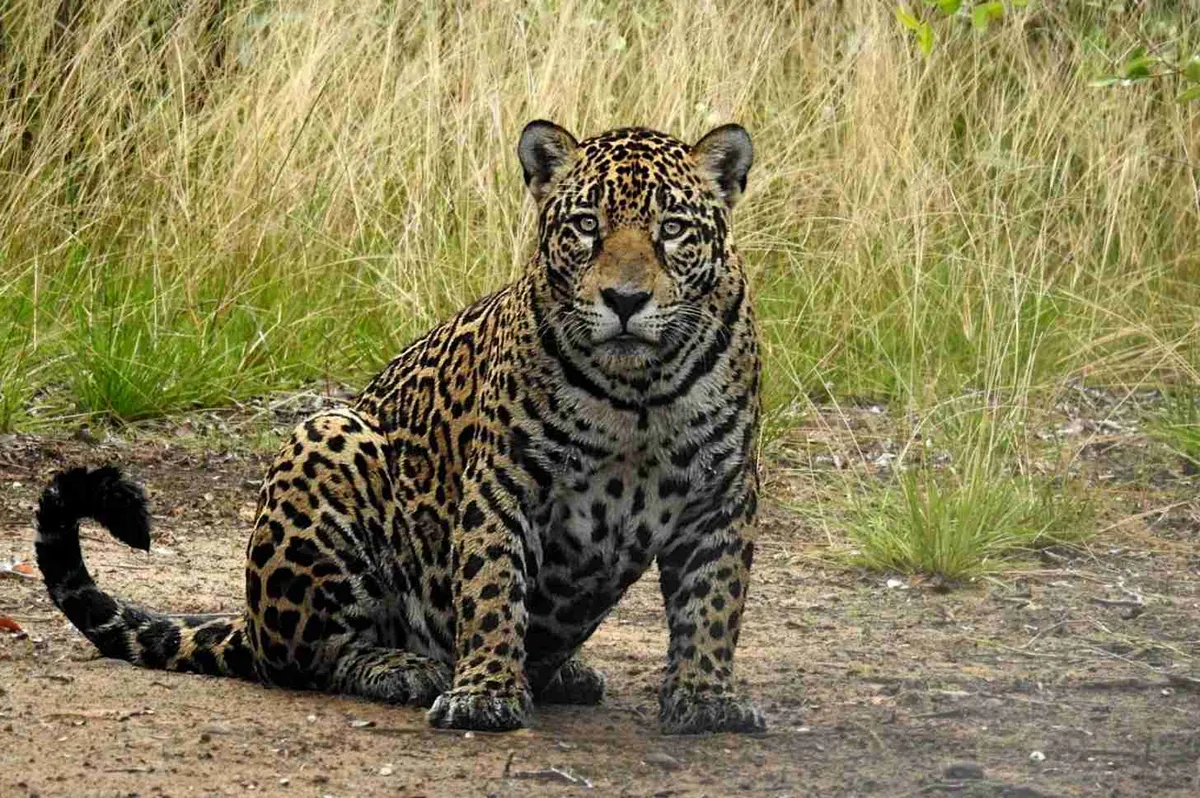
High in the Sierra del Merendón mountains of Honduras, a male jaguar was recently photographed. This is the first time in a decade a jaguar has been seen in this area.
The big cat was found at about 7,200 feet, which is much higher than jaguars usually live. They typically stay below 3,300 feet. These mountains might be a high-up path for animals to travel between Honduras, Guatemala, and other places.
Jaguars, like all big cats, are losing their homes and are hunted by poachers. But this jaguar moving back into its old territory suggests that conservation efforts are working. These efforts include patrols against poaching, protecting land, and bringing back prey animals.
We're a new kind of news feed.
Regular news is designed to drain you. We're a non-profit built to restore you. Every story we publish is scored for impact, progress, and hope.
Start Your News DetoxScientists call jaguars found at these high elevations "cloud jaguars." Allison Devlin, who leads the jaguar program for Panthera, a wildcat conservation group, said seeing jaguars at this height is very rare. She noted that their ability to travel through these high areas shows how tough they are.
The young, healthy male jaguar was caught on camera on February 6. This was almost exactly 10 years after the first cloud jaguar was seen in the Sierra del Merendón, in the same spot.
These mountains are a vital link between Honduras and Guatemala. They connect the jaguar's historical range, which stretches across 18 countries from Mexico to Argentina.
Jaguars are top predators. They help keep prey populations healthy and balanced. They also help prevent diseases that can spread from animals to humans.
However, jaguars face many dangers. Forests are being cut down for farms, ranches, mines, and towns. Climate change also hurts them, with forest fires and drying swamps. Jaguars have disappeared from over half of their original habitat.
Their remaining homes are broken up, making it hard for these big cats to move, hunt, find water, or a mate. Young jaguars also struggle to find their own territory. Jaguars are also affected by the "war on drugs," as drug groups operate in much of their habitat.
Prey animals are also becoming scarce because humans hunt them. Without enough wild prey, jaguars sometimes hunt livestock, which leads ranchers to kill them. More roads also mean more jaguars are hit by cars.
The illegal trade of jaguars and their body parts dropped after they were protected in 1975. But with a growing demand for their skins, teeth, and bones, poaching is increasing again.
As a result, jaguar numbers have dropped by 20-25% in the last 20 years. They are now listed as "near threatened," and their populations continue to fall. They have vanished from some areas where they once lived.
This is why conservationists are excited about the recent sighting. Marcio Martinez from Honduras's National Institute of Forest Conservation said it confirms that jaguars are still spread out in the northwestern part of the country. He added that seeing the cat brings hope for their return to the Merendón mountains.
Renewed Focus on Jaguar Conservation
Countries where jaguars live are working with conservation groups to protect these cats and their homes.
In 2025, these countries agreed on a plan to stop illegal trade by strengthening laws and enforcement. They also promised to work together across borders and educate people to reduce killings caused by conflicts. A regional plan to protect habitat was also finished last year.
At a 2026 meeting, countries agreed to protect jaguar travel paths, promote peaceful living, and restore jaguar habitats. This is part of the Jaguar 2030 Roadmap, which aims to create 30 "jaguar conservation units" and connecting paths by 2030.
Honduras has also promised to stop deforestation by 2029, which is a major threat to jaguars. They plan to use about 8,000 soldiers for this task.
However, conservationists say that political promises need real funding and coordinated actions on the ground. In 2021, WWF noted that little progress had been made three years into the Jaguar Roadmap 2030. Current progress reports are not publicly available.
Panthera, a key supporter of the roadmap, works with local partners and governments. Their biologists are setting up more camera traps to monitor jaguars, running anti-poaching patrols, and working with landowners to secure jaguar travel routes. They are also bringing back prey animals like peccaries.
Devlin believes these efforts are important for jaguars to survive in the region. She hopes the young male jaguar caught on camera can move between populations. This movement helps keep jaguars connected and genetically healthy.