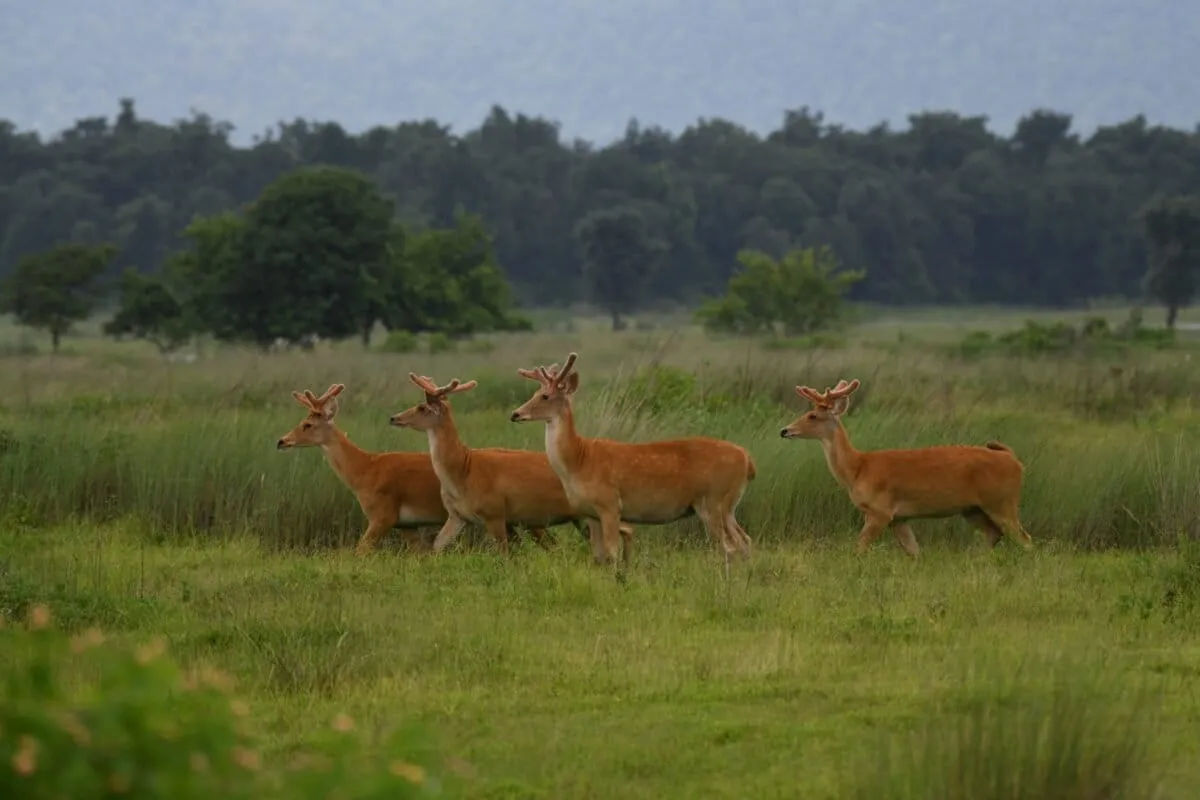
Imagine having your entire species' future riding on one single location. That was the rather precarious situation for India's hard-ground swamp deer, a unique subspecies that, until recently, put all its antlers in one basket: the Kanha Tiger Reserve.
Once freely roaming across India, these deer — known as Rucervus duvaucelii branderi to their more formal friends — saw their numbers dwindle to a mere 1,100. All of them packed into one protected area in Madhya Pradesh state. Which, if you think about it, is both impressive and slightly terrifying.
Now, these aren't your typical swamp deer. While their cousins prefer the squishy, waterlogged areas, the hard-ground variety likes its footing firm, preferring solid grasslands. They're also known as barasingha, which charmingly translates to "12-horned" in Hindi. Because, well, they are.
We're a new kind of news feed.
Regular news is designed to drain you. We're a non-profit built to restore you. Every story we publish is scored for impact, progress, and hope.
Start Your News DetoxA New Address, A New Hope
Neha Awasthi, a deer expert from the IUCN, pointed out the obvious problem with putting all your precious deer in one geographic basket: a single disease outbreak, an environmental hiccup, or even just some bad genetic luck could wipe out the whole lot. Not ideal for species preservation.
So, between 2015 and 2023, the Madhya Pradesh forest department decided these deer needed a change of scenery. They carefully relocated 98 individuals from Kanha to the Satpura Tiger Reserve. Think of it as a very exclusive, very long-distance, all-inclusive safari.
Once at Satpura, the deer first got to chill in a 50-hectare enclosure, safe from any local predators, giving them time to get acquainted with their new digs. Only after they'd settled in were they released into the wild open grasslands.
And the results? A study co-authored by Awasthi confirms the move was a roaring success. By 2023, that initial group of 98 deer had swelled to a robust 172. It seems a fresh start was exactly what the barasingha needed. Now, if only we could solve our own housing crises with such elegant efficiency.