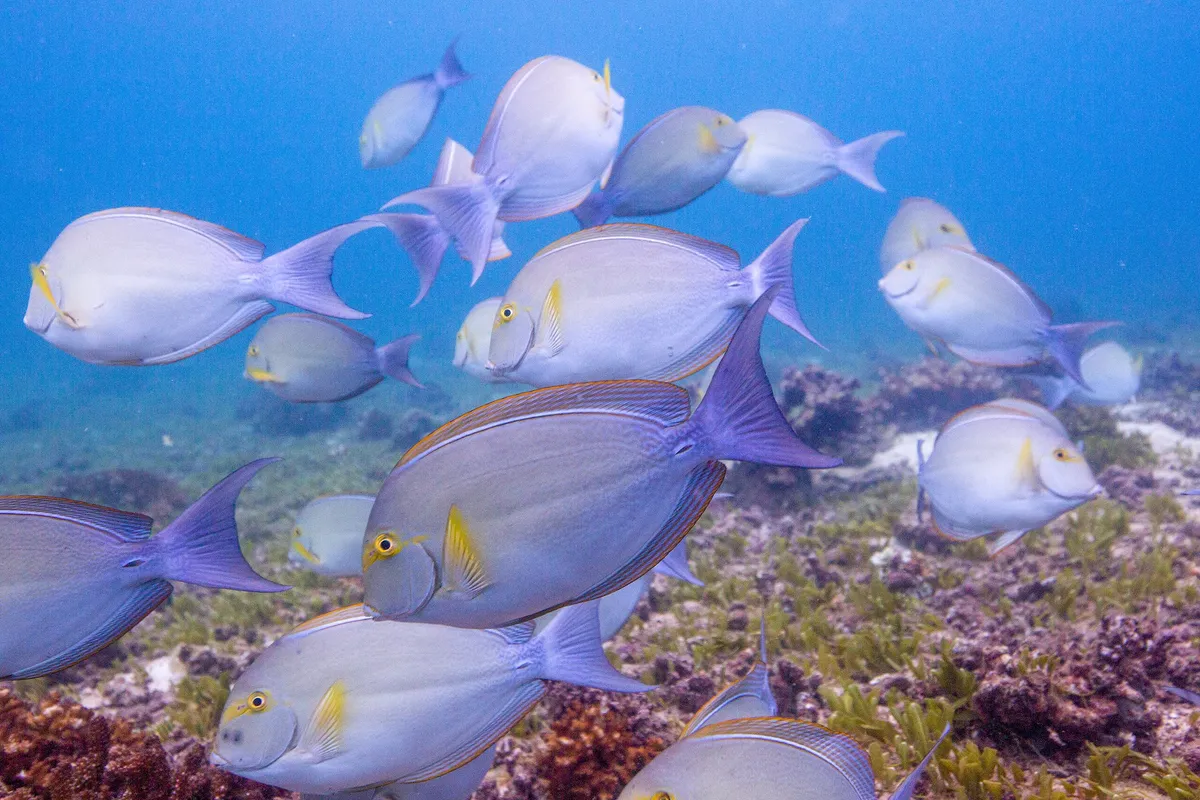
Coral reefs are dying. That's the story we know. But researchers at the Smithsonian Tropical Research Institute just found something else hiding in that decline: a massive untapped resource for fighting hunger.
When fish populations in coral reefs recover to healthy levels, sustainable seafood yields jump by nearly 50%. That's not incremental. That's 20,000 to 162 million additional servings of fish annually — enough to meet the recommended intake for several million people.
The math gets more interesting when you look at where the biggest gains land. Indonesia, the Philippines, parts of Africa and Southeast Asia — the regions with the highest rates of hunger and micronutrient deficiencies — would benefit most. A researcher involved in the study, Sean Connolly, put it plainly: "There is a positive correlation between countries' potential increase in the number of fish servings with stock recovery and their global hunger index."
We're a new kind of news feed.
Regular news is designed to drain you. We're a non-profit built to restore you. Every story we publish is scored for impact, progress, and hope.
Start Your News DetoxIn other words, the places that need protein most stand to gain the most from reef recovery.
Why this matters beyond the headline
This isn't just environmental conservation dressed up in sustainability language. When coral reefs collapse, fishing communities don't just lose an ecosystem — they lose their livelihood and their food supply simultaneously. A recovered reef fixes both at once.
But here's the friction point: recovery takes time. Fish populations don't bounce back overnight. That means communities dependent on fishing need alternative income during the rebuilding years. Some regions need international support to make that transition work. It's not impossible — it's just not free.
Jessica Zamborain-Mason, the study's lead author, framed the real opportunity: "Effective reef fisheries monitoring and management has substantial and measurable benefits beyond environmental conservation; it has food security and public health implications."
The research, published in the Proceedings of the National Academy of Sciences in 2025, analyzed coral reef regions worldwide. The findings suggest that when countries commit to letting fish stocks recover — through catch limits, protected areas, and sustainable management — the payoff is measured in millions of people eating better.
This is progress that doesn't require choosing between feeding people and protecting nature. It requires choosing both, with intention and support.