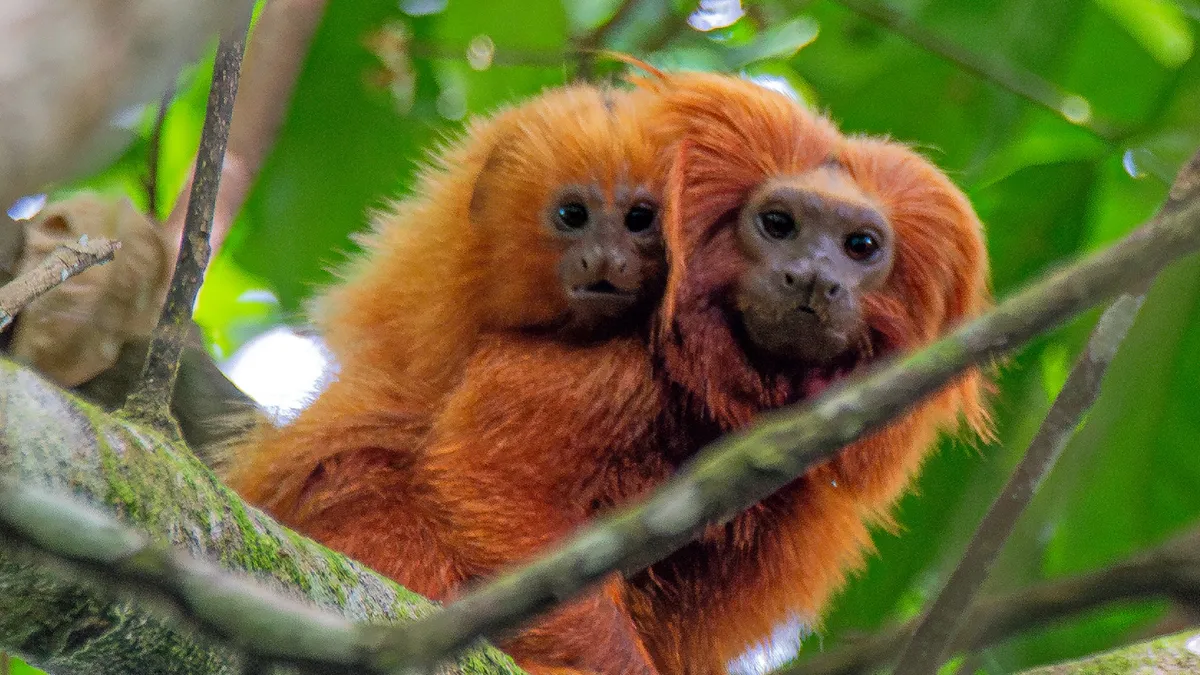
Brazil's golden lion tamarins are basically the comeback kids of the animal kingdom. These small, ridiculously orange monkeys were nearly wiped out in the 1970s, only to claw their way back to a respectable 4,800 individuals by 2023. A real conservation success story, if you ask us.
Then, between 2017 and 2019, yellow fever decided to crash the party, wiping out a staggering 30% of their population. Suddenly, we were back down to a precarious 2,500. Which, if you're keeping score, is a pretty terrifying swing for a species that already lives on just 2% of its original Atlantic Forest habitat.
Good news, though: researchers have been busy. They dug into over 1,000 tamarin deaths during that yellow fever epidemic, comparing them to pre-outbreak data from 2014-2016. The goal? To figure out exactly where these tiny primates were most vulnerable.
We're a new kind of news feed.
Regular news is designed to drain you. We're a non-profit built to restore you. Every story we publish is scored for impact, progress, and hope.
Start Your News DetoxTurns out, certain environmental factors — the usual suspects like forest fragmentation and proximity to human activity — made some areas far riskier than others. By crunching all that data, they've now pinpointed "priority zones." These are the high-risk hot spots where future vaccination efforts will pack the biggest punch.
It's a proactive, targeted strike against a disease that could, frankly, undo decades of hard-won conservation. Because when you're a small, bright orange monkey living on borrowed time, every shot counts.