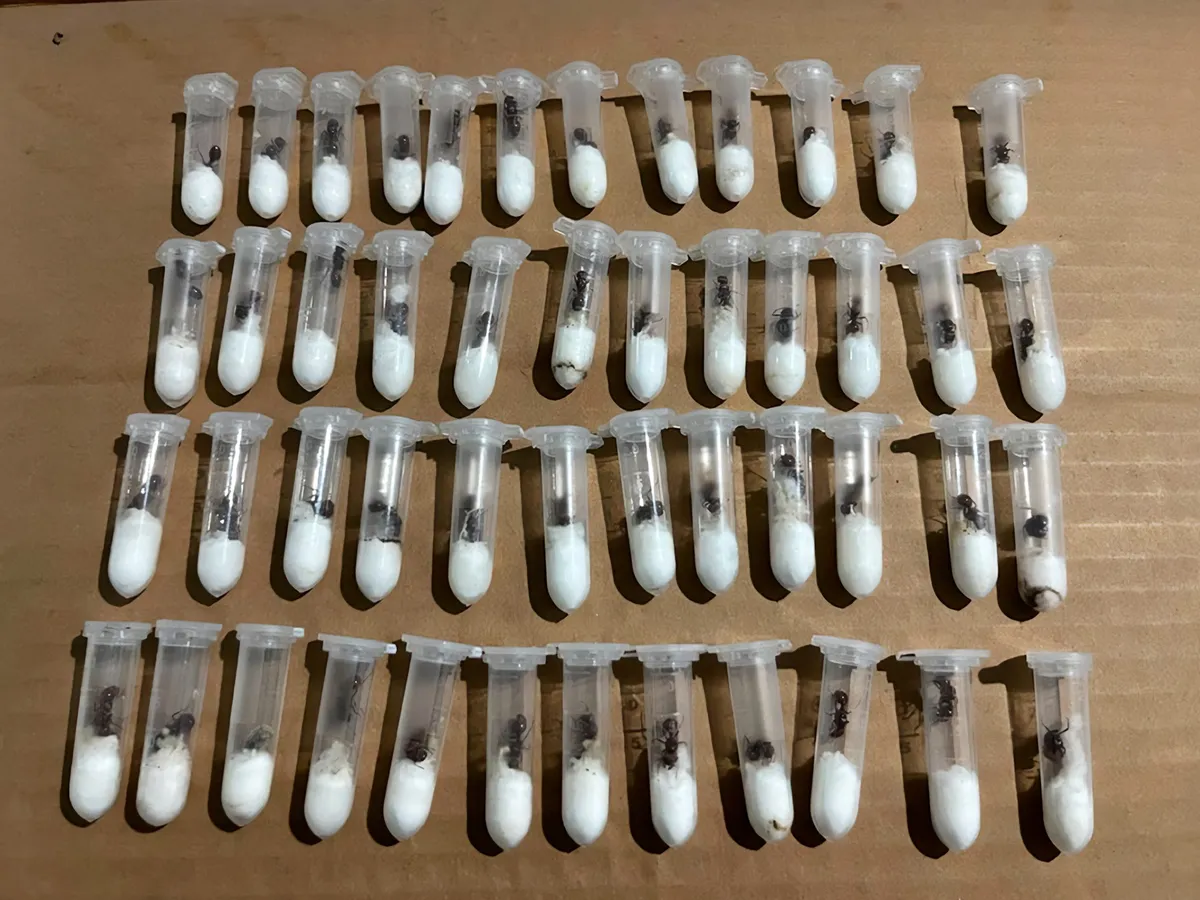
Picture this: a suspicious package, labeled rather innocently as "collectible figures," gets flagged by a delivery company in Mexico. Inside? Not action heroes, but 105 live queen harvester ants, each tucked into a test tube with a cotton ball, then hidden inside plastic toys. Because apparently, that's where we are now.
The ants were on a rather long journey from Jalisco, Mexico, all the way to Laos. Unfortunately, 18 of the royal insects didn't make it, but the surviving 87 were released into the Cerro Viejo Protected Natural Area. Which, if you think about it, is a pretty dramatic way to return to the wild.

The Royal Treatment
These aren't just any ants; they're Pogonomyrmex genus, also known as harvester ants, native to American deserts. And they're apparently hot property in the global insect trade. Why? Because they're master architects, building incredibly complex colonies that fascinate hobbyists. People keep them in elaborate artificial habitats called formicariums, which sounds like something out of a sci-fi movie but is very much a real thing.
We're a new kind of news feed.
Regular news is designed to drain you. We're a non-profit built to restore you. Every story we publish is scored for impact, progress, and hope.
Start Your News DetoxSandra Altherr, co-founder of the German NGO Pro Wildlife, points out that this seizure is just one tiny piece of a much larger, increasingly busy ant-trafficking puzzle. Her team found over 360 different ant species for sale on various trading websites. And just last year, Kenyan authorities intercepted a shipment of 5,300 endemic harvester ants and arrested four people. So, while your average ant might just be looking for a picnic, some of their queenly cousins are apparently living lives of international intrigue.