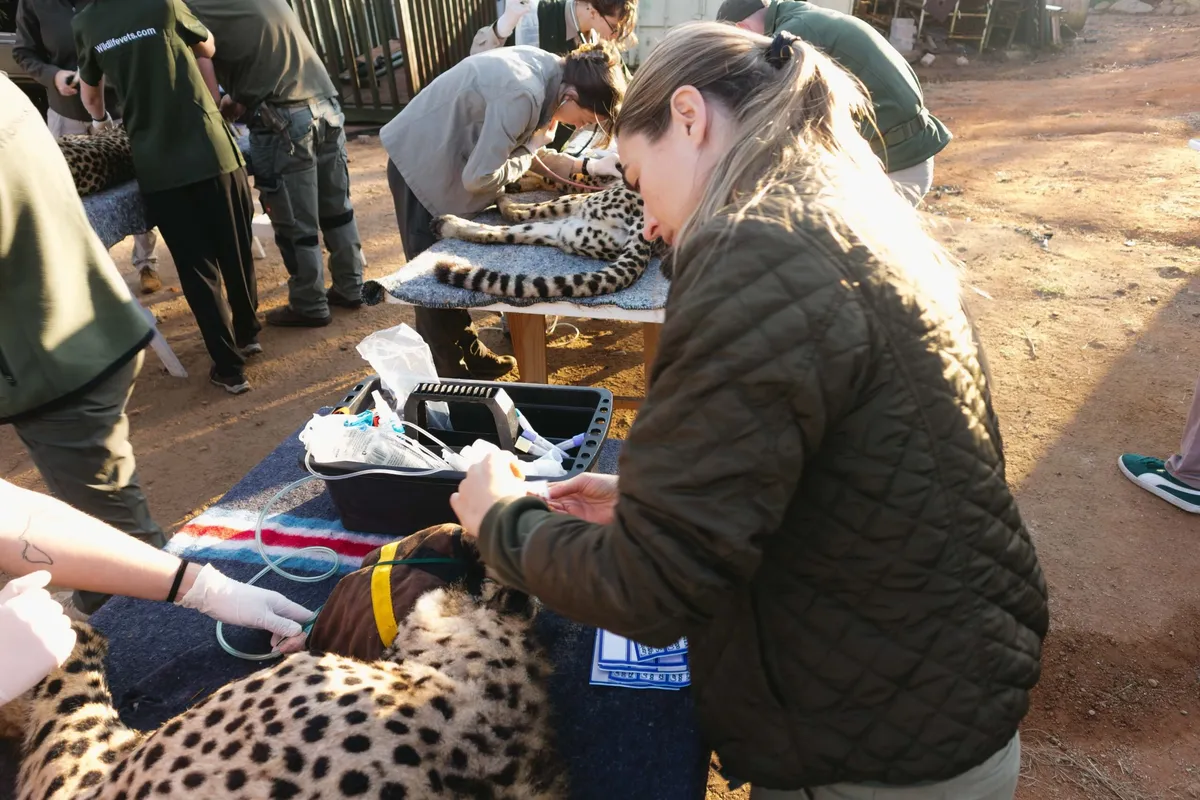
Turns out, you can go home again. Especially if home is Zambia's Greater Luangwa Ecosystem and you're a cheetah who hasn't been seen there in nearly three decades. Six of these sleek, spotted speedsters — three males, three females — just made their grand return to North Luangwa National Park, after a lengthy road trip from South Africa.
It’s a big deal, considering the last confirmed cheetah sighting in the area was way back in 1998. The culprits for their disappearance? Apparently, a nasty combination of anthrax outbreaks and some less-than-ideal habitat conditions. Because even the fastest land animal needs a decent place to live and not get sick, which, if you think about it, is a pretty low bar.

The Zambian Department of National Parks and Wildlife (DNPW) teamed up with conservation groups like the Endangered Wildlife Trust (EWT) to make this happen. And this isn't a one-off. Another six cheetahs are set to arrive in August, with a third group of six following in August 2027. Because if you're going to reintroduce a species, you might as well go all in.
We're a new kind of news feed.
Regular news is designed to drain you. We're a non-profit built to restore you. Every story we publish is scored for impact, progress, and hope.
Start Your News DetoxAccording to Olivia Sievert, who manages EWT's Cheetah Metapopulation Project (which sounds like a very important job title), many of the old threats to cheetahs have eased up. Conservation efforts have paid off, with prey populations bouncing back in North and South Luangwa national parks. This has allowed other big predators, like lions and African wild dogs, to really hit their stride.
But here’s the kicker: cheetahs, for all their speed, aren't exactly great at long-distance self-relocation. The nearest existing cheetah populations are just too far away to naturally wander back into the Luangwa valley. So, active reintroduction isn't just a nice idea; it's the only way to get these magnificent cats back into their ancestral hunting grounds. Let's hope they appreciate the effort.