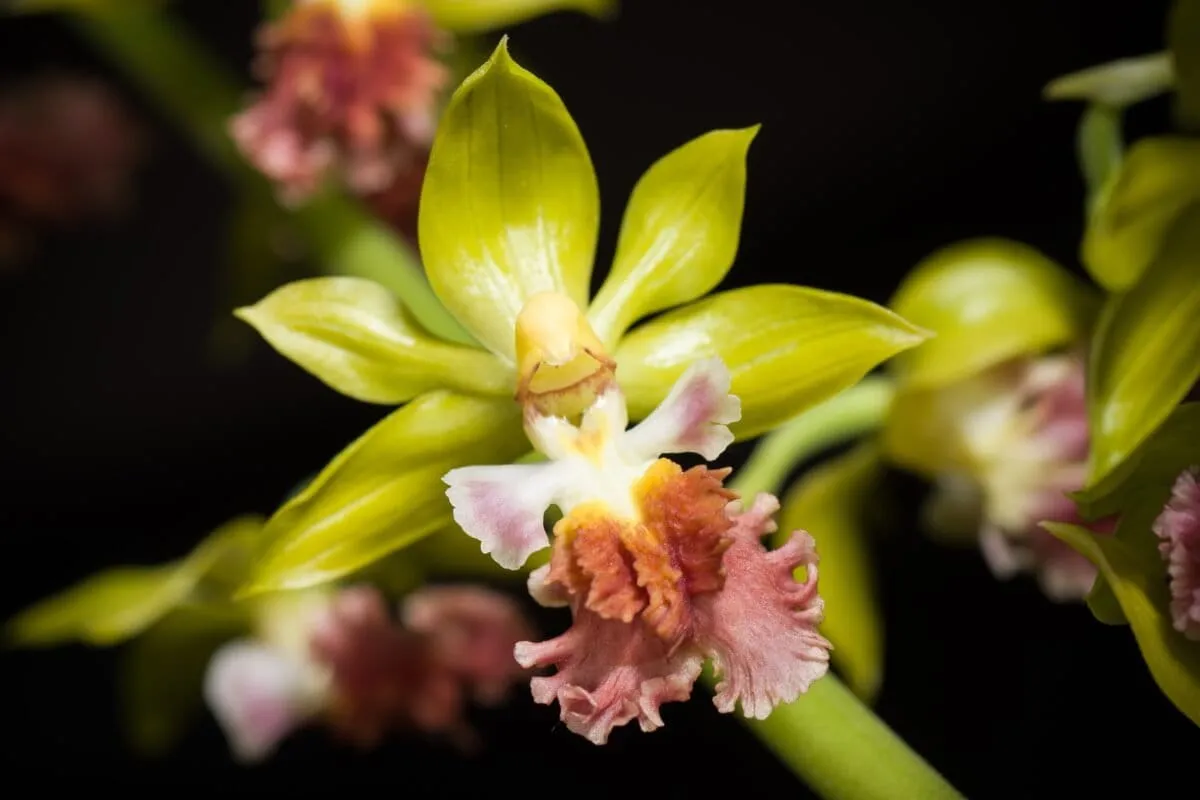
Myanmar holds one of the world's most intact botanical secrets. The country's tropical forests, limestone karsts, and cloud-wrapped mountains shelter over 14,000 vascular plant species—including more than 1,200 orchids, a color-shifting begonia discovered just recently, and rare gingers that exist nowhere else on Earth.
Yet for decades, this botanical treasure has remained largely unmapped. Researchers couldn't answer basic questions: where exactly do these plants grow? Which species are most vulnerable? What's actually being lost?
The bottleneck was simple but stubborn. Myanmar's herbarium records—the dried plant specimens that form the backbone of botanical knowledge—sat mostly undigitized in filing cabinets. Field surveys were sporadic. And after the 2021 military coup, research became nearly impossible. "Biodiversity is often one of the neglected victims of war," says Alice Hughes, a biologist at the University of Melbourne. "You can't go and collect data, and you also can't protect areas."
We're a new kind of news feed.
Regular news is designed to drain you. We're a non-profit built to restore you. Every story we publish is scored for impact, progress, and hope.
Start Your News DetoxFilling the Gaps
Now, a shift is happening. Researchers including Ke-Ping Ma from the University of Chinese Academy of Sciences are leading a push to digitize Myanmar's botanical records and pool them into shared databases. It's unglamorous work—scanning specimens, verifying locations, building digital maps—but it's unlocking what was hidden.
This collaborative approach matters because conservation can't happen in a vacuum. When you know precisely where a rare ginger grows, you can protect that specific forest. When you map orchid distributions across regions, you spot patterns in what's thriving and what's disappearing. When you share this data across institutions and countries, you multiply the eyes watching for threats.
The political instability that has made fieldwork dangerous also means some of Myanmar's richest forests are under siege from resource extraction. But better data gives conservationists and policymakers something they didn't have before: a clear picture of what's actually at stake.
With 14,020 plant species documented and more being discovered each year, Myanmar's botanical diversity rivals countries twice its size. The real work now is making sure that diversity survives long enough to be fully understood.