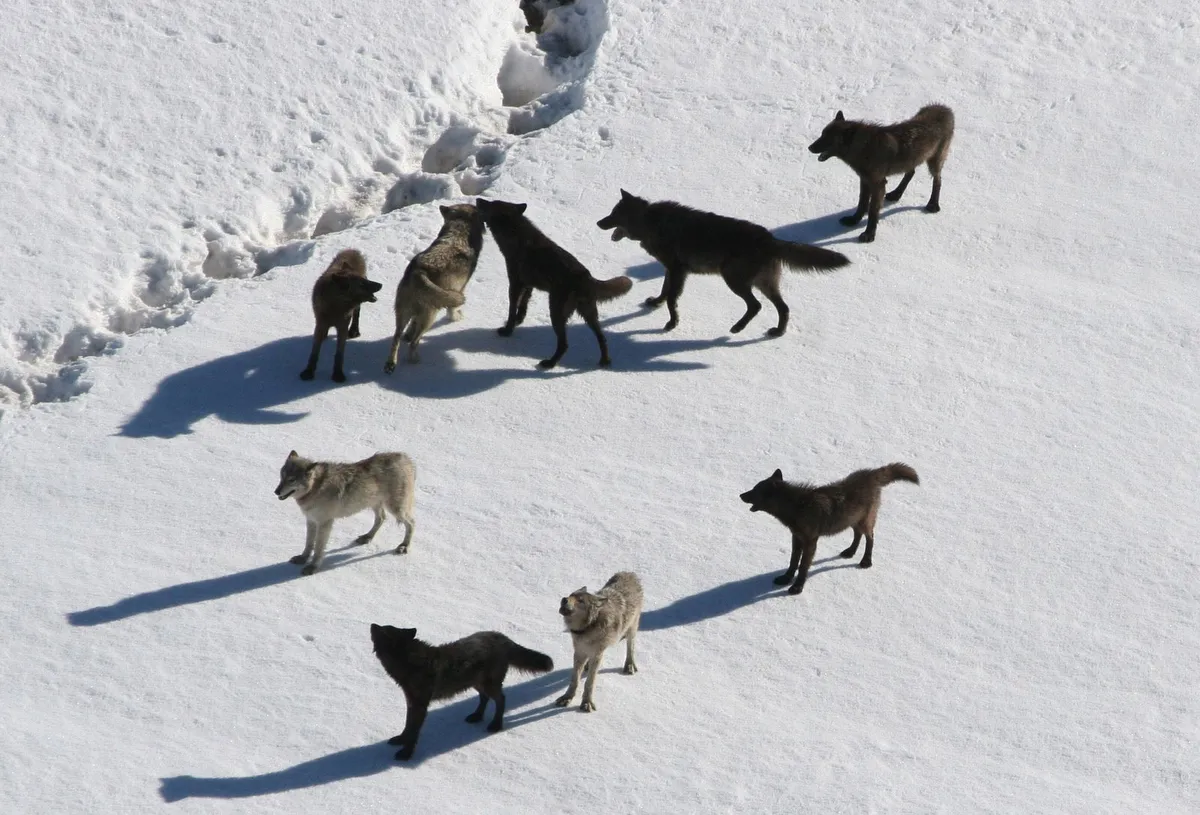
A young female wolf known as 1478F was found dead in southern Montana in late December, shot outside the legal hunting season. She belonged to the Junction Butte pack—the most frequently observed wolf population in Yellowstone—and was considered a rising leader within her group.
1478F was born in April 2022 and had become a favorite among wildlife trackers and visitors for her intelligence and hunting prowess. According to Wolves of the Rockies, she was "moving toward a leadership position" in the pack, the kind of role that shapes a group's survival and success for years to come.
The investigation
Wildlife officials are treating the death as poaching—the killing happened more than a month after Montana's authorized wolf hunting season closed. The case triggered a $31,000 reward (up from an initial $1,000) after donations poured in from animal advocacy groups, reflecting how closely people follow these particular wolves.
We're a new kind of news feed.
Regular news is designed to drain you. We're a non-profit built to restore you. Every story we publish is scored for impact, progress, and hope.
Start Your News DetoxThe Junction Butte pack has become something of a global draw. Thousands of visitors come to Yellowstone each year specifically to see wolves, and this pack delivers. That visibility has made 1478F's death resonate beyond typical wildlife news—it's touched a nerve about what wolves mean to the region, and who gets to decide their future.
The deeper tension
Wolves were hunted to near extinction across the United States by the mid-1900s. Starting in 1995, wildlife managers brought 41 wolves back to Yellowstone over two years. That reintroduction worked—the ecosystem shifted, prey populations stabilized, and the wolves thrived. But it never stopped being controversial.
Today, two sides remain locked in disagreement. Advocates point out that wolves draw tourists and money to rural Montana and Wyoming—they're an economic asset, not just a symbol. Ecologically, they're apex predators that keep elk populations in check, which allows vegetation to recover along streams and riverbanks. The science on this is fairly settled.
Hunting proponents argue the species is stable enough to sustain harvest, that controlled hunting helps manage population size, and that rural communities have a right to participate in wildlife management on their own land.
What 1478F's death highlights is that this debate isn't abstract. It plays out in individual animals, in pack dynamics, in the difference between a thriving leader and an empty space in the social structure. The investigation continues, and so does the question of what role wolves will play in the West going forward.