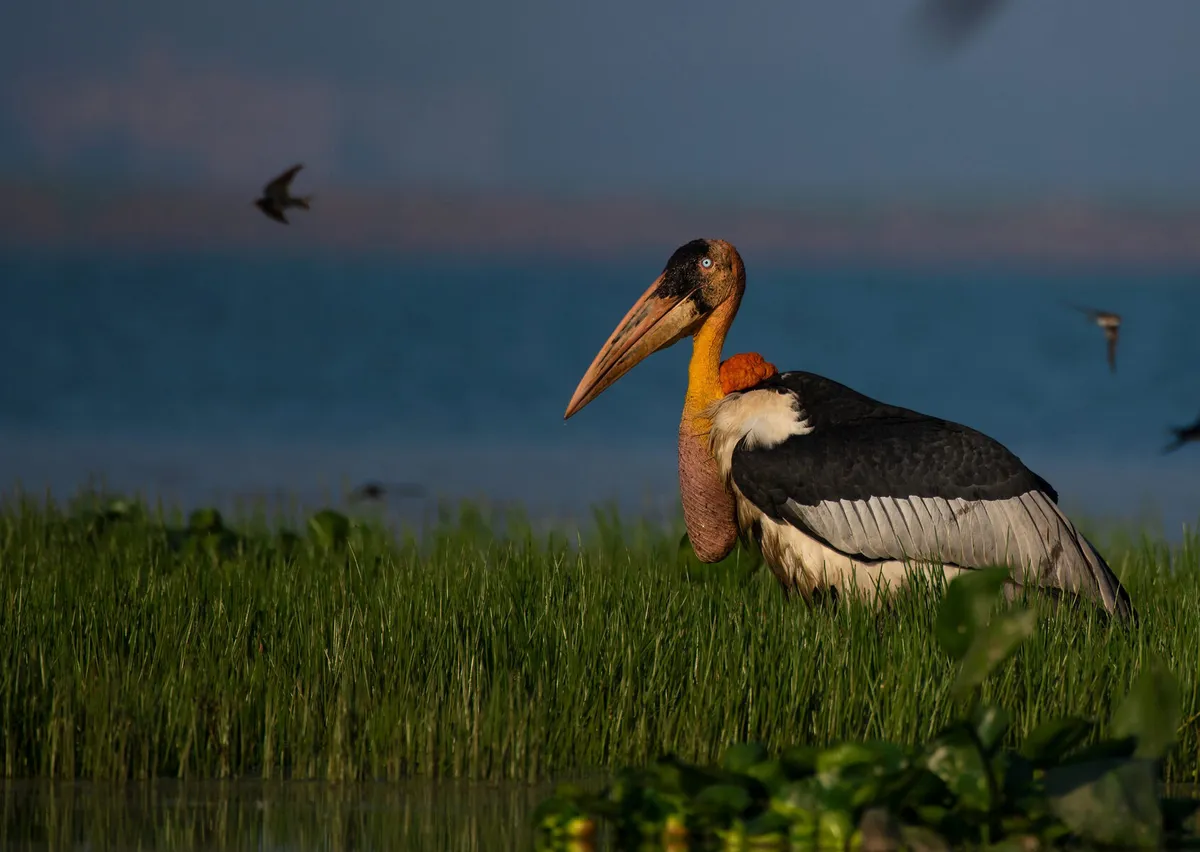
In 2007, Purnima Devi Barman was supposed to be writing a PhD dissertation. Instead, she found herself standing in Assamese villages, explaining why the gangly, four-and-a-half-foot-tall birds locals called "hargila" — bone swallower — deserved to live.
The greater adjutant storks had nearly vanished. By the time Barman began her work, only 800 to 1,200 remained on the planet. Deforestation had stripped away their nesting sites. Fear had done the rest. The birds were seen as omens of death, and villagers cut down trees where they roosted.
But Barman noticed something: the problem wasn't actually the storks. It was the story people told about them.
We're a new kind of news feed.
Regular news is designed to drain you. We're a non-profit built to restore you. Every story we publish is scored for impact, progress, and hope.
Start Your News DetoxRewriting the Narrative
She didn't launch a typical conservation campaign. No lectures about ecosystem services, no guilt trips about extinction. Instead, she wove the storks into the fabric of what her community already valued.
When a stork laid eggs, Barman organized traditional baby showers. During breeding season, she sang local wedding songs. She encouraged women to say prayers for newly hatched chicks in temples. She worked with local weavers to stitch the stork's distinctive orange neck pouch into patterns on mekhala chadors and gamochas — traditional Assamese garments.
Somewhere between the prayers and the woven patterns, the storks stopped being a curse. They became family.
By 2008, over 400 women had joined what Barman called the Hargila Army. They monitored nests, rescued fallen chicks, and walked through villages telling people why these birds mattered — not as abstract conservation targets, but as part of the ecosystem that sustained them all. The storks consumed decaying matter in the wetlands, recycling nutrients, keeping the system alive.
The economic piece came next. The Hargila Army began weaving and selling stork-themed textiles to markets across India and internationally. The work gave women income and a voice in their communities. It also meant the storks stayed valuable — not just spiritually, but materially.
Numbers That Speak
The population rebound is real. Today, an estimated 3,180 greater adjutant storks exist globally, with 1,830 in Assam alone. In Kamrup district, the number of nests climbed from 27 in 2008 to over 210. The Hargila Army itself grew from 400 to 20,000 members.
Barman has been recognized globally for this work, winning the Whitley Gold Award. She's now expanding the project to Bihar and Cambodia, aiming to push the global population to 5,000 by 2030.
What makes this story stick isn't the numbers, though. It's what Barman learned in the process: "Human emotion is a powerful tool of change. Appeal to people's emotions, and we can change the fate of entire species."
The storks are still ungainly. Still bald. Still strange. But they're no longer disappearing. And the women who saved them have found something unexpected — respect, income, and proof that you don't need to choose between community and conservation. You just need to speak the language your community already understands.