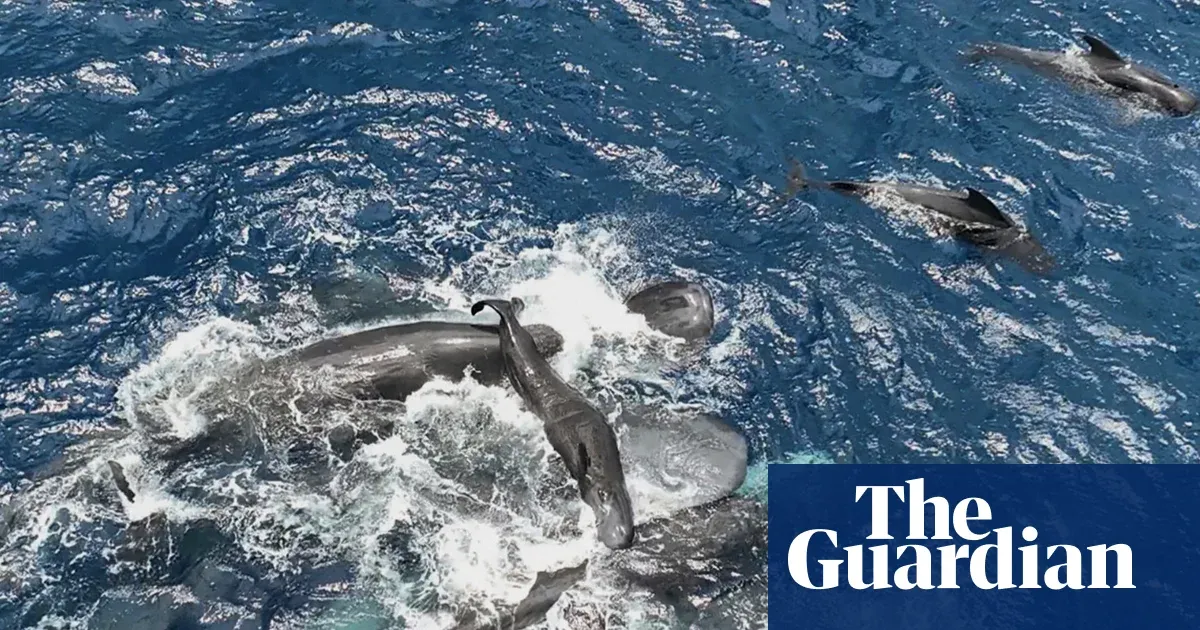
Get this: scientists just filmed something truly rare — a sperm whale giving birth. And it gets even cooler: other female whales actually pitched in, like a team of underwater midwives, helping the mom and her new baby.
This isn't just a cute video. This footage, captured by Project Ceti off the coast of Dominica, is a huge deal. They were watching a group of 11 whales, including a 19-year-old named Rounder, who was about to have her second calf.
Out of 93 different kinds of whales, dolphins, and porpoises, we've only ever seen nine species give birth in the wild. But seeing other whales, not even related to the mom, helping out? That's almost unheard of.
We're a new kind of news feed.
Regular news is designed to drain you. We're a non-profit built to restore you. Every story we publish is scored for impact, progress, and hope.
Start Your News DetoxShane Gero from Project Ceti mentioned this is the first time birth assistance has been seen in any animal besides primates. So, it's not just humans and monkeys helping each other out anymore. Grandma was there, and so were other unrelated females, all lending a fin.
The Big Moment Underwater
The birth took about 34 minutes. During that time, other adult females would dive under Rounder, often on their backs, facing her. Talk about support!
As soon as the calf arrived, the whole group went into action. All the adults gently squeezed the tiny newborn between their bodies. They nudged it with their heads, pushing it around underwater and even lifting it onto their backs above the surface.
Here's why that matters: newborn sperm whales, even though they learn to swim fast, actually sink right after birth. Whales are born tail-first, unlike most other mammals. So, those helping whales lift the baby up, keeping it from sinking and helping it get its first breaths. Pretty clever, right?
Scientists also picked up on a lot of whale chatter. They noticed big changes in the whales' "vocal style" during key moments, like when other pilot whales showed up after the birth. It suggests the whole crew was working together, either to help the birth or protect the new baby.
Sperm whale pregnancies are long, up to 16 months. The calves are born about 13 feet long and stick with mom for at least two years. These young whales become the center of their social circle, with other whales even babysitting while the mom goes hunting.
After filming the birth in 2023, the team didn't see the pod for over a year. But then, last July, they spotted the newborn with two other young whales, Accra and Aurora. Surviving its first year is a huge win, meaning this little whale has a good shot at growing up.