
Scientists have found a surprising way to protect hedgehogs from roads. Researchers at the University of Oxford suggest that ultrasonic repellers could help lower the number of hedgehogs killed by cars. This idea comes from new research showing that hedgehogs can detect high-frequency ultrasound.
The European hedgehog is a beloved animal, but its numbers are dropping fast. In 2024, it was listed as "near threatened." Road accidents are a big problem. Up to one in three hedgehogs in some areas die from being hit by vehicles.
These new findings mean that ultrasonic devices might keep hedgehogs away from roads. This could reduce deaths. Before this, scientists didn't know if hedgehogs could hear such high-pitched sounds.
We're a new kind of news feed.
Regular news is designed to drain you. We're a non-profit built to restore you. Every story we publish is scored for impact, progress, and hope.
Start Your News DetoxAssistant Professor Sophie Lund Rasmussen, a lead researcher, said the next step is to work with car companies. They want to fund and design sound repellents for cars. If this works, it could greatly reduce the threat of road traffic to hedgehogs.
How Hedgehog Hearing Was Tested
To study hedgehog hearing, Oxford researchers teamed up with colleagues in Denmark. They measured the brain responses of 20 hedgehogs from wildlife rescue centers. Small electrodes were placed on the animals to track electrical signals between the ear and brain. Short sound pulses were played through a speaker.
The results showed that the brain responded to sounds between 4 and 85 kHz. Hedgehogs were most sensitive around 40 kHz. This confirms they can hear ultrasound, which starts above 20 kHz. They can hear frequencies up to at least 85 kHz. After checks, all hedgehogs were released back into the wild.
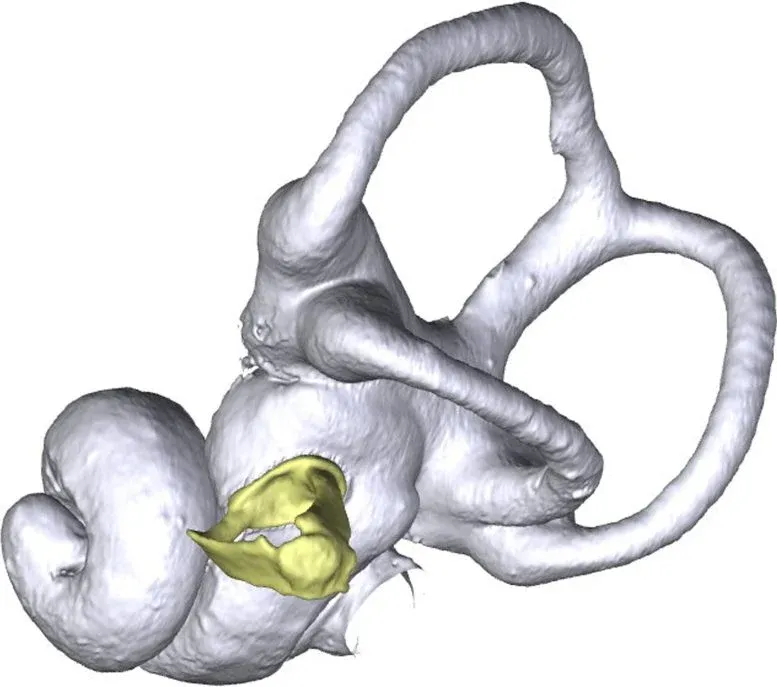
Researchers also used micro-CT scans on a deceased hedgehog. This hedgehog had been critically injured by a rat trap. The scans created a detailed 3D model of its ear. This revealed new features.
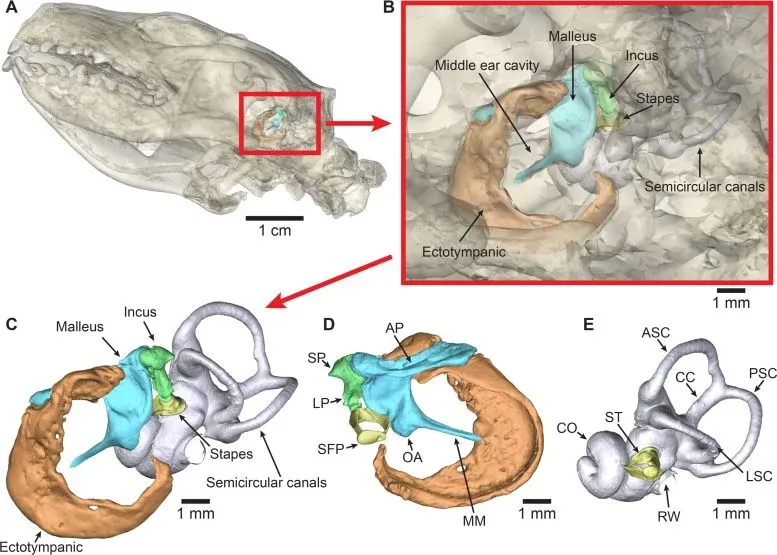
The model showed tiny, dense middle ear bones. It also showed a partly fused connection between the eardrum and the first bone. This structure makes the ear stiffer. It improves the transmission of very high-pitched sounds. This is also seen in animals like bats that use echolocation.
Ear Anatomy and Ultrasonic Adaptations
Further analysis found that hedgehogs have a small stapes. This is the tiniest middle ear bone. It connects the chain of bones to the inner ear's cochlea. A lighter, smaller stapes can move faster. This helps transmit high-frequency sound waves. The cochlea itself is short and compact. This helps process ultrasonic vibrations.
These findings suggest that ultrasonic repellents could be developed. Hedgehogs would hear them, but humans and pets would not. If effective, these devices could keep hedgehogs away from roads. They could also protect them from other dangers like robotic lawnmowers and garden strimmers.

Dr. Rasmussen noted that hedgehogs are designed to hear a broad ultrasonic range. A key question now is whether they use ultrasound to talk to each other or find prey. Researchers have already started looking into this.
Professor David Macdonald, a co-author, finds it exciting when conservation research leads to new discoveries. These discoveries then offer new ways to help conserve species. The main question now is if hedgehogs respond to ultrasound in ways that reduce collision risks. This includes risks with robotic lawnmowers or cars.
Deep Dive & References
Hearing and anatomy of the ear of the European hedgehog Erinaceus europaeus - Biology Letters, 2026