Sea turtles are known for traveling vast distances. However, some green sea turtles in the Galápagos Islands stay surprisingly close to home.
Researchers tracked "yellow-morph" green sea turtles. They expected these turtles to migrate far away to reproduce. Instead, satellite tracking showed they stayed within the Galápagos Marine Reserve for three years.
Dr. Rowe, a professor at Alma College, noted this unexpected finding. He is the lead author of a new study in Frontiers in Amphibian and Reptile Science.
We're a new kind of news feed.
Regular news is designed to drain you. We're a non-profit built to restore you. Every story we publish is scored for impact, progress, and hope.
Start Your News DetoxTwo Types of Turtles in One Place
Green sea turtles are mostly vegetarians. They eat algae and seagrasses as adults. There are two main genetic types of green sea turtles. Yellow-morph turtles live in the western Pacific. Black-morph turtles live in the eastern Pacific.
The Galápagos is the only place where both types live together. They share the same waters and food. Interestingly, young yellow-morph turtles grow faster than young black-morph turtles. Scientists are still trying to understand why.
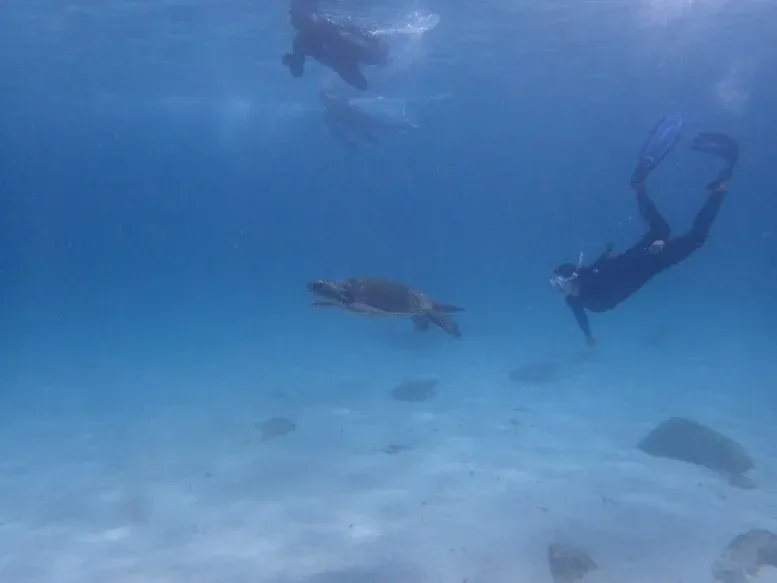 A snorkeler observes a green sea turtle swimming over the seafloor in the Galápagos. Credit: Juan Pablo Muñoz-Pérez
Tracking Their Journeys
To learn about yellow-morph turtles' movements, Dr. Rowe and his team studied them. In 2015, they tagged nine adult turtles near four islands. The tags sent location signals to satellites.
The tracking lasted up to 418 days. Most turtles stayed in shallow coastal waters. Some swam up to 25 kilometers (15.5 miles) offshore. Five turtles mostly stayed around one island. Others moved between islands, especially during cooler months.
The average area a turtle used was about 1,498 square kilometers (578 square miles). However, the size of this area varied greatly among individual turtles.
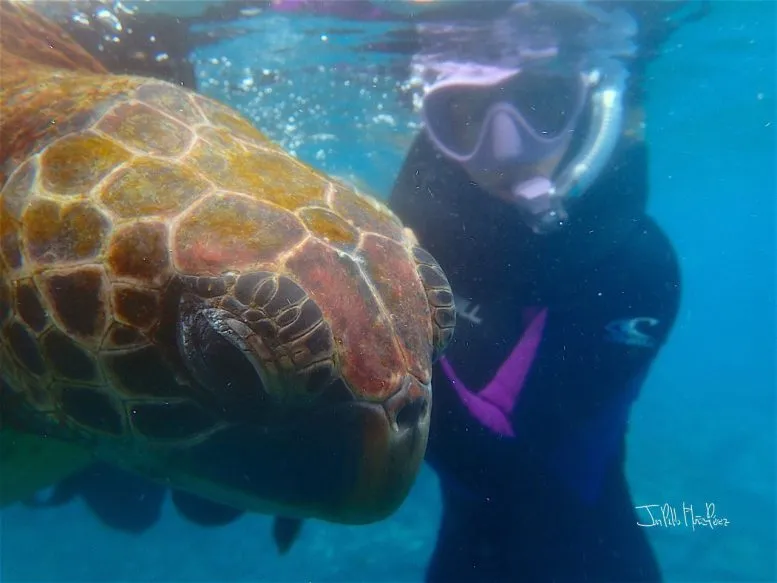 A snorkeler encounters a green sea turtle at close range in the waters surrounding the Galápagos Islands. Credit: Juan Pablo Muñoz-Pérez
Future Migrations and Conservation
The study suggests yellow-morph green sea turtles can stay in the Galápagos for long periods. However, the study only covered part of their lives. It's possible they still make long migrations across the Pacific at other times.
Female yellow-morph turtles are not known to nest in the Galápagos. This suggests they eventually leave to lay eggs on distant beaches.
Dr. Juan Pablo Muñoz Pérez, a coauthor, explained that black-morph females do nest in the Galápagos. These turtles might live there year-round or travel to other islands or feeding grounds in Central and South America.
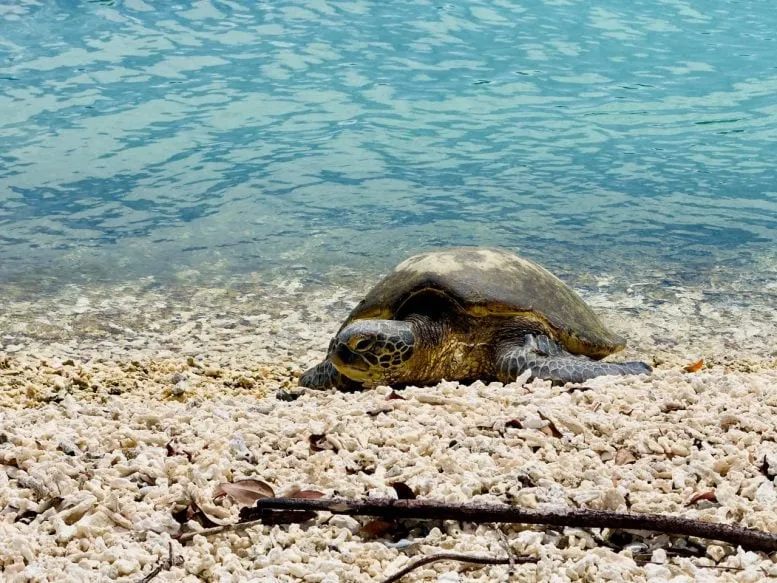
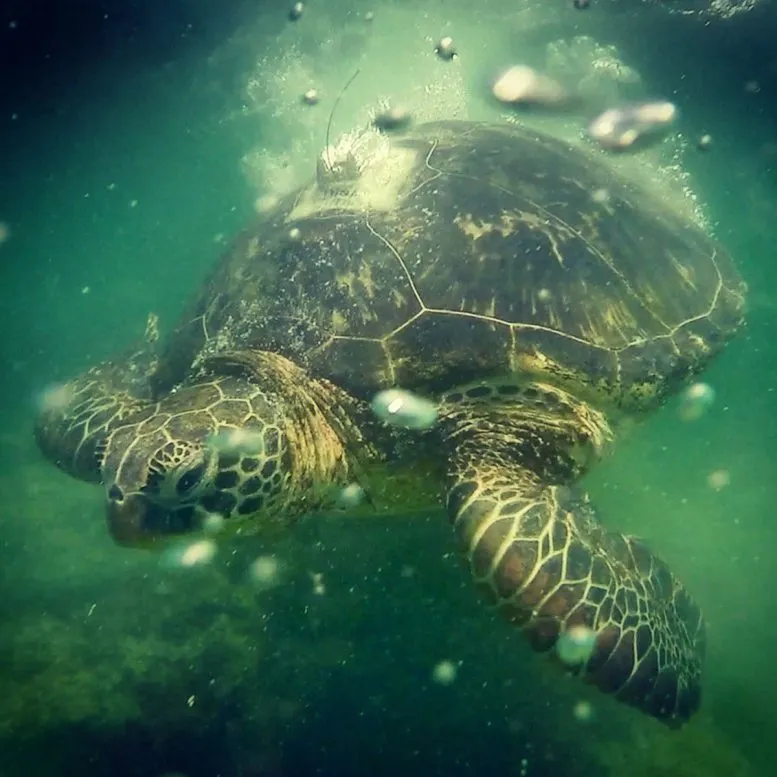 A green sea turtle swims through shallow coastal waters in the Galápagos Islands. Credit: Juan Pablo Muñoz-Pérez
The turtles' movements highlight the need for broad conservation efforts. Protecting just one feeding site is not enough. Turtles may rely on habitats around multiple islands and the waters connecting them.
Dr. Rowe emphasized that habitat quality must be maintained across all islands. It should not be allowed to degrade anywhere.
Deep Dive & References
Movements of yellow-morphotype green turtles (Chelonia mydas) in the Galápagos Marine Reserve - Frontiers in Amphibian and Reptile Science, 2026