For over a century, a common frog in western Ecuador and southern Colombia was known by the wrong scientific name. Researchers at Pontificia Universidad Católica del Ecuador have now officially named it Pristimantis milpe.
This discovery is unusual because the frog is not rare. It is common, widespread, and its nighttime call is easy to hear. Its home spans over 67,000 square kilometers of the Chocó forests, from sea level up to 1,200 meters high.
The formal description of the frog was published in the journal ZooKeys.
Solving a Century-Old Mystery
The key to identifying Pristimantis milpe came from old amphibian specimens at the Natural History Museum in London (NHM).
We're a new kind of news feed.
Regular news is designed to drain you. We're a non-profit built to restore you. Every story we publish is scored for impact, progress, and hope.
Start Your News DetoxSantiago Ron, a lead author of the study and researcher at PUCE, traveled to England. He wanted to clear up the confusion that had lasted over 100 years. He looked at the original specimens, called "types," which were collected in Ecuador in the 1800s and kept at the museum.
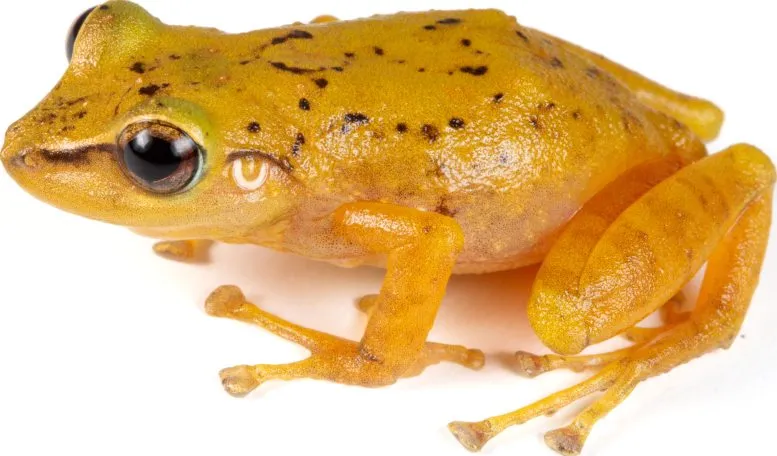 The Milpe Robber Frog lives in a wide variety of habitats, from parks in urban areas to primary forests. The individual in the photo comes from the Río Ayampe Reserve in the Manabí province. Credit: Diego Paucar
By comparing these old specimens with frogs living in the Ecuadorian Chocó today, researchers found that the historical frogs had been wrongly identified as another species. This meant a common frog, known to scientists for decades, did not have its own scientific name.
Jhael Ortega, a PhD student and study author, noted that such a common species being misidentified for so long shows how important it is to correctly link scientific names to living animals.
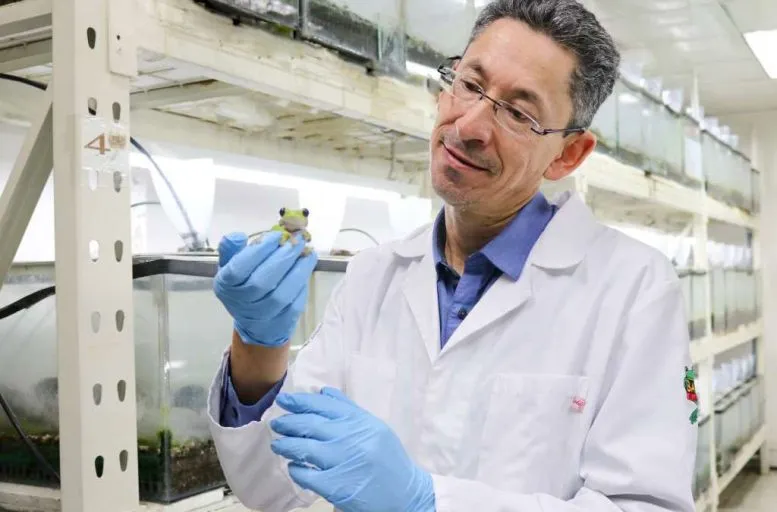 Amphibiologist Santiago Ron, the leading author of the study. Credit: Santiago R. Ron
Unique Calls and Colors
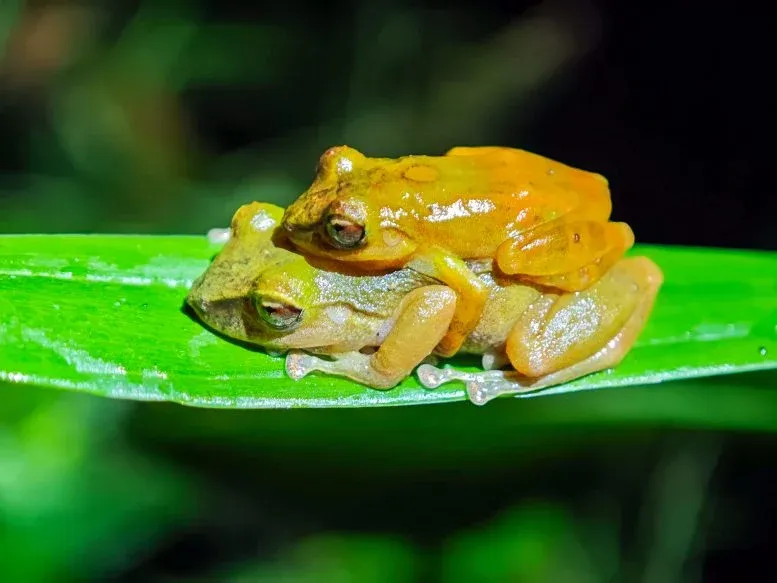
The Milpe Robber Frog (Cutín de Milpe) is active at night. Males call from leaves on shrubs and bromeliads, often several meters above the ground. They make a loud, distinct "click" sound.
Males and females also look different. Females have unique orange or light blue coloring with black spots on their groin and thighs. Males usually have more uniform colors.
This frog lives in the Chocó forests of Ecuador and southern Colombia. This region is very important for protecting biodiversity.
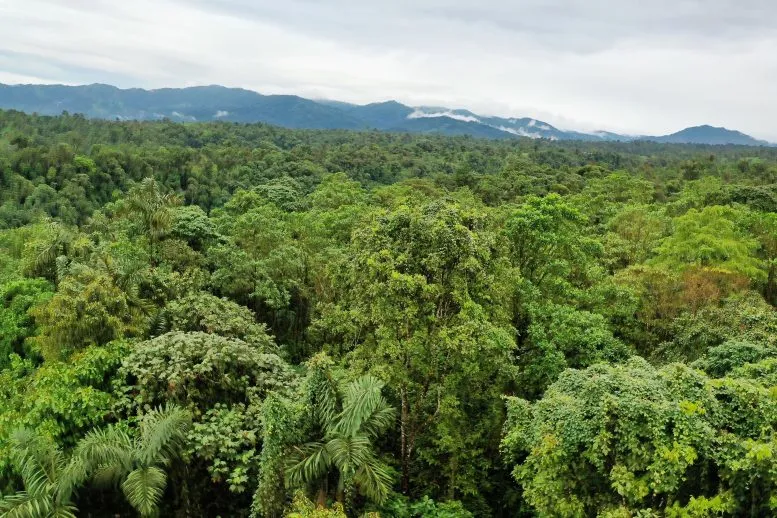 The Ecuadorian Chocó forest is home to more than 250 species of amphibians, including the Milpe Robber Frog, Pristimantis milpe. Credit: Santiago R. Ron
Old Collections Still Help Science
This discovery highlights how important natural history collections remain. Specimens kept for generations allow researchers to re-examine classifications and compare features. This helps answer questions that could not be solved when the specimens were first collected.
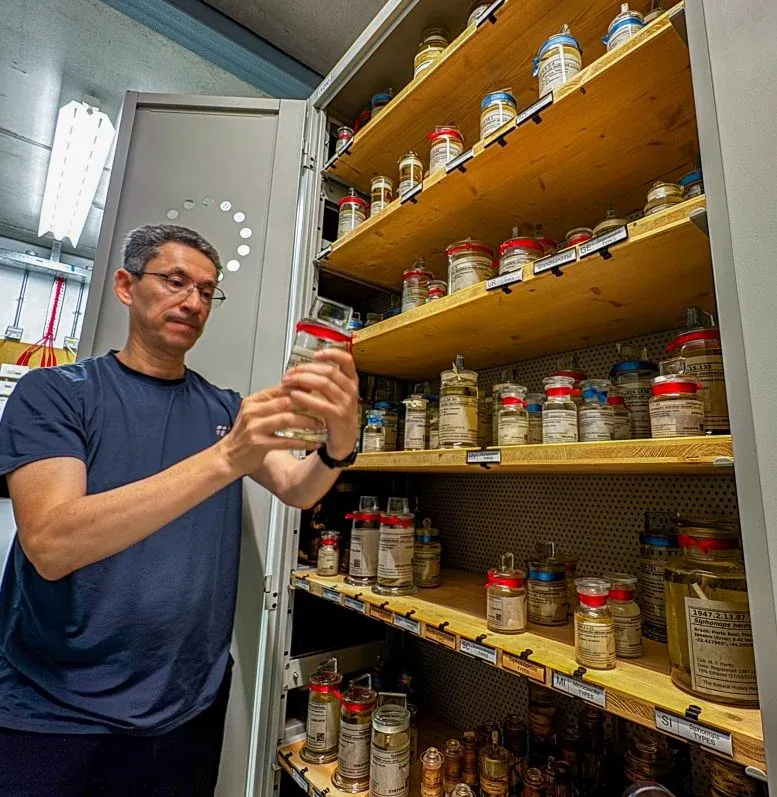 Santiago Ron reviewing jars with historical specimens preserved in the collections of the Natural History Museum in London. Specimens were collected in the 19th century in Ecuador and preserved in London. Credit: Santiago R. Ron
In this case, combining 19th-century museum specimens with observations of living frogs helped formally recognize Pristimantis milpe as its own species.
This finding shows that new discoveries aren't just about rare animals. Even a common frog can be misidentified for decades. Correcting these errors often means connecting old collections with modern research.