Astronomers have long wondered how supermassive black holes keep feeding themselves. These black holes launch powerful jets that heat the gas around them. This heating should cut off their fuel supply.
New images from the James Webb Space Telescope (JWST) offer a clearer picture. They show gas filaments connecting a galaxy's hot atmosphere to the disk that feeds its central black hole.
An international team, including researchers from the Université de Montréal and Michigan State University, made these observations. Their findings were published in The Astrophysical Journal Letters.
We're a new kind of news feed.
Regular news is designed to drain you. We're a non-profit built to restore you. Every story we publish is scored for impact, progress, and hope.
Start Your News DetoxMegan Donahue, a professor at Michigan State University, noted that JWST is providing many new facts. Scientists are working together to understand how black holes get fuel and interact with their galaxies.
The Black Hole Feeding Cycle
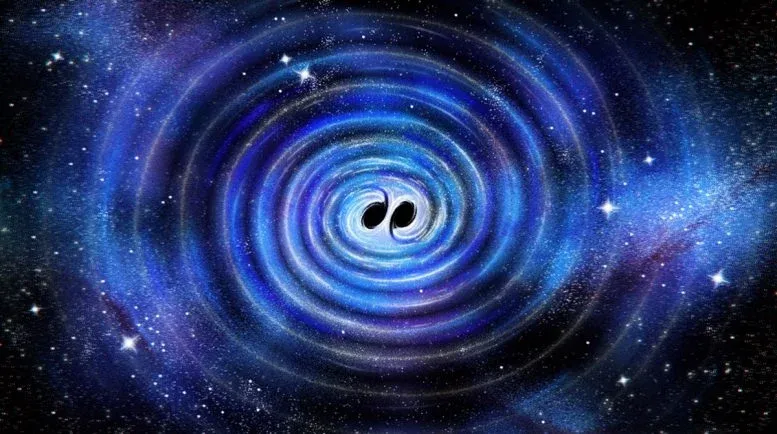
Most large galaxies have a supermassive black hole (SMBH) at their center. These black holes can be millions or billions of times more massive than the sun. When a black hole actively consumes material, it becomes an active galactic nucleus (AGN).
Active black holes shoot out strong energy jets. These jets can change the galaxy, stop new stars from forming, and affect how the galaxy grows.
This creates a puzzle: if the jets heat the gas, they should eventually stop the black hole from feeding. The leading idea is that some of the heated gas cools down. It then condenses into long, thin filaments and falls back towards the galaxy's center. This creates a cycle where the black hole both disrupts and refills its own fuel.
To study this, researchers used JWST to look at NGC 4696. This galaxy is at the center of the Centaurus Cluster, about 145 million light-years away. It's a good place to study how AGNs work.
JWST Traces Gas Flow
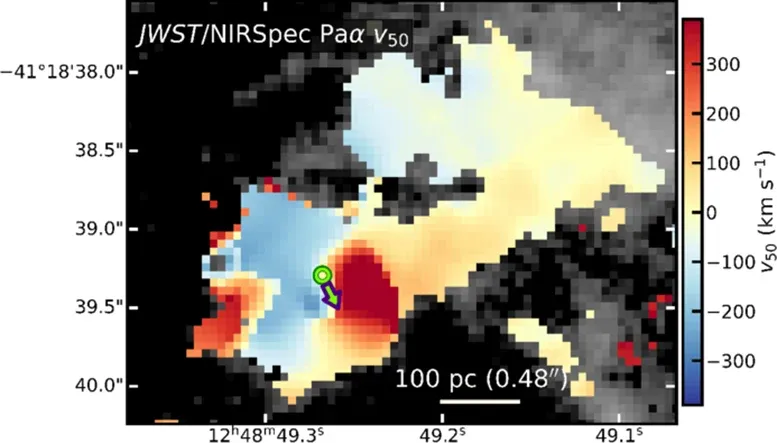
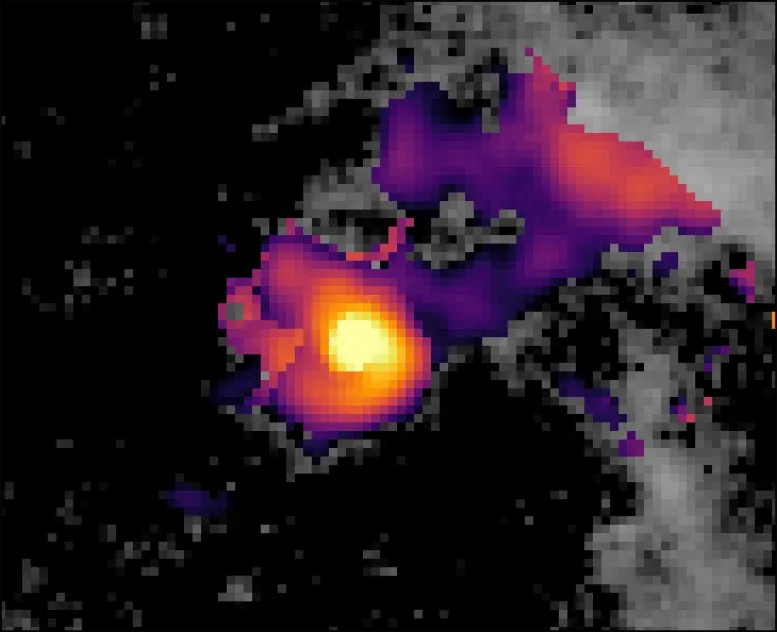
Using JWST's NIRSpec instrument for nearly eight hours, the team mapped gas movement near the black hole. They could see features about 30 light-years across. This is very small compared to a galaxy that spans hundreds of thousands of light-years.
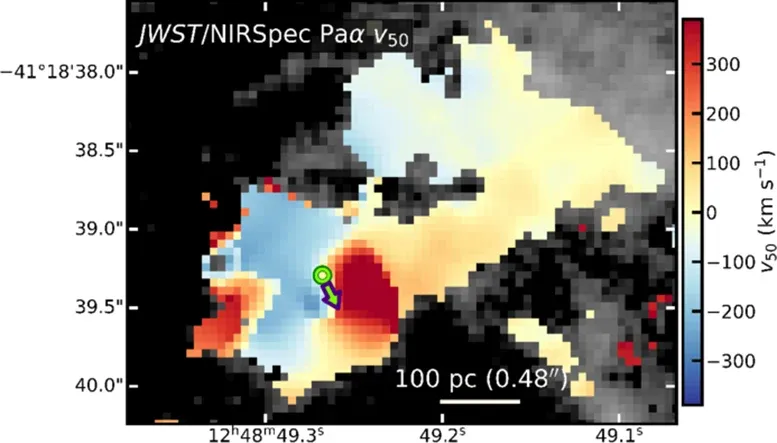
The maps showed an S-shaped swirl at the center. This is a rotating disk of gas around the SMBH. The disk is almost 800 light-years wide, with gas moving up to 600 kilometers per second.
Crucially, the disk seems to connect directly to one of the large gas filaments in the galaxy. The observations show gas moving along this filament and entering the rotating disk that feeds the black hole.
These observations help complete the picture of the feeding cycle. Black hole jets inject energy into the surrounding gas. Over time, some gas cools, becomes unstable, and forms filaments. These filaments can be hundreds of light-years wide and thousands of light-years long.
Magnetic forces then slow the gas's rotation and guide it inward. The material gathers in a spinning disk around the black hole. This disk fuels the black hole, which then launches new jets, restarting the cycle.
Simulations Support the Findings
The researchers also used advanced computer simulations to test their ideas. The gas in the simulations behaved much like the gas observed by JWST. This provides independent support for the proposed feeding process.
Mark Voit, a professor at Michigan State University, said it was exciting to be part of the project. He noted that their group's calculations predicted magnetic fields would help feed black holes by channeling cool gas. He finds it amazing to see this happening in the JWST images.
Deep Dive & References
JWST Reveals How Black Holes are Fed: Kiloparsec-scale Multiphase Filaments Feed Subkiloparsec Circumnuclear Disks - The Astrophysical Journal Letters, 2026