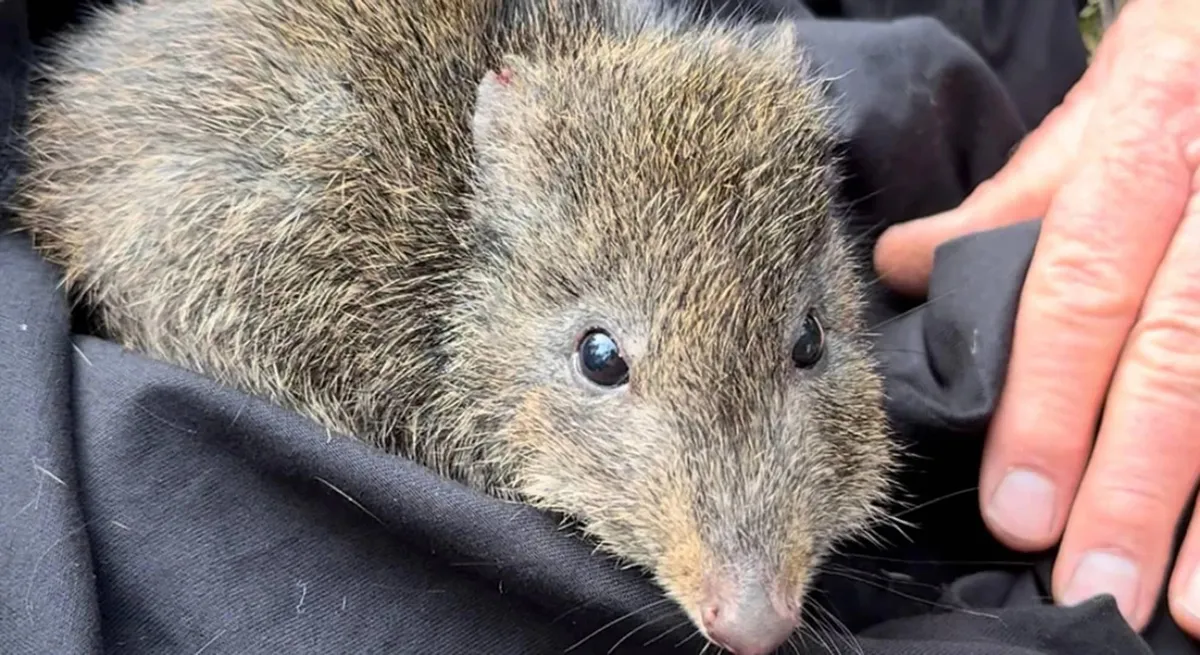
There are fewer than 150 Gilbert's potoroos left in the wild. These small marsupials, found only in Western Australia, nearly vanished entirely before their rediscovery in 1994. Now researchers have found an unexpected way to help them survive: by analyzing what they eat, one dropping at a time.
Scientists at Edith Cowan University partnered with Western Australia's Department of Biodiversity, Conservation and Attractions to study the potoroo's diet using environmental DNA extracted from scat samples. It sounds unconventional, but it's revealing crucial information about where these animals can actually thrive.
How poo became a conservation tool
Traditionally, researchers would manually sort through animal droppings to identify food remains. The problem was fungal spores—the potoroo's primary food source—are nearly impossible to identify this way. PhD student Rebecca Quah's team used eDNA metabarcoding instead, a molecular technique that reads genetic material left behind in faeces to determine exactly what an animal has eaten.
We're a new kind of news feed.
Regular news is designed to drain you. We're a non-profit built to restore you. Every story we publish is scored for impact, progress, and hope.
Start Your News Detox"It's a non-invasive way of studying diet," Quah explained. "All you need are fresh scats from the environment."
The team compared potoroo droppings with scat from three other fungi-eating mammals that historically lived in the same areas: quokkas, quendas, and bush rats. They found significant dietary overlap—and more importantly, they discovered that the habitats where all these species coexist together are likely suitable for potoroos.
This matters because the current wild population is scattered across four sites, two of them islands off the coast. Researchers are searching for a new mainland location to establish an additional population, and the diet study provides a roadmap. "Examining the fungal diet of mammals that occur with the potoroo can help in deciding where to establish new populations," said Dr Tony Friend, a research associate with the conservation department.
Why this marsupial matters beyond its rarity
The potoroo isn't just another endangered species. Fungi-eating mammals like the potoroo are what ecologists call "ecosystem engineers." When they dig for fungi, they turn over soil. When they move through the forest, they disperse fungal spores. Fungi, in turn, form relationships with plant roots that help plants thrive. Lose the potoroo, and you begin to unravel a web of ecological relationships that keeps the whole system healthy.
Breeding potoroos in captivity has failed—they're remarkably picky eaters—so wild-to-wild translocations are the only realistic path forward. Previous attempts to boost numbers have had limited success, but this new understanding of their dietary needs and preferred habitats gives conservationists a better chance of finding places where relocated populations can actually survive.
Australia's native mammals face relentless pressure from introduced predators like cats and foxes. The potoroo's recovery depends on finding refuge in the right places—places where their food is abundant and their predators fewer. A handful of droppings, analyzed at the molecular level, might just point the way.