A purple-feathered bird flushes a cicada from the forest floor, beak triumphant. A baby pangolin nuzzles into a rescue blanket. A sun bear digs through campsite trash with a butterfly on its nose. These moments—hidden, fleeting, sometimes heartbreaking—are what the world sees once a year through the Wildlife Photographer of the Year competition.
Run by London's Natural History Museum, this contest draws submissions from photographers across 113 countries. This year, 60,000 images competed for recognition. The museum announced its official category winners in October, but one award has been held back: the People's Choice, decided entirely by public vote.
Starting February 4 and running through March 18, anyone can judge 24 finalist photographs and crown their favorite. It's the kind of competition so prestigious it's called the Oscars of wildlife photography—and this year, you get a say.
We're a new kind of news feed.
Regular news is designed to drain you. We're a non-profit built to restore you. Every story we publish is scored for impact, progress, and hope.
Start Your News DetoxThe stories behind the lens
These aren't just pretty pictures. Many reveal the pressures animals face daily: predation, human conflict, climate strain, pollution, habitat loss. A rescued baby pangolin—orphaned after her mother was trafficked for scales and traditional medicine—represents both resilience and the illegal wildlife trade that makes pangolins the world's most trafficked mammal. A sun bear rummaging through campsite trash isn't foraging by choice; it's adapting to habitat destruction, evolution in real time.
But the images also show recovery. T12, a tiger in India's Similipal Tiger Reserve, was once the only male among a handful of females. Ten years later, he's fathered several generations, reviving the population. Photographer Prasenjeet Yadav tracked him for months with hidden cameras, capturing the dark-striped male in a forest at night—a story of survival written in one image.
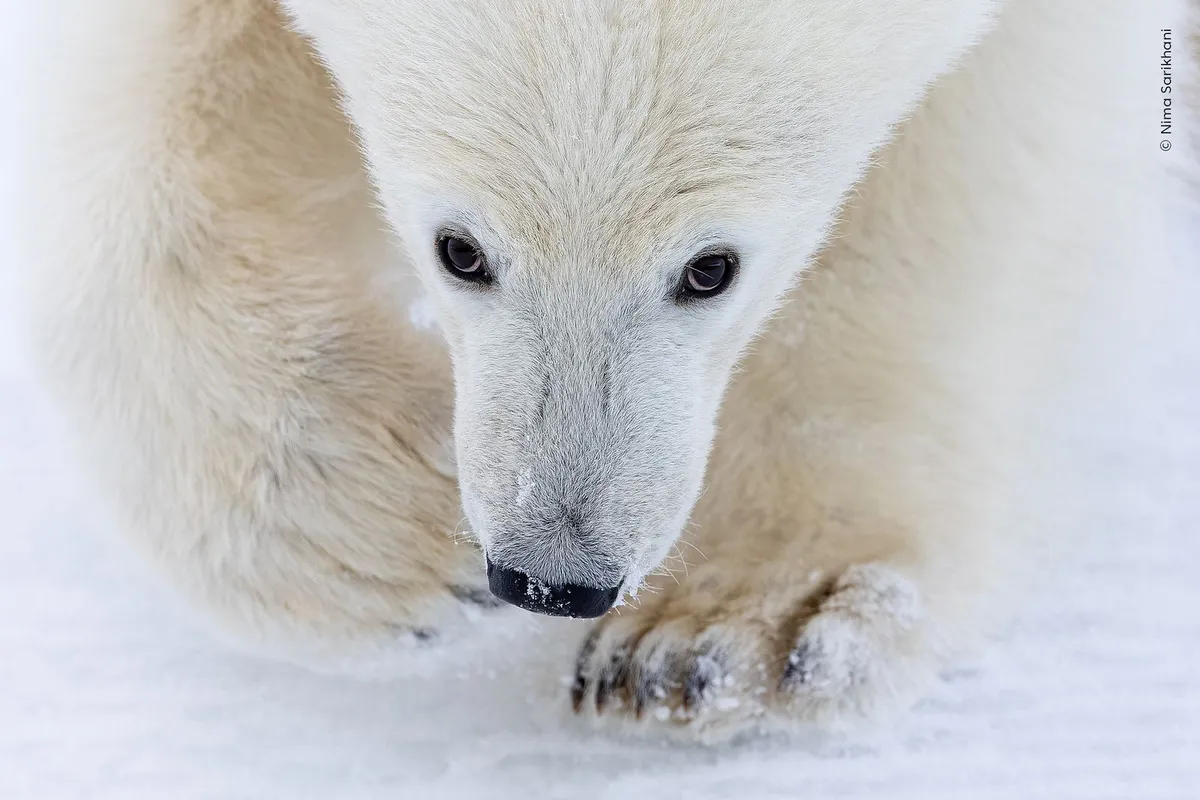
Other moments are simply quiet: a cellar spider protecting her egg sack for a month until spiderlings emerge. A mother polar bear napping with three cubs draped across her back. A juvenile swimming crab hitching an inexplicable ride on a jellyfish in Indonesia's Lembeh Strait, raising more questions than answers.
The photographs span continents and species—from ambush bugs in Michigan to rufous-vented ground cuckoos in Costa Rican rainforests, each one the result of patience, timing, and a photographer willing to wait in a wildlife blind or track an animal for months.
Voting closes March 18 at 9 a.m. EST. The winner and four runners-up will be announced March 25, and the winning photograph will be displayed alongside other contest winners in the Wildlife Photographer of the Year exhibition in London.
A Fleeting Moment by Lior Berman: A rufous-vented ground cuckoo snatches a cicada from the forest floor.
A Fragile Future by Lance van de Vyver: A baby pangolin sits on a blanket at a rescue center in South Africa.
Into the Furnace by Mogens Trolle: A sun bear looks through trash at a campsite in Thailand.
Dark Knight by Prasenjeet Yadav: A tiger with unusually dark coloration walks through a forest at night.